
 Connect With Our Team
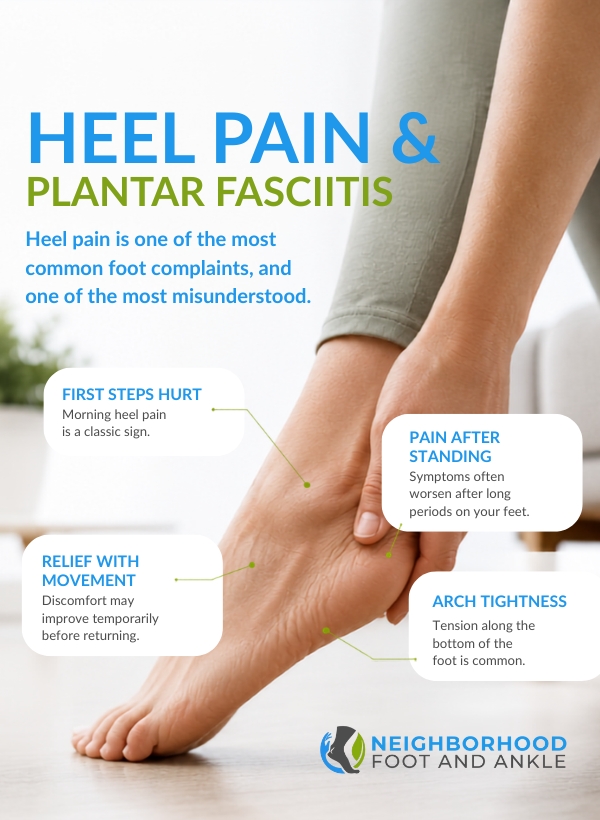
Plantar Fasciitis and Heel Pain: Why Your First Steps Hurt
That sharp pain in your heel when you first step out of bed can make every morning more difficult. The discomfort may ease after you walk around, only to return after sitting, standing, or spending a long day on your feet.
This pattern is commonly associated with plantar fasciitis, one of the leading causes of pain along the bottom of the heel. Although many people try to walk through it, persistent heel pain can change how you move and interfere with work, exercise, errands, and everyday activities.
At Neighborhood Foot and Ankle in Dallas, Dr. Jonathan Pajouh and Dr. Veena Devaraju evaluate heel pain to determine what is causing it and which treatment options may help.
What Is Happening Along the Bottom of the Foot?
The plantar fascia is a strong band of tissue that connects the heel bone to the toes. It helps support the arch and absorbs some of the stress placed on the foot while standing and walking.
When repeated pressure places too much tension on this tissue, small tears, irritation, and pain may develop. The discomfort is often concentrated near the heel, although some patients also notice tightness or tenderness extending into the arch.
Plantar fasciitis does not always begin after a clear injury. Symptoms may appear gradually after a change in activity, footwear, work demands, exercise routine, or the amount of time spent standing.
Common Signs of Plantar Fasciitis
Plantar fasciitis often causes a recognizable pattern of discomfort. Pain may feel sharp, stabbing, aching, or tight depending on the severity of the irritation and how long it has been present.
Common symptoms include:
• Sharp heel pain during the first steps in the morning
• Pain after sitting or resting for an extended period
• Discomfort after prolonged standing or walking
• Tightness along the heel, arch, or bottom of the foot
• Pain that improves with movement but returns later
Morning pain is common because the plantar fascia can tighten while the foot is resting. When weight is placed on the foot again, the tissue suddenly stretches and may produce a sharp sensation. Symptoms may temporarily improve as the tissue warms up, but that does not necessarily mean the underlying irritation has resolved.
Why Does Plantar Fasciitis Develop?
Plantar fasciitis usually develops from a combination of pressure, movement patterns, activity, and foot structure. A person with flat feet may place different tension on the plantar fascia than someone with high arches, but either structure can contribute to heel pain.
Factors that may increase stress on the plantar fascia include:
• Unsupportive, worn, or poorly fitting footwear
• A sudden increase in walking, running, or exercise
• Tight calf muscles or limited ankle flexibility
• Long workdays spent standing on hard surfaces
• Changes in body weight or activity level
Running and other repetitive activities can place additional strain on the tissue, especially when training intensity increases too quickly. However, plantar fasciitis also affects people who do not exercise regularly. Work demands, shoe choices, and everyday standing can be enough to irritate the heel.
Dr. Pajouh explains, “A lot of patients tell us the pain gets better once they start moving, so they assume it is going away. But when it keeps returning every morning, it is usually a sign that the heel still needs attention.”
Why an Accurate Heel Pain Diagnosis Matters
Not every case of heel pain is plantar fasciitis. Achilles tendinitis, stress fractures, nerve irritation, heel pad problems, arthritis, and other conditions can produce pain in or around the heel.
The location and timing of the discomfort provide helpful clues. Plantar fasciitis typically affects the bottom or inner portion of the heel. Pain behind the heel may be more consistent with an Achilles tendon problem, while burning, tingling, or numbness may suggest nerve involvement.
A thorough foot exam may include an evaluation of the heel, arch, ankle flexibility, gait, footwear, and areas of tenderness. Imaging may be recommended when symptoms or the medical history suggest a fracture, arthritis, or another condition.
Treatment Options for Plantar Fasciitis
Most cases improve without surgery. Treatment may include rest, ice, supportive shoes, orthotics, stretching, night splints, taping, physical therapy, or anti-inflammatory medication.
For pain that continues, corticosteroid injections or extracorporeal shock wave therapy may be considered. Surgery is usually reserved for severe cases that do not improve with conservative care.
The goal is to reduce strain on the plantar fascia, improve flexibility and support, and help you return to normal activity with less pain.
Schedule a Heel Pain Evaluation in Dallas
Heel pain that keeps returning, limits activity, or changes the way you walk should not be ignored. Early evaluation may prevent the condition from becoming more difficult to manage.
Neighborhood Foot and Ankle provides plantar fasciitis and heel pain evaluations for patients in Dallas and those traveling from nearby Allen and surrounding DFW communities. Contact our office to schedule an appointment and learn which treatment options may be appropriate for your symptoms.
Book Your Appointment Online Now
Published by Neighborhood Foot and Ankle | Dr. Pajouh and Dr. Devaraju | Serving Dallas and surrounding DFW | 972-726-6464
Educational purposes only. Not medical advice.