
 Connect With Our Team
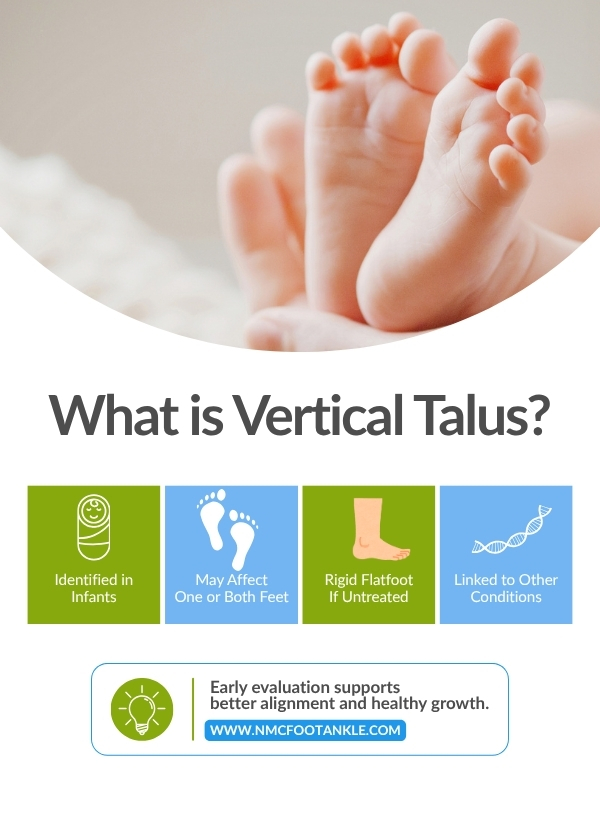
Understanding Vertical Talus in Infants and Children
Vertical talus is a rare foot condition present at birth that affects the way the bones in the foot are aligned. It can cause the bottom of the foot to look rounded, sometimes described as a “rocker-bottom” appearance. Because the foot may be stiff and difficult to move into a normal position, vertical talus is different from more flexible flatfoot conditions that some children outgrow.
For parents, noticing that something looks different about a baby’s foot can feel concerning. The good news is that early evaluation can help identify the condition and guide the next steps. At Neighborhood Foot and Ankle, Dr. Pajouh and Dr. Devaraju provide foot and ankle care for children and adults, helping families understand symptoms, development concerns, and treatment options in a clear, supportive way.
Vertical talus may affect one foot or both feet. It is often identified during routine infant exams, especially when the foot appears unusually flat, stiff, or curved. In some cases, it may also be associated with other neuromuscular, genetic, or developmental conditions, which is why a full evaluation is important.
What Is Vertical Talus?
Vertical talus is a congenital foot deformity, meaning it is present at birth. It occurs when one of the bones in the foot, called the talus, is positioned incorrectly. This affects the alignment of the midfoot and hindfoot and can cause the foot to point upward while the bottom of the foot appears rounded.
Unlike a flexible flatfoot, vertical talus is usually rigid. That means the foot does not easily move into a normal position when gently adjusted. This stiffness is one of the reasons early diagnosis matters.
Common features may include:
- A stiff, flat-looking foot
- A rounded or rocker-bottom shape
- Limited motion in the foot or ankle
- The front of the foot pointing upward
- Difficulty placing the foot flat as the child grows
- One or both feet being affected
Some babies do not show pain early on, especially before they begin standing or walking. However, untreated vertical talus can lead to difficulty with shoe wear, walking mechanics, balance, and long-term foot comfort.
Why Early Diagnosis Matters
Early diagnosis gives children the best opportunity for improved alignment and function. Since babies’ bones, joints, and soft tissues are still developing, treatment is often more effective when started early.
A podiatrist may evaluate the foot’s shape, flexibility, and range of motion. Imaging may also be recommended to confirm the diagnosis and understand the position of the bones. The goal is to determine whether the foot is flexible, rigid, or associated with another underlying condition.
Parents should schedule an evaluation if they notice:
- A baby’s foot appears unusually curved or rounded
- The foot feels stiff or difficult to move
- The sole has a rocker-bottom appearance
- The child has trouble standing flat-footed
- One foot looks significantly different from the other
- There are concerns about delayed standing or walking
“Parents do not need to panic if they notice something unusual, but they should not ignore it either,” says Dr. Devaraju. “With pediatric foot conditions, early evaluation helps us understand what is happening and gives the child the best chance at healthier movement as they grow.”
For families traveling from Carrollton and Farmers Branch, Neighborhood Foot and Ankle provides pediatric foot evaluations designed to help parents get answers and feel more confident about the next step.
How Is Vertical Talus Treated?
Treatment depends on the child’s age, the severity of the condition, flexibility of the foot, and whether other medical conditions are involved. In many cases, care begins with conservative methods to improve alignment before considering more advanced treatment.
Treatment may include:
- Gentle stretching and manipulation
- Casting to gradually improve foot position
- Bracing after correction to help maintain alignment
- Monitoring development as the child grows
- Surgery in more severe or rigid cases
Casting is often used in infancy because the foot is still developing and may respond better to gradual correction. If casting alone does not fully correct the position, a procedure may be recommended to help improve alignment. After correction, bracing may be needed to reduce the chance of recurrence.
The treatment process is not one-size-fits-all. Some children need more involved care, while others may respond well to early intervention. That is why a personalized evaluation is so important.
Supporting Healthy Foot Development
Healthy foot development plays an important role in how a child stands, walks, balances, and moves through daily life. When a condition like vertical talus is identified early, parents have more options for supporting better long-term function.
At home, parents can help by watching how their child’s feet rest, how they bear weight, and whether one foot appears different from the other. Once a child begins standing or walking, changes in balance, shoe fit, or foot position may become easier to notice.
It is also important not to assume a stiff flatfoot is something a child will automatically outgrow. While some pediatric foot concerns are flexible and improve with age, vertical talus is typically more rigid and usually requires professional care.
A Clear Next Step for Parents
Vertical talus is rare, but early attention can make a meaningful difference. If your child’s foot appears stiff, rounded, unusually flat, or difficult to move into position, a pediatric foot evaluation can help determine what is going on and what treatment options may be appropriate.
Neighborhood Foot and Ankle helps families understand pediatric foot concerns with careful evaluation, clear communication, and treatment planning based on the child’s needs.
Schedule an Appointment Today
Published by Neighborhood Foot and Ankle | Dr. Pajouh and Dr. Devaraju | Serving Dallas and DFW communities | (972)-726-6464
Educational purposes only. Not medical advice.