
 Connect With Our Team
What Is Vertical Talus? Understanding This Pediatric Foot Condition
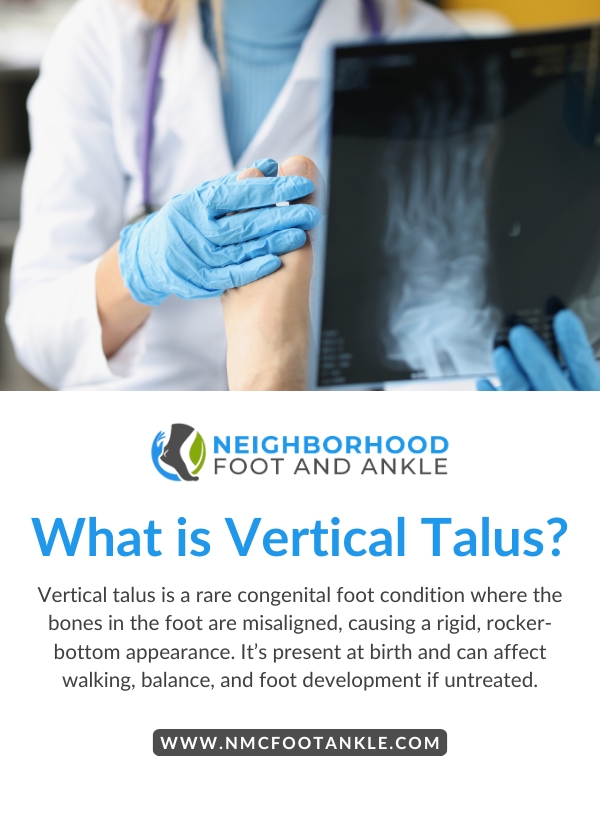
Vertical talus is a rare congenital foot condition present at birth where the bones in the foot are misaligned. This creates a rigid foot with a noticeable “rocker-bottom” appearance. Because the structure of the foot is affected early, this condition can interfere with standing, balance, and walking as a child grows.
At Neighborhood Foot and Ankle in Dallas, Texas, early recognition plays an important role in improving outcomes. Families often travel from nearby Lewisville and The Colony for specialized pediatric foot care focused on restoring alignment and supporting long-term mobility.
What Causes Vertical Talus?
Vertical talus develops during fetal growth when the bones in the foot do not form in proper alignment. This misalignment affects how the foot is structured and how it will function as a child begins to grow and bear weight. While the exact cause is not always known, several factors may be involved:
- Neuromuscular conditions that affect muscle control
- Genetic factors or associated syndromes
- Abnormal positioning during pregnancy
In many cases, the condition is visible at birth due to the stiff shape of the foot and limited flexibility. Because it does not correct on its own, early evaluation is important to guide proper development and prevent future mobility issues.
How Do You Know If Your Child Has Vertical Talus?
Parents are often the first to notice that something looks different. The foot may appear unusually shaped or feel stiff when touched. Unlike more flexible foot conditions, vertical talus typically does not improve with simple stretching. These differences often become more noticeable as your child begins to stand or attempt early steps.
Common signs include:
- A rounded “rocker-bottom” foot shape
- A rigid foot that does not move easily
- Difficulty placing the foot flat when standing
- Delayed or abnormal walking patterns
If these signs are present, a podiatric evaluation can help confirm the diagnosis and guide next steps for appropriate treatment. Early assessment with licensed podiatrists, such as those at Neighborhood Foot and Ankle, also allows for more effective treatment options that can support proper foot development as your child grows.
Treatment Options for Vertical Talus
Treatment focuses on correcting alignment early to support proper development. Starting care at a younger age can improve outcomes and reduce the need for more complex interventions later on. The approach depends on severity and how early the condition is diagnosed.
- Serial casting is often used in infants to gradually guide the foot into a more natural position
- Bracing may help maintain correction after initial treatment
- Minimally invasive procedures or surgery may be recommended to properly align the bones
- Physical Therapy and custom orthotics support strength, balance, and long-term function
Dr. Jonathan Pajouh shares, “Early treatment gives us the opportunity to guide the foot as it develops. The goal is to improve function while allowing children to move and grow as normally as possible.”
What Can Parents Expect During Treatment?
Treatment for vertical talus is a gradual, step-by-step process that adapts as your child grows. Care is designed to be gentle while still effective, especially during early development when the foot responds best to correction. Families can expect regular follow-up visits to monitor progress, along with guidance on managing casts, braces, or at-home care routines.
Progress typically happens over time rather than immediately, which is why consistency with appointments and treatment plans is important. Having a clear plan in place helps families feel more confident and supported throughout the process.
Why Is Early Treatment Important for Long-Term Development?
Addressing vertical talus early can help reduce the risk of long-term complications. When left untreated, the condition may lead to ongoing difficulty with walking, poor balance, and discomfort as a child becomes more active.
Early care allows for less invasive treatment options, better alignment during key growth stages, improved walking mechanics, and a reduced risk of future pain or mobility issues. Taking action early can make treatment more effective and support healthier development over time. Early intervention also helps ensure your child can stay active and reach developmental milestones with greater ease.
Pediatric Foot Care in Dallas, Texas
At Neighborhood Foot and Ankle, care is centered around early diagnosis and personalized treatment for pediatric foot conditions. Each child is evaluated with a gentle, thorough approach to ensure both structure and function are addressed. The focus is on creating a plan that supports healthy growth while helping your child stay active and comfortable.
If you notice an unusual foot shape or stiffness in your child’s foot, scheduling an evaluation can help determine the best course of action. Early guidance can provide clarity, reduce uncertainty, and set your child on the right path for long-term foot health.
Schedule Your Consult Today
Educational purposes only. Not medical advice.