
 Connect With Our Team
Venous Stasis in the Legs: Why Swelling and Skin Changes Should Not Be Ignored
Leg swelling can feel easy to explain away. Maybe you stood too long. Maybe you sat at a desk all day. Maybe your shoes felt tight by evening and seemed better the next morning.
But when swelling keeps coming back, feels worse at the end of the day, or appears with skin discoloration, aching, heaviness, or wounds that are slow to heal, it may be more than simple fluid retention. One possible cause is venous stasis.
Venous stasis happens when blood does not move efficiently from the legs back up toward the heart. Instead, blood can pool in the lower legs and feet. Over time, this can lead to swelling, skin changes, discomfort, inflammation, and in more serious cases, venous ulcers.
At Neighborhood Foot and Ankle in Dallas, Texas, Dr. Jonathan Pajouh and Dr. Veena Devaraju evaluate foot and ankle swelling, skin changes, wound concerns, and circulation-related symptoms to help patients understand what may be happening and what care may be needed.
What Causes Venous Stasis in the Legs?
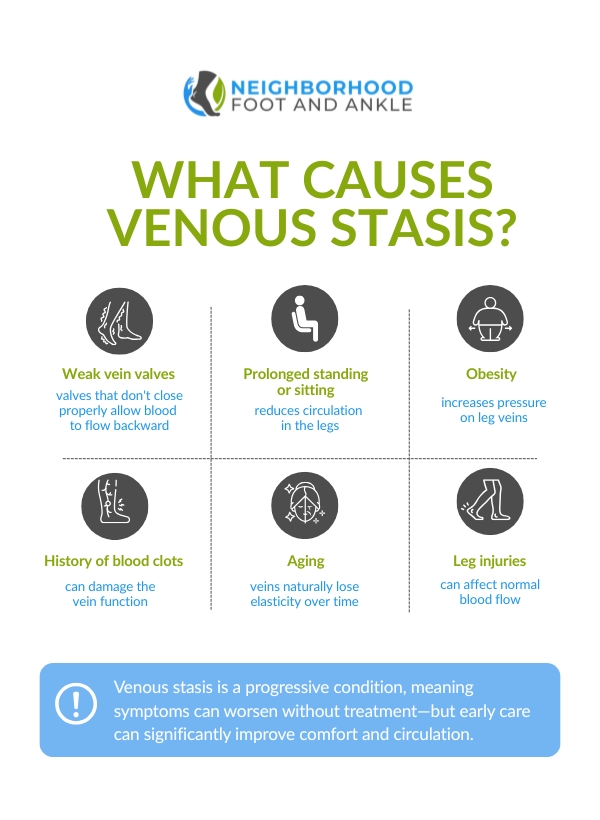
Healthy veins rely on one-way valves to help move blood upward against gravity. When those valves weaken or stop closing properly, blood can flow backward and collect in the lower legs. This increased pressure can affect the surrounding tissue and skin.
Common causes and risk factors include:
- Weak or damaged vein valves
- Long periods of standing or sitting
- Obesity or extra pressure on the leg veins
- A history of blood clots, also called DVT
- Aging, leg injury, or prior surgery
Venous stasis can develop gradually. At first, symptoms may be mild, such as ankle swelling after a long day. Over time, swelling may become more frequent, more noticeable, or harder to manage.
Common Symptoms of Venous Stasis
Venous stasis often shows up in the lower legs, ankles, and feet. Some patients first notice swelling around the ankles. Others may see changes in the skin before they feel much discomfort.
Common symptoms may include ankle swelling, leg heaviness, aching, tightness, itching, or tenderness. The skin may begin to look darker, red, dry, shiny, irritated, or thickened. Shoes may feel tighter than usual, especially later in the day.
In more advanced cases, small wounds may form near the ankle or lower leg. These wounds can become venous ulcers, which may be slow to heal and more likely to return if swelling and circulation concerns are not managed.
Why Early Evaluation Matters
Venous stasis is progressive, which means symptoms can worsen over time without proper management. What starts as occasional swelling can develop into more consistent discomfort, skin irritation, inflammation, and wounds.
This is especially important for patients with diabetes, neuropathy, circulation problems, or a history of slow healing. Swelling can change how shoes fit, increase pressure on the skin, and raise the risk of blisters, calluses, irritation, or open wounds.
“I tell patients not to brush off swelling that keeps coming back. Your feet and ankles can give early signs that circulation or skin health needs attention,” says Dr. Devaraju.
Early evaluation can help identify what may be causing symptoms and whether additional testing, wound care, compression, or referral to another specialist may be appropriate.
When Should You Seek Care for Venous Stasis Symptoms?
You should consider scheduling an evaluation if leg or ankle swelling is persistent, worsening, one-sided, painful, or paired with skin changes. Swelling that leaves an indentation when pressed, worsens throughout the day, or makes shoes feel tight may also need attention.
Skin changes are another important warning sign. Darkening around the ankles, redness, dryness, scaling, itching, thickened skin, or open sores can suggest that pressure and inflammation are affecting the tissue.
Patients should seek urgent medical attention if swelling appears suddenly, affects one leg more than the other, is associated with chest pain or shortness of breath, or comes with severe calf pain, warmth, or redness. These symptoms may require immediate evaluation for more serious conditions.
Treatment and Foot Care Support
Treatment depends on the cause and severity of the symptoms. A foot and ankle specialist may examine the feet, ankles, skin, pulses, swelling pattern, and any wounds that are present.
Care may include compression therapy when appropriate, elevation, wound care, skin protection, shoe recommendations, activity changes, and coordination with other specialists if vein disease or circulation concerns need further evaluation.
If a venous ulcer has already developed, wound care becomes especially important. These ulcers can be slow to heal and may return if the underlying swelling and circulation issues are not managed.
Conclusion: Protect Your Skin, Circulation, and Foot Health
Recurring swelling, skin discoloration, lower leg irritation, and slow-healing wounds should not be ignored. Venous stasis can become more serious over time, but early care can help improve comfort, support skin health, and reduce the risk of complications.
At Neighborhood Foot and Ankle, Dr. Pajouh and Dr. Devaraju help patients throughout Dallas and surrounding DFW evaluate swelling, skin changes, venous ulcers, wound concerns, and foot or ankle symptoms related to circulation.
If you are dealing with recurring ankle swelling, skin discoloration, lower leg irritation, or a slow-healing wound, schedule an evaluation. Getting answers early can help protect your feet, improve comfort, and reduce the risk of more serious complications.
Contact us Today
Published by Neighborhood Foot and Ankle | Dr. Pajouh and Dr. Devaraju | Serving Dallas and surrounding DFW | 972-726-6464.
Educational purposes only. Not medical advice,