
 Connect With Our Team
Did you know that your foot type affects more than just how your shoes feel? It plays a major role in your balance, walking mechanics, and overall risk of injury. Understanding your foot type is essential for choosing the right footwear, orthotics, and exercises to keep your feet healthy, comfortable, and pain-free.
Understanding Your Foot Type and Why It Matters
Every foot is unique, but most people fall into one of three main categories. Your foot type not only affects shoe fit, but also influences balance, walking mechanics, posture, and even your risk of injury. Understanding your foot type can help you choose the right footwear, orthotics, and exercises to reduce strain and maintain long-term foot health.
At NMC Foot & Ankle in Dallas, Dr. Pajouh, DPM and Dr. Devaraju, DPM provide professional assessments to identify your foot type and recommend personalized strategies to prevent pain and improve mobility.
Most people have one of the following foot types:
-
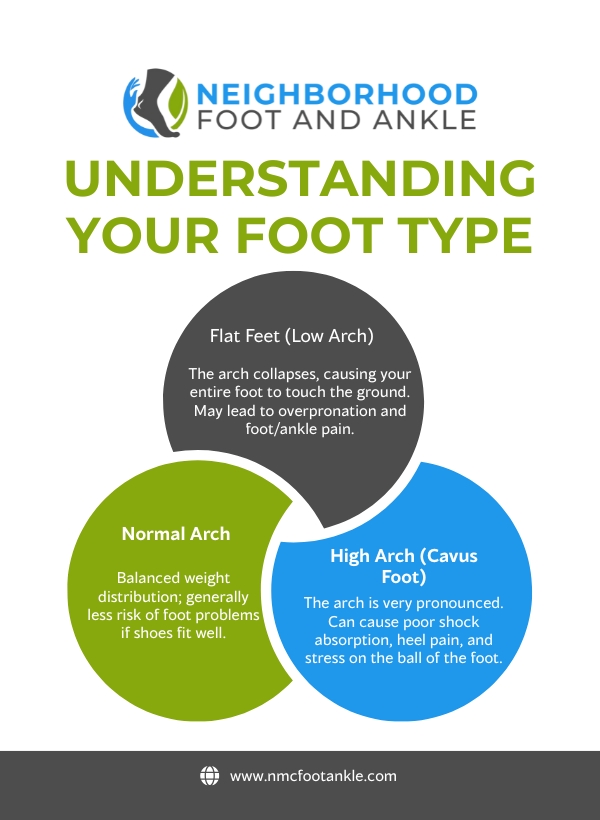
Flat Feet (Low Arch): The arch collapses, causing the entire foot to touch the ground. Flat feet can lead to overpronation, increasing the risk of foot, ankle, and knee pain. Supportive shoes or custom orthotics often help maintain proper alignment.
-
Normal Arch: A balanced arch distributes weight evenly across the foot. People with normal arches generally experience fewer problems, though improper footwear or repetitive stress can still cause discomfort.
-
High Arch (Cavus Foot): Very pronounced arches reduce shock absorption, leading to heel pain, stress on the ball of the foot, and increased ankle sprain risk. Cushioning, supportive insoles, and stretching exercises can relieve discomfort.
Flat feet may contribute to shin splints, plantar fasciitis, or knee pain if unsupported, while high arches can increase stress on the foot and ankle. By knowing your foot type, you can make informed choices about shoes, orthotics, and exercises to improve comfort and prevent injury.
Dr. Pajouh, DPM and Dr. Devaraju, DPM at NMC Foot & Ankle in Dallas provide professional assessments to determine your foot structure and create personalized plans for healthier, pain-free feet.
Foot Care Strategies for Every Foot Type
Regardless of your foot type, there are several strategies that can help maintain healthy, pain-free feet. Choosing supportive footwear that matches your foot structure, provides cushioning where needed, and offers proper arch support is essential. Custom orthotics can further correct alignment issues, reduce pressure points, and improve your gait.
Stretching and strengthening exercises, such as calf stretches, foot rolls, and arch exercises, can relieve tension and prevent discomfort. Finally, routine foot assessments with a podiatrist like Dr. Pajouh, DPM or Dr. Devaraju, DPM ensure early detection and treatment of potential problems, keeping your feet healthy in the long term.
Choosing the Right Activities for Your Foot Type
Your foot type can influence not only your comfort but also the types of activities that are safest and most effective for you. Selecting exercises or hobbies that align with your foot structure can reduce the risk of strain and long-term injury.
-
Flat Feet: People with low arches may benefit from low-impact activities that minimize stress on the feet and joints. Swimming, cycling, and elliptical workouts are excellent options. When running or walking, shoes with good arch support and motion control features can help reduce overpronation.
-
Normal Arches: Individuals with a neutral arch have more flexibility in activity choice but should still prioritize supportive footwear. Balanced arch support and cushioned soles help maintain comfort during high-impact activities like running, hiking, or team sports.
-
High Arches: High-arched feet may be more prone to stress injuries due to reduced shock absorption. Low-impact cardio, yoga, and strength training exercises with proper footwear can help protect the feet. Extra cushioning and insoles can also reduce pressure on the heels and balls of the feet.
By understanding which activities are best suited for your foot type, you can enjoy an active lifestyle without aggravating underlying issues. Dr. Pajouh, DPM and Dr. Devaraju, DPM at NMC Foot & Ankle in Dallas can provide guidance on activity modifications, shoe recommendations, and strengthening exercises tailored to your feet. This proactive approach not only enhances comfort during exercise but also supports long-term foot health and mobility.
When to See a Podiatrist
Foot discomfort is not always normal. Persistent pain, swelling, or difficulty walking may indicate an underlying issue that requires professional care. People with high arches or flat feet who experience recurring problems should consider a thorough evaluation to prevent long-term damage.
At NMC Foot & Ankle, Dr. Pajouh, DPM and Dr. Devaraju, DPM specialize in diagnosing foot types, recommending personalized solutions, and creating long-term plans to improve comfort and function. From orthotics to exercise guidance and preventive care, they provide comprehensive podiatry services in a patient-friendly environment.
Take Control of Your Foot Health
Understanding your foot type is a simple yet powerful way to protect your feet, reduce pain, and improve overall mobility. Don’t wait until discomfort affects your daily life.