
 Connect With Our Team
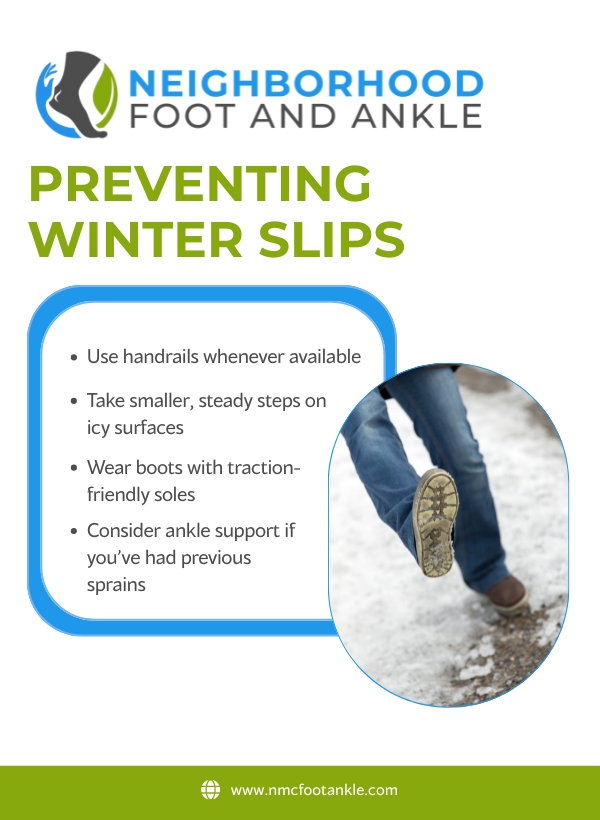
Winter in Dallas can be beautiful—but icy sidewalks, snowy streets, and freezing rain also bring hidden hazards for your feet and ankles. Even a short slip on ice can lead to sprains, fractures, or lingering discomfort that affects your mobility for weeks or months. With a few proactive steps, you can reduce your risk of injury and enjoy the season safely.
Why Winter Increases Foot & Ankle Risks
Cold weather doesn’t just chill your toes—it affects how your body moves. Muscles and ligaments stiffen in lower temperatures, which can make slips and falls more likely. Snow and ice hide uneven surfaces, while wet conditions can reduce the grip of even sturdy footwear.
Common winter injuries include:
- Ankle sprains – overstretched or torn ligaments caused by a misstep on slippery surfaces.
- Fractures – especially in the foot or ankle when falls are severe.
- Achilles tendon strains – sudden slips can strain tendons, causing lingering pain.
- Bruising and soft tissue injuries – sometimes minor but painful, affecting your daily activity.
At NMC Foot & Ankle, Dr. Devaraju and Dr. Pajouh evaluate and treat winter-related foot and ankle injuries, including sprains, fractures, and chronic pain. They offer personalized care with options like custom orthotics, supportive footwear, and physical therapy to help patients recover safely and prevent future problems.
Simple Tips to Stay Safe on Icy Surfaces
Winter weather can make even short walks risky. Icy sidewalks, snow-covered driveways, and slippery entryways are common causes of foot and ankle injuries during the colder months. Taking preventive measures is the most effective way to protect yourself and enjoy the season safely.
Recommendations from NMC Foot & Ankle:
Choose traction-friendly footwear
Boots with rubber soles or textured treads provide better grip on snow and ice. Avoid smooth-soled shoes that can increase the risk of slipping.
Take smaller, steady steps
Short, deliberate steps help maintain balance and reduce the chance of falling on icy surfaces.
Use handrails whenever possible
Railings on stairs, ramps, or entryways offer extra support if you lose your footing.
Consider ankle support
If you’ve had previous sprains, wearing an ankle brace or supportive footwear can help prevent reinjury.
Keep pathways clear
Shovel snow, use ice melt, or sprinkle sand on walkways to create safer surfaces at home or work.
By following these simple precautions, you can significantly reduce your risk of winter foot and ankle injuries. Combining safe habits with awareness of your surroundings ensures that you stay mobile, confident, and pain-free all season long.
When to Seek Professional Care
Even with precautions, accidents happen. Not all foot and ankle injuries are obvious. Early evaluation can prevent complications. Signs that you should see a podiatrist include:
- Persistent pain or swelling after a fall
- Difficulty walking or bearing weight
- Bruising, deformity, or instability in the ankle
- Lingering soreness that doesn’t improve with rest
Early intervention can prevent minor injuries from becoming chronic problems. The professional podiatrists at NMC Foot & Ankle can assess sprains, fractures, or tendon injuries, providing treatment plans that may include custom orthotics, physical therapy, or ankle supports.
Maintaining Foot Health Through Winter
In addition to injury prevention, keeping your feet healthy during the colder months is important. Tips include:
- Keep feet warm and dry – Moisture can make feet cold and increase slipping risk inside boots. Wool or moisture-wicking socks are ideal.
- Stretch and strengthen your ankles – Simple exercises like ankle circles, calf raises, or towel scrunches can improve stability.
- Monitor for skin changes – Dry, cracked skin or fungal infections can worsen in winter, so moisturize and inspect your feet regularly.
Dr. Devaraju and Dr. Pajouh can guide patients through exercises and recommend preventive measures tailored to their foot structure and activity level.
Schedule a Winter Foot & Ankle Evaluation
Winter foot injuries don’t always heal on their own. Pain, swelling, or instability can linger and affect your mobility and daily life. At NMC Foot & Ankle, in Dallas, our team provides comprehensive care for sprains, fractures, and chronic ankle issues.
Whether you’re managing an old injury, experiencing new discomfort, or simply want expert guidance on winter foot care, scheduling an evaluation is the best first step.
Stay Safe, Walk Confidently
Winter doesn’t have to mean injury season. By wearing the right shoes, taking careful steps, and seeking professional care when needed, you can protect your feet and ankles all season long.
Dr. Pajouh and Dr. Devaraju are dedicated to helping Dallas patients maintain mobility, prevent reinjury, and enjoy healthy, pain-free feet—even in icy conditions. Don’t wait until a slip turns serious.