
 Connect With Our Team
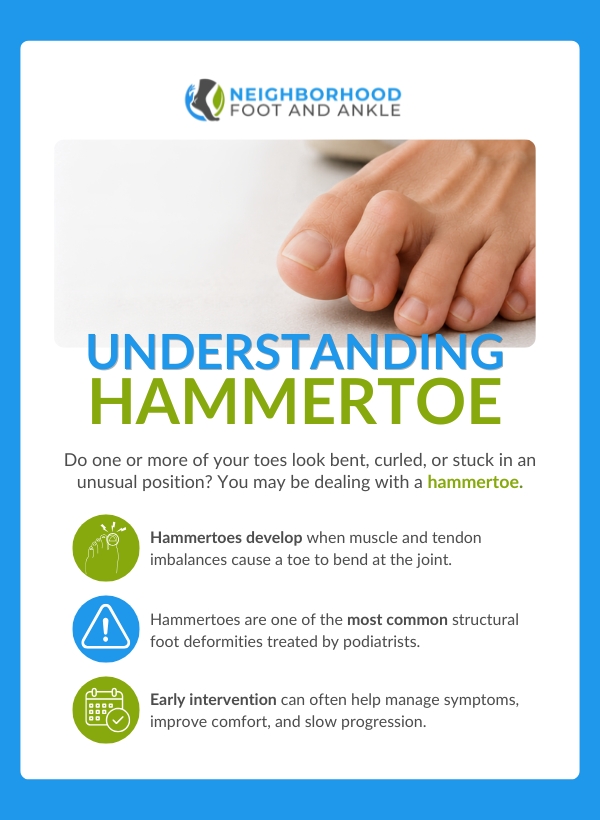
Understanding Hammertoes: Why Toes Begin to Bend
A toe that looks bent, curled, or stuck in an unusual position may be more than a cosmetic concern. It could be a hammertoe, a common structural condition that affects the middle joint of the toe.
Hammertoes often develop gradually. At first, the toe may remain flexible and straighten when you move it with your hand. As the condition progresses, the joint can become increasingly stiff, making it harder to wear certain shoes or walk comfortably.
At Neighborhood Foot & Ankle in Dallas, licensed podiatrists, Dr. Jonathan Pajouh and Dr. Veena Devaraju evaluates hammertoes and other toe deformities to determine what is contributing to the change. Understanding the cause is important because hammertoes do not develop the same way for every patient.
What Causes Hammertoe?
A hammertoe develops when the muscles, tendons, and ligaments responsible for keeping the toe straight become imbalanced. This imbalance pulls the toe into a bent position at the joint.
Shoes that are too tight, narrow, or pointed can contribute by placing the toes in a cramped position. High heels may also push weight toward the front of the foot, increasing pressure around the toes. However, footwear is not always the only cause.
Other factors may include:
• A naturally high arch or flatfoot structure
• Previous injuries involving the toe or foot
• Arthritis affecting the toe joints
• Muscle weakness or tendon imbalance
• A second toe that is longer than the big toe
Genetics can also influence the structure of the feet and toes. Some patients are more likely to develop hammertoes because of inherited foot mechanics or the natural shape of their toes.
Hammertoes most commonly affect the second, third, or fourth toes. The toe bends at the middle joint, which can cause the top of the joint to rub against the inside of a shoe. Over time, repeated friction and pressure may lead to redness, corns, calluses, or tender areas.
“Many patients first notice that one toe looks different or that a certain pair of shoes suddenly feels uncomfortable,” Dr. Pajouh explains. “It may not seem like a big deal at first, but treating the pressure early can make everyday walking and shoe wear more comfortable.”
Symptoms can vary depending on the severity of the condition. Some people experience only mild irritation, while others develop persistent pain, stiffness, swelling, or difficulty moving the affected toe.
The bent position may also change how pressure is distributed across the ball of the foot. This can contribute to discomfort beneath the toes, callus formation, or a feeling that the toe is rubbing or catching inside the shoe.
How Are Hammertoes Treated?
Treatment depends on whether the hammertoe is still flexible, how much discomfort it causes, and whether it is affecting walking or footwear choices. Early hammertoes can often be managed without surgery.
A podiatric evaluation may include examining the position and flexibility of the toe, reviewing footwear, and assessing the overall structure of the foot. X-rays may sometimes be recommended to evaluate the joints and determine whether arthritis or another structural issue is present.
Conservative treatment options may include:
• Wearing shoes with a wider, deeper toe box
• Using padding to reduce rubbing over the joint
• Stretching and strengthening the toes
• Using custom orthotics to improve pressure distribution
• Treating painful corns or calluses safely
Patients should avoid cutting or shaving corns at home. Removing too much skin can lead to irritation, bleeding, or infection, especially for people with diabetes, circulation problems, or reduced sensation in the feet.
Toe exercises may help maintain flexibility when the hammertoe is still movable. Your podiatrist may recommend gently stretching the toe, picking up small objects with the toes, or performing exercises that strengthen the smaller muscles of the foot.
When Is Surgery Considered for a Hammertoe?
Conservative treatment may reduce pressure, improve comfort, and help maintain flexibility, but it may not completely straighten a toe that has already become rigid. When the joint is fixed in place, symptoms are severe, or nonsurgical treatments no longer provide enough relief, surgery may be discussed.
Hammertoe surgery is planned around the specific deformity. The procedure may involve releasing or balancing tendons, removing a small portion of bone, or realigning the joint. Not every hammertoe requires surgery, and a podiatric evaluation can help determine which treatment options are appropriate.
Do Not Let a Hammertoe Limit Your Comfort
Ignoring a painful hammertoe can allow stiffness, rubbing, and skin irritation to worsen. Patients may begin avoiding certain activities or changing the way they walk to reduce pressure on the toe. These adjustments can sometimes create discomfort in other areas of the foot.
If one or more of your toes are becoming bent, painful, or difficult to fit into shoes, schedule an evaluation with Neighborhood Foot & Ankle in Dallas, Texas. Dr. Jonathan Pajouh and Dr. Veena Devaraju can examine the toe, identify contributing factors, and recommend a treatment plan focused on comfort, mobility, and preventing further irritation.
Schedule an Appointment Now
Published by Neighborhood Foot and Ankle | Dr. Pajouh and Dr. Devaraju | Serving Dallas and surrounding DFW | 972-726-6464
Educational only. Not medical advice.