
 Connect With Our Team
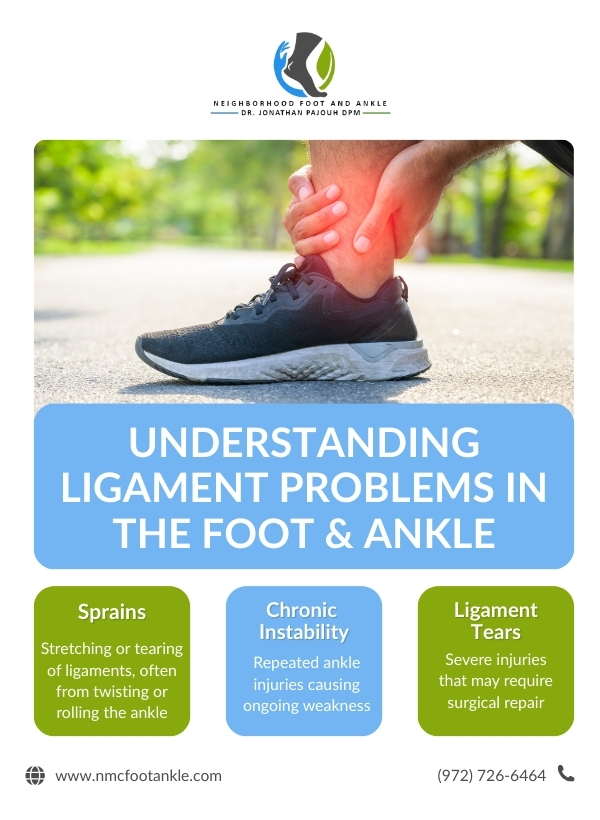
Ligaments are the unsung heroes of the foot and ankle, connecting bones and providing stability while allowing joints to move smoothly. They absorb impact with every step, protecting the foot and ankle during walking, running, or even standing.
When ligaments are stretched, torn, or weakened, pain, swelling, and instability can make everyday activities challenging. Repeated injuries or untreated problems may lead to chronic instability, stiffness, or long-term discomfort. Understanding how ligaments function and recognizing injuries early is key to maintaining foot and ankle health and staying active with confidence.
What Are Ligaments and Why Are They Important?
Ligaments are tough, flexible bands of connective tissue that connect bones and stabilize joints. In the foot and ankle, they support complex joints that bear your full body weight while allowing a wide range of movement. Acting like natural straps, ligaments prevent excessive motion that could cause injury and help absorb the stresses of walking, running, or standing.
Healthy ligaments are essential for smooth, coordinated movement, balance, and reducing strain on surrounding muscles. When ligaments are damaged or weakened, they can cause pain, swelling, instability, or a sensation that the ankle might “give out,” making everyday activities more difficult.
Because ligaments have limited blood flow, healing can be slow. This makes careful evaluation and targeted treatment crucial for proper recovery, whether the injury is a mild sprain or a more severe tear.
At NMC Foot & Ankle in Dallas, Dr. Jonathan Pajouh, DPM, specializes in diagnosing and treating ligament problems. Through physical exams, imaging, and personalized care plans, he helps patients restore mobility, reduce pain, and regain confidence. Treatments can include therapy, bracing, or surgical repair when needed, ensuring long-term stability and lasting results.
Common Ligament Problems
The foot and ankle rely on a complex network of ligaments to maintain stability and support movement. When these ligaments are injured or weakened, it can affect mobility, cause pain, and increase the risk of repeated injuries. The most common ligament problems include:
- Sprains – Stretching or partial tearing of a ligament, often caused by twisting or rolling the ankle.
- Chronic Instability – Repeated ankle injuries that leave the ligaments weak, causing ongoing “giving way.”
- Ligament Tears – Severe injuries where ligaments are completely torn, sometimes requiring surgical repair.
In all cases, Dr. Jonathan Pajouh, DPM, can assess the severity of ligament injuries and recommend the most appropriate treatment. Whether through conservative care, therapy, bracing, or surgical options, he helps patients regain stability, reduce pain, and return to their normal activities safely.
Diagnosis and Treatment
At NMC Foot & Ankle, ligament injuries are carefully diagnosed through a combination of thorough physical examinations and imaging tests, such as X-rays or MRIs, to determine the extent of the damage. Understanding the severity and type of injury is essential for creating an effective, personalized treatment plan.
Treatment options vary depending on the injury and patient needs, and may include:
-
Conservative Care: This approach includes rest, ice, compression, elevation (R.I.C.E.), immobilization, and physical therapy to strengthen surrounding muscles and restore joint function. It is often effective for mild sprains and minor ligament injuries.
-
Bracing or Support: Special ankle braces or custom orthotics can stabilize the joint, reduce pain, and prevent further injury, particularly in cases of chronic instability.
-
Surgical Repair: For severe ligament tears or injuries that do not respond to conservative treatment, surgery may be recommended to repair or reconstruct damaged ligaments, helping restore full function and prevent long-term complications.
By identifying ligament injuries early and following a structured treatment plan, patients can regain mobility, reduce pain, and return to daily activities safely. Early care not only promotes healing but also helps prevent repeated injuries and chronic joint instability.
Preventing Ligament Injuries
While not all injuries can be avoided, some strategies help reduce risk:
- Wear supportive, well-fitting shoes suitable for your activity.
- Strengthen ankle muscles with targeted exercises.
- Warm up and stretch before physical activity.
Even with precautions, injuries can occur. Prompt evaluation by a foot and ankle specialist like Dr. Jonathan Pajouh, DPM, ensures proper care and faster recovery.
When to See a Specialist
Persistent ankle pain, swelling, instability, or difficulty walking after an injury should be evaluated promptly. Early diagnosis and treatment prevent chronic issues and help you get back to normal activity.
At NMC Foot & Ankle in Dallas, Dr. Jonathan Pajouh, DPM provides expert care for all ligament injuries, from minor sprains to complex tears. With personalized treatment plans and compassionate guidance, patients regain confidence, mobility, and quality of life.