
 Connect With Our Team
Ankle arthritis doesn’t usually announce itself with sudden, severe pain. For many adults, it begins quietly—small changes that are easy to dismiss as aging, overuse, or a minor strain. But those early signals matter. Recognizing ankle arthritis in its early stages can help slow joint damage, reduce discomfort, and preserve mobility for years to come.
At NMC Foot & Ankle in Dallas, Texas, patients often arrive wishing they had addressed their symptoms sooner. Early care can make a meaningful difference in long-term joint health.
Subtle Symptoms That Signal Early Ankle Arthritis
Early ankle arthritis often shows up as discomfort rather than sharp pain. Because symptoms can come and go, many people adapt without realizing their joint is changing.
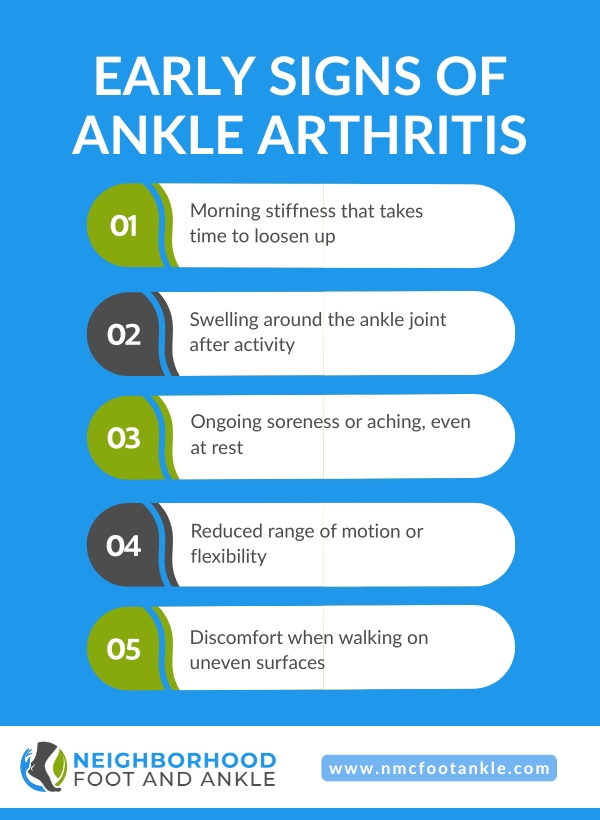
Common early signs include:
- Morning stiffness that takes time to loosen up
- Swelling around the ankle joint after walking or standing
- Ongoing soreness or aching, even when resting
- Reduced flexibility or range of motion
- Discomfort on uneven surfaces, like gravel or stairs
These symptoms may seem minor, but together they often indicate early cartilage wear or inflammation within the ankle joint.
Dr. Pajouh says “A lot of patients tell me, ‘It’s not that bad yet,’ but those small aches and stiffness are often your ankle asking for attention. Catching it early gives us more options to protect your joint and keep you moving comfortably.”
Why Is the Ankle So Vulnerable?
Unlike the knee or hip, ankle arthritis is frequently linked to previous injuries and causes ankle vulnerability. Old sprains, fractures, or repeated stress can change how the joint bears weight. Over time, uneven pressure leads to cartilage breakdown and joint irritation.
Daily habits can also contribute. Long hours on your feet, high-impact exercise, unsupportive footwear, or altered walking mechanics can all accelerate wear. This is why ankle arthritis can appear even in active adults who otherwise feel healthy.
The Cost of Ignoring Early Symptoms
When ankle arthritis goes untreated, joint changes tend to progress. Cartilage continues to thin, inflammation becomes more persistent, and pain can increase with everyday movement. As stiffness worsens, people often limit activity—leading to muscle weakness, balance issues, and reduced quality of life.
Early intervention focuses on preserving joint function, not just managing pain. Addressing arthritis sooner can help delay more aggressive treatments later on.
How Early Evaluation Makes a Difference
A professional evaluation looks beyond symptoms alone. At NMC Foot & Ankle, podiatrists assess alignment, gait, joint mobility, and imaging when needed to understand what’s happening inside the ankle.
Dr. Jonathan Pajouh and Dr. Devaraju work closely with patients to identify early joint changes and develop care plans that fit their lifestyle and activity level. The goal is to reduce stress on the joint while maintaining movement and independence.
What Are Conservative Treatments That Support Joint Health?
Conservative, non-surgical approaches designed to protect the joint and relieve symptoms may include:
- Custom orthotics or bracing to improve alignment and reduce joint stress
- Supportive footwear recommendations for daily activities
- Targeted physical therapy to improve strength and flexibility
- Activity modifications that protect the joint without stopping movement
- Anti-inflammatory strategies to manage swelling and discomfort
These approaches aim to keep patients active while slowing arthritis progression.
Staying Active Without Making It Worse
One common concern is whether movement will worsen ankle arthritis. In most cases, the opposite is true. Appropriate, low-impact activity helps nourish cartilage, maintain strength, and support balance.
Walking on even surfaces, cycling, swimming, and guided strengthening exercises are often encouraged. The key is choosing activities that support joint health rather than overload it—a balance your podiatrist can help you find.
When to Schedule an Evaluation
If ankle stiffness, swelling, or discomfort is becoming part of your routine, it’s time for an expert opinion. Symptoms that linger, worsen, or interfere with walking should never be ignored. Early evaluation provides clarity—and options—before joint damage becomes more advanced.
Dr. Devaraju reminds you “If your ankle feels stiff every morning or sore after simple activities, that’s not something you should just push through. Getting it checked now can help prevent bigger problems down the road.”
Protect Your Mobility
Ankle arthritis doesn’t have to define your future. With early care, many patients maintain mobility, comfort, and confidence in their movement. Book an appointment with NMC Foot & Ankle in Dallas, Texas to have your symptoms evaluated and create a personalized plan for long-term joint health.