
 Connect With Our Team
What Causes Metatarsalgia and Ball of Foot Pain?
Metatarsalgia is pain and inflammation in the ball of the foot, often felt under the metatarsal bones in the forefoot. These bones help support push-off when walking, running, or standing. When too much pressure builds in this area, the soft tissues can become irritated and painful.
For some people, metatarsalgia feels sharp, aching, or burning. Others describe it as feeling like they are walking on a pebble or bruise. Symptoms may worsen with activity, long periods on the feet, certain shoes, or walking barefoot on hard floors.
At Neighborhood Foot and Ankle in Dallas, Dr. Pajouh and Dr. Devaraju help patients identify the cause of ball of foot pain and choose treatment options that support better comfort and movement.
Why Does Metatarsalgia Happen?
Metatarsalgia happens when the front of the foot absorbs more pressure than it can comfortably handle. That pressure may come from activity, footwear, foot structure, aging, or a combination of factors.
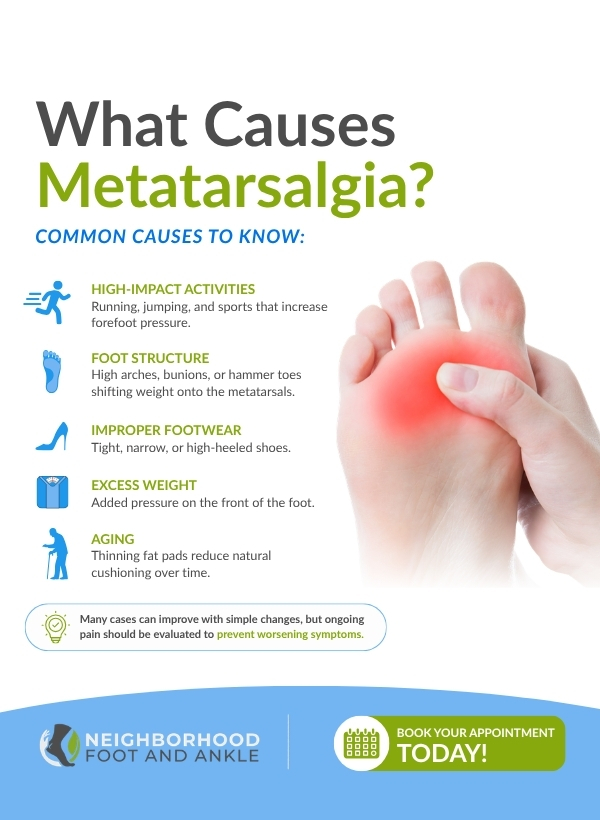
Common causes may include:
- High-impact activity such as running, jumping, sports, or intense workouts
- Foot structure concerns such as high arches, bunions, hammertoes, or uneven weight distribution
- Shoes that are to tight, narrow, unsupportive, worn-out, or high-heeled
- Added body weight that increases pressure on the forefoot
- Thinning fat pads that reduce cushioning under the ball of the foot
Dr. Pajouh explains: “When someone feels pain in the ball of the foot, I want to know what is putting extra stress there. It may be shoes, activity, foot shape, or something else entirely. Once we find the reason, treatment becomes much more targeted.”
Metatarsalgia may also happen with other foot problems. Bunions can shift weight toward the smaller toes. Hammertoes can change how the toes meet the ground. High arches may place more force on the heel and forefoot instead of spreading weight evenly across the foot.
Shoes can also make symptoms better or worse. Narrow shoes may squeeze the toes and increase pressure across the front of the foot. High heels shift body weight forward. Even athletic shoes can contribute to pain if they are worn out, too flexible, or not suited for the activity.
When Should Ball of Foot Pain Be Checked?
Ball of foot pain should be checked when it continues, worsens, or starts affecting how you walk. Occasional soreness after a long day may improve with rest and shoe changes, but ongoing pain should not be ignored.
It may be time to schedule an evaluation if pain:
- Pain continues despite rest
- Symptoms worsen with activity
- Burning, tingling, swelling, or numbness develops
- It feels like stepping on a bruise or pebble
- Pain changes how you walk
A proper diagnosis matters because not every case of ball of foot pain is metatarsalgia. Similar symptoms can come from stress fractures, Morton’s neuroma, arthritis, tendon irritation, capsulitis, plantar plate injuries, or nerve-related concerns. Treating the wrong problem can delay healing.
During an evaluation, a podiatrist may review your foot structure, gait, shoes, activity level, and areas of tenderness. Imaging may be recommended when needed to rule out fractures, joint problems, or other concerns.
For patients in Dallas and nearby Highland Park, early evaluation can help keep small foot problems from becoming bigger movement issues.
Metatarsalgia Treatment and Relief Options
Treatment depends on what is causing the pressure. Many cases improve with conservative care that reduces irritation and supports better weight distribution.
Care may include better footwear, metatarsal pads, custom orthotics, activity changes, stretching, anti-inflammatory support, or adjustments to training routines. Shoes with a wider toe box, better cushioning, and proper arch support may help reduce stress across the ball of the foot.
Custom orthotics may be recommended when foot structure contributes to uneven pressure. These inserts can support alignment, improve weight distribution, and reduce overload in irritated areas. For active patients, treatment may also include guidance on safe return to activity and shoe choices.
The goal is not only to calm pain, but to reduce the reason it keeps coming back. That may mean improving support, correcting pressure patterns, or addressing related concerns such as bunions, hammertoes, or tight calf muscles.
Moving Comfortably Again
Metatarsalgia can make walking, standing, exercising, and wearing regular shoes uncomfortable. The good news is that many cases improve with the right diagnosis and treatment plan.
If ball of foot pain is interfering with your routine, an evaluation at Neighborhood Foot and Ankle can help identify the cause and guide the next step toward relief.
Book Your Foot Exam Today
Published by Neighborhood Foot and Ankle | Dr. Pajouh and Dr. Devaraju | Serving Dallas and surrounding DFW | 972-726-6464.
Educational purposes only. Not medical advice.