
 Connect With Our Team
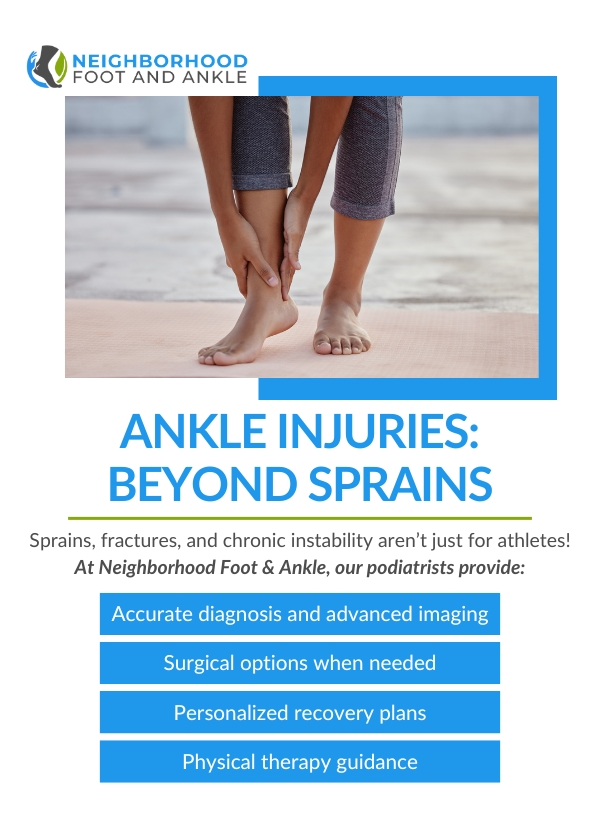
Ankle Injury Treatment and Recovery | Neighborhood Foot and Ankle
Ankle pain doesn’t just affect athletes—it can show up in everyday routines, whether you’re walking, working, or just trying to stay active. In Dallas, many people start looking for answers when that discomfort or instability begins to interfere with normal movement.
At Neighborhood Foot and Ankle, Dr. Pajouh and Dr. Devaraju, licensed podiatrists, take a practical, hands-on approach to figuring out what’s causing the issue and how to fix it. They work with patients to build a recovery plan that actually fits their lifestyle, not just the injury. It’s common to see patients coming in from Irving and Mesquite for a closer look and guidance on getting back to moving with confidence.
What Causes Ankle Injuries?
Ankle injuries typically occur when the joint is forced out of its normal position. This can stretch or tear ligaments, strain surrounding muscles, or even result in fractures depending on the severity.
Common causes include:
- Sudden twisting or rolling of the ankle
- Walking or running on uneven surfaces
- Improper footwear that lacks support
- Weakness or instability from previous injuries
- High-impact activities or rapid changes in direction
Even everyday activities can place stress on the ankle, especially if strength and balance are not well supported.
Why Do Some Ankle Injuries Keep Coming Back?
Recurrent ankle injuries are often linked to incomplete healing or underlying instability. When the ligaments do not fully recover, the joint can remain vulnerable to repeated strain.
Without proper rehabilitation, the ankle may:
- Feel weak or unstable during movement
- Be more prone to rolling or twisting again
- Develop chronic discomfort or swelling
- Affect balance and coordination over time
Addressing both the injury and the contributing factors is essential for reducing the risk of recurrence.
Common Symptoms to Watch For
Ankle injury symptoms can range from mild discomfort to significant pain depending on the severity of the damage.
Signs often include:
- Swelling around the ankle joint
- Pain with movement or weight-bearing
- Bruising or discoloration
- Limited range of motion
- A feeling of instability or “giving out”
These symptoms may improve with rest, but lingering discomfort or instability should be evaluated to prevent long-term issues.
What Are the Most Effective Treatment Options?
Treatment focuses on restoring stability, reducing inflammation, and supporting proper healing. In many cases, conservative, non-surgical care is effective when started early.
Common treatment approaches include:
- Accurate diagnosis and imaging to identify the extent of the injury
- Personalized recovery plans based on activity level and goals
- Physical therapy guidance to rebuild strength and stability
- Bracing or support to protect the joint during healing
These strategies help improve function while reducing the risk of further injury. Consistency with treatment plays a key role in achieving a full recovery.
For more severe injuries or cases that do not respond to conservative care, surgical options may be considered to repair damaged structures and restore stability.
When Should You See a Podiatrist for an Ankle Injury?
Not all ankle injuries require immediate medical attention, but certain symptoms should not be ignored. Early evaluation can help prevent complications and support faster recovery.
A visit may be helpful if:
- Pain persists beyond a few days
- Swelling does not improve with rest
- Walking becomes difficult or painful
- The ankle feels unstable or repeatedly gives out
“Ankle injuries are often underestimated, especially when people try to push through the pain,” says Dr. Devaraju. “Identifying the extent of the injury early allows us to guide recovery in a way that helps prevent ongoing instability.”
Supporting Long-Term Ankle Stability
Recovery does not end once the pain subsides. Strength, balance, and flexibility all play an important role in maintaining ankle health and preventing future injuries.
Ongoing support may include targeted exercises, proper footwear, and activity modifications when needed. These steps help improve overall joint function and reduce unnecessary strain during daily movement.
Getting Back to Movement with Confidence
Ankle injuries can interfere with even the simplest activities, but early care and the right treatment plan can make a significant difference. Addressing symptoms promptly helps restore stability and reduces the risk of long-term complications.
If ankle pain or instability is affecting your routine, a professional evaluation at Neighborhood Foot and Ankle in Dallas, serving surrounding DFW, can help you return to movement with greater confidence and support.
Book Your Consultation Online
Educational purposes only. Not medical advice.