
 Connect With Our Team
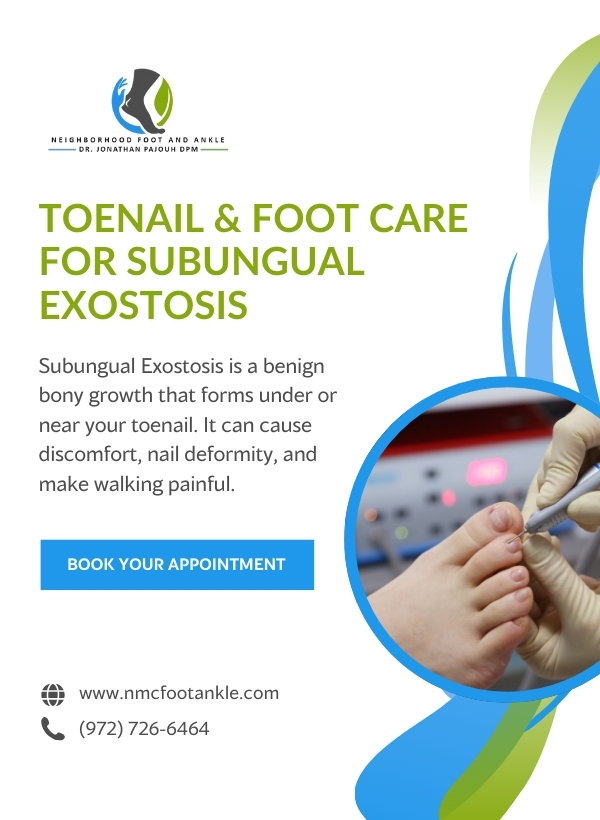
Foot pain and nail problems often bring to mind ingrown toenails or fungal infections. But a persistent bump or nail deformity could signal something less common—Subungual Exostosis. This benign bony growth usually develops under or near the big toenail. While it may start small and painless, it can cause nail changes, irritation, and walking difficulties if left untreated. Early diagnosis and treatment are important to prevent long-term discomfort.
Understanding Subungual Exostosis
Subungual Exostosis is a type of osteochondroma, which is a bone spur or outgrowth that develops from the bone surface. In this case, the spur forms on the distal (end) part of the toe bone, just under the toenail.
As the bone grows upward toward the nail, it can push against the nail bed or the nail itself. This leads to symptoms such as:
-
A firm bump beneath or near the toenail
-
Pain when wearing shoes or walking
-
Redness or swelling around the nail
-
Nail lifting, splitting, or deformity
-
Possible drainage if the skin breaks down over the bump
Because it alters the shape of the nail and causes pain, Subungual Exostosis is sometimes mistaken for an ingrown toenail or even a nail infection. That’s why proper evaluation by a foot specialist, such as Dr. Pajouh at NMC Foot & Ankle in Dallas, is essential.
What Causes Subungual Exostosis?
The exact cause isn’t always clear, but several factors may contribute:
-
Repeated trauma or irritation: Stubbing the toe, wearing tight shoes, or playing sports can stress the area.
-
Chronic infection or inflammation: Long-standing irritation of the nail bed may trigger bone growth.
-
Genetic predisposition: In some cases, there may be a hereditary component.
-
Foot structure and biomechanics: Certain foot shapes or walking patterns may increase pressure on the toes.
Though anyone can develop Subungual Exostosis, it most commonly affects adolescents and young adults, and it typically appears on the big toe.
When to See a Specialist
If you notice a hard bump under your toenail, especially if it's growing or becoming painful, it’s best to get it evaluated by a podiatrist. Early treatment can reduce the risk of complications like nail damage or chronic pain.
Dr. Jonathan Pajouh, DPM at NMC Foot & Ankle in Dallas, specializes in diagnosing and treating complex foot conditions, including Subungual Exostosis. Using advanced imaging tools and a careful physical exam, Dr. Pajouh can determine whether the bump is a bone spur, cyst, or another type of lesion — and recommend the most effective course of treatment.
How Is Subungual Exostosis Treated?
Treatment typically depends on the severity of the symptoms and the size of the bone growth. In some mild cases, observation and footwear modification may be enough. However, many patients eventually need minor surgical intervention.
Surgical treatment involves removing the bony growth and repairing any affected nail structures. This outpatient procedure is usually done under local anesthesia, and recovery time is relatively short — most patients can return to normal activities within a few weeks.
Dr. Jonathan Pajouh performs this procedure with precision and care, ensuring the best possible cosmetic and functional outcome. His approach at NMC Foot & Ankle in Dallas is focused on preserving nail health while eliminating pain and preventing recurrence.
Preventing Future Issues
While Subungual Exostosis can’t always be prevented, there are steps you can take to reduce your risk:
-
Wear properly fitting shoes with enough room in the toe box
-
Avoid repetitive trauma to the toes, especially in sports or high-impact activities
-
Address nail issues early, including ingrown nails or infections
-
See a podiatrist regularly if you’re prone to foot problems
Early intervention is the key to minimizing discomfort and preserving your foot and nail health.
Next Steps
Don’t let a painful toenail bump disrupt your daily life. Early treatment is key to relieving discomfort and preventing further complications. Dr. Jonathan Pajouh at NMC Foot & Ankle in Dallas offers expert care tailored to your needs, helping you get back on your feet comfortably and confidently.