
 Connect With Our Team
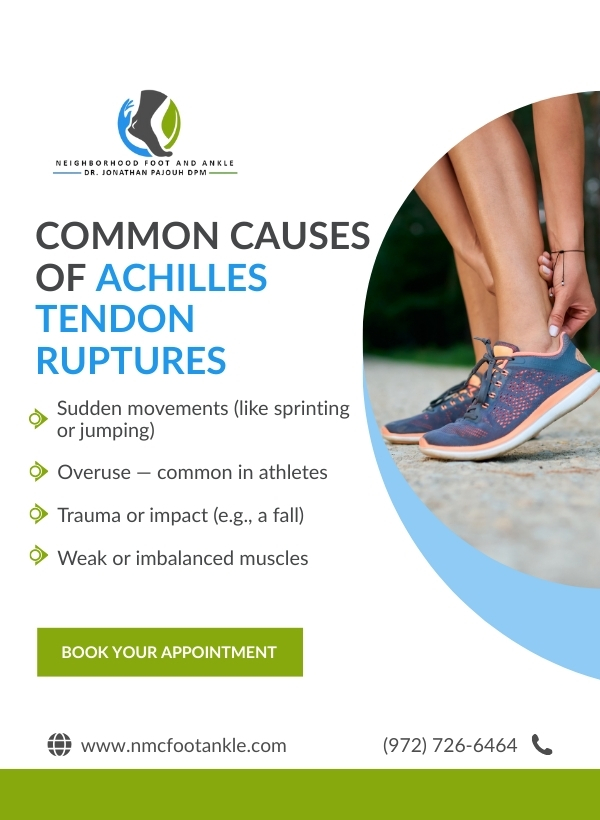
An Achilles tendon rupture can be a sudden, painful injury that affects the back of your ankle. The Achilles tendon, connecting the calf muscles to the heel bone, is essential for movements like walking, running, and jumping. When it ruptures, it can significantly limit mobility and cause severe discomfort. Understanding the common causes behind Achilles tendon ruptures can help you take preventive measures and recognize symptoms early on.
What Causes an Achilles Tendon Rupture?
Achilles tendon ruptures can happen unexpectedly due to a variety of factors. Some of the most common causes include:
-
Sudden Movements: High-impact activities like sprinting, jumping, or sudden pivots can cause the tendon to stretch beyond its capacity, leading to a rupture. These quick, forceful movements are often seen in sports like basketball, soccer, or tennis.
-
Overuse and Repetitive Strain: Repetitive activities, such as long-distance running, frequent jumping, or heavy training, can gradually weaken the tendon. Over time, the constant strain can lead to small tears, making the tendon more vulnerable to a complete rupture.
-
Trauma or Impact: A direct blow to the ankle, such as from a fall or accident, can overstretch the tendon and result in a rupture. These injuries often occur when the foot is forced into an unnatural position during impact.
-
Weak or Imbalanced Muscles: Weak calf muscles or tightness in the Achilles tendon can increase strain on the tendon, making it more likely to tear during physical activity. Muscular imbalances or improper training may contribute to the injury.
At NMC Foot & Ankle in Dallas, Dr. Jonathan Pajouh, DPM, is an expert in diagnosing and treating Achilles tendon ruptures. With his extensive experience in managing tendon injuries, he can provide a comprehensive treatment plan tailored to your specific needs, whether conservative or surgical, to ensure optimal recovery and long-term mobility.
Symptoms of Achilles Tendon Ruptures
If you experience an Achilles tendon rupture, certain symptoms will be immediately noticeable. These include:
-
Sharp, Sudden Pain: A sharp, intense pain at the back of your ankle, often described as a popping sensation, is a hallmark of an Achilles tendon rupture.
-
Swelling and Bruising: The ankle will likely swell rapidly, and bruising may appear around the injury site.
-
Difficulty Walking or Standing on Tiptoes: Since the Achilles tendon is critical for walking and standing on your toes, a rupture will make these movements difficult or impossible.
-
Popping or Snapping Sound: Many people report hearing or feeling a "pop" at the time of the injury, which indicates that the tendon has torn.
If you experience sharp pain, swelling, bruising, or difficulty walking, contact NMC Foot & Ankle immediately. Early treatment is essential for a faster recovery and to prevent further damage.
How Achilles Tendon Ruptures Are Treated
Treating an Achilles tendon rupture effectively requires the right combination of rest, rehabilitation, and, in some cases, surgery. The treatment approach largely depends on the severity of the rupture.
-
Conservative Treatments: For minor ruptures or partial tears, rest, ice, compression, and elevation (R.I.C.E.) can help reduce swelling and manage pain. Medications like NSAIDs may also be prescribed to alleviate inflammation and discomfort. Physical therapy is often recommended to improve flexibility and strengthen the muscles around the tendon.
-
Surgical Options: In more severe cases, where the tendon has fully ruptured, surgery may be necessary to reattach the torn ends of the tendon. There are different surgical methods, and a doctor will help you determine the best approach based on the extent of the injury.
-
Rehabilitation: Whether you have surgery or not, rehabilitation through physical therapy is crucial for recovery. Rehab exercises will help restore strength, range of motion, and flexibility, which can reduce the risk of re-injury and help you get back to normal activities.
When to Seek Medical Help
If you suspect you've ruptured your Achilles tendon, contact Dr. Pajouh at NMC Foot & Ankle as soon as possible. Delaying treatment can lead to complications and longer recovery times. Some signs that you may need professional care include:
-
Sudden, sharp pain in the back of your ankle
-
Difficulty walking or standing on tiptoes
-
Swelling and bruising in the ankle area
-
A popping or snapping sensation at the time of injury
Conclusion
Achilles tendon ruptures can occur unexpectedly, leading to significant pain and mobility issues. Whether caused by sudden movements, overuse, trauma, or muscle imbalances, understanding the risk factors is key to prevention. Early recognition of symptoms and seeking prompt treatment can speed up recovery and prevent further damage.
Where to go from here
If you're dealing with an Achilles tendon injury, it's important not to wait for the problem to worsen. Early intervention can help you recover faster and reduce the risk of complications. Schedule an appointment with Dr. Pajough today to begin your recovery journey and get back to doing what you love. Contact us at (972) 726-6464 or book your appointment, at NMC Foot & Ankle in Dallas, online below.