
 Connect With Our Team
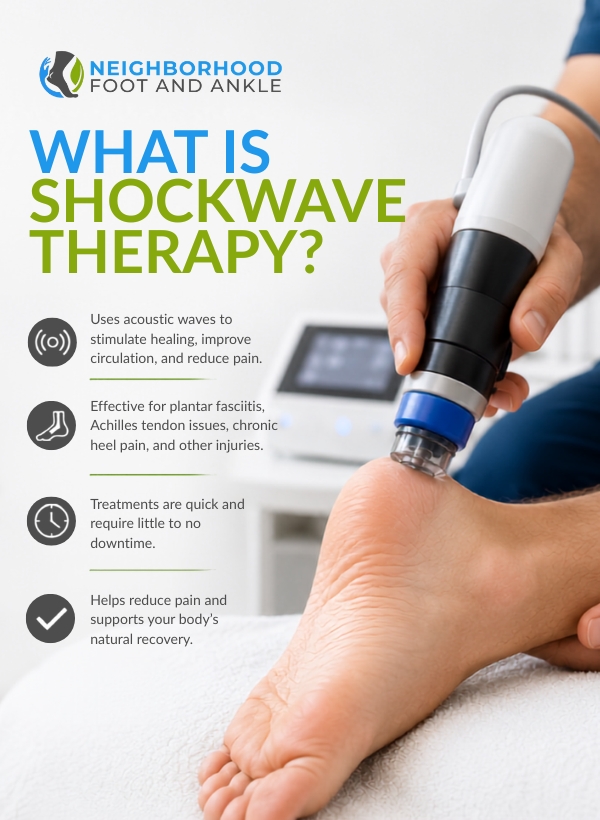
Shockwave Therapy for Chronic Foot and Heel Pain
Chronic foot pain can wear you down. When every step hurts, it becomes harder to stay active, exercise, work comfortably, or keep up with normal routines. Rest, ice, stretching, and supportive shoes may help, but some conditions continue even after weeks or months of conservative care.
Shockwave therapy is a non-surgical treatment that may be considered when stubborn heel, tendon, or soft-tissue pain is not improving as expected. At Neighborhood Foot and Ankle in Dallas, Dr. Jonathan Pajouh and Dr. Veena Devaraju evaluate the source of the pain before determining whether this treatment belongs in a patient’s care plan.
What Is Shockwave Therapy?
Shockwave therapy uses targeted acoustic energy that is delivered through the skin to the painful area. Depending on the equipment used, the treatment may involve focused shockwaves or radial pressure waves. A handheld applicator is placed over the treatment area while controlled pulses are directed into the affected tissue.
The goal is to encourage the body’s natural healing response in tissue that has remained irritated or slow to recover. Shockwave treatment may help stimulate blood flow, release growth factors, reduce pain, and support the repair process. It does not involve an incision, and patients can usually leave the office after the session.
Dr. Pajouh explains, “We often see patients who have already changed shoes, stretched, rested, and tried to manage the pain on their own. When it keeps returning, shockwave therapy may give us another non invasive way to treat the irritated tissue.”
Conditions Commonly Treated
Shockwave therapy is often associated with plantar fasciitis, especially when heel pain has become chronic. The plantar fascia is the band of tissue that runs along the bottom of the foot and connects the heel to the toes. Repeated strain can irritate this tissue and cause sharp pain, particularly during the first few steps after rest.
It may also be considered for certain Achilles tendon problems and other lingering soft-tissue injuries. The treatment is not appropriate for every type of foot pain, so an accurate diagnosis should come first.
Conditions that may be evaluated for shockwave therapy include:
• Chronic plantar fasciitis
• Persistent heel pain
• Achilles tendinopathy
• Painful soft-tissue overuse injuries
• Certain areas of stubborn tendon irritation
Research has shown promising results for plantar fasciitis and some tendon conditions, although individual outcomes can vary. Treatment settings, the type of device, the location of the injury, and how long the problem has been present may all affect the response.
What Happens During Treatment?
Before treatment begins, the painful area is identified through an exam. Gel is usually applied to the skin, and the applicator is moved over the targeted tissue while acoustic pulses are delivered.
Patients may feel tapping, pulsing, or pressure during the session. The intensity can often be adjusted based on the area being treated and the patient’s comfort. Sessions are generally brief, although the exact treatment time and number of visits depend on the condition and the protocol being used.
Benefits patients may appreciate include:
• No surgical incision
• Little to no interruption of normal routines
• Short in-office treatment sessions
• No lengthy surgical recovery period
• The ability to combine treatment with stretching, orthotics, or therapy
Some soreness, tenderness, or mild redness may occur afterward. These effects are usually temporary. Research comparing shockwave therapy with other nonsurgical options has found that local discomfort and slight redness are among the more commonly reported side effects.
Healing is not always immediate. Some patients notice gradual improvement as the tissue responds over the following weeks. The treatment is intended to support healing rather than simply numb the painful area.
A Complete Treatment Plan
Shockwave therapy is generally not used by itself. It may be combined with stretching, activity changes, supportive footwear, physical therapy, taping, or custom orthotics.
For plantar fasciitis, continued calf and plantar fascia stretching may help reduce tension along the bottom of the foot. Orthotics may improve support and redistribute pressure, while footwear changes can reduce repeated strain during daily activity.
For Achilles problems, treatment may also include temporary activity modification and a structured strengthening program. The goal is to address both the irritated tissue and the movement or pressure patterns that contributed to the condition.
Could Shockwave Therapy Be Right for You?
Shockwave therapy may be considered when pain has lasted for several months and has not responded well enough to appropriate conservative treatment. It may also appeal to patients who want to explore non-surgical care before considering injections or surgery.
However, not all heel or ankle pain is caused by plantar fasciitis or tendon irritation. Stress fractures, nerve problems, arthritis, heel pad injuries, and other conditions can cause similar symptoms. A podiatric exam helps determine whether shockwave therapy is suitable or whether another treatment would be more appropriate.
Schedule a Foot Pain Evaluation in Dallas
Pain that keeps returning or limits your ability to walk deserves a closer look. Neighborhood Foot and Ankle provides evaluations for chronic heel, plantar fascia, and Achilles pain for patients in Dallas, Garland, and surrounding DFW communities.
Contact Neighborhood Foot and Ankle at 972-726-6464 or visit https://www.nmcfootankle.com/ to schedule an appointment and learn whether shockwave therapy may be part of your treatment plan.
Published by Neighborhood Foot and Ankle | Dr. Pajouh and Dr. Devaraju | Serving Dallas and surrounding DFW | 972-726-6464.
Educational purposes only. Not medical advice.