
 Connect With Our Team
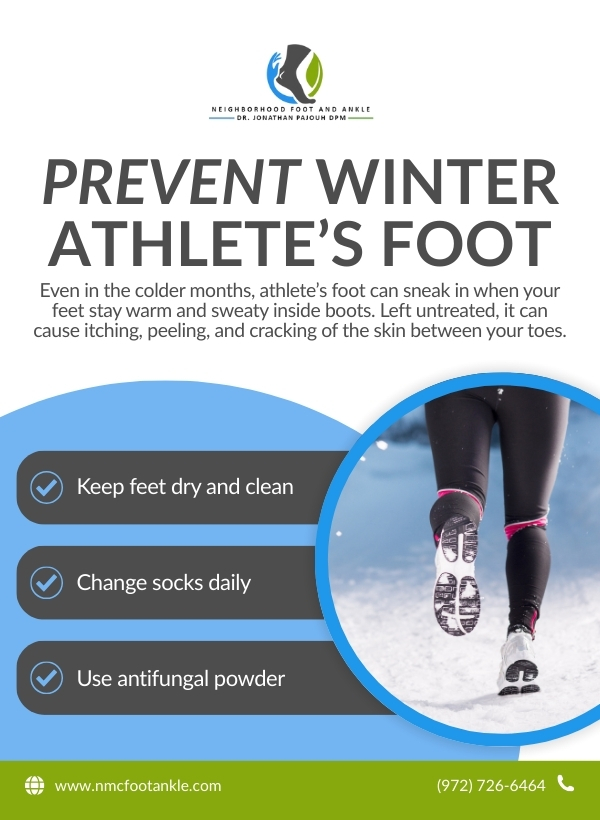
When winter arrives, we often bundle up in cozy boots and warm socks to keep our feet comfortable. While this keeps your toes toasty, it can also create the perfect environment for athlete’s foot, a common fungal infection that thrives in warm, moist conditions. Even in the colder months, athlete’s foot can sneak in, causing itching, peeling, and cracking between your toes if left untreated. Understanding how to prevent and manage this condition is essential for maintaining healthy feet during the winter season.
What is Athlete’s Foot?
Athlete’s foot, medically known as tinea pedis, is a fungal infection that affects the skin on the feet, particularly between the toes. It can spread easily through direct contact with infected surfaces, such as locker room floors, gym showers, or even shared socks and shoes. Symptoms include:
- Itching, burning, or stinging sensations
- Red, scaly, or peeling skin
- Cracks or fissures between toes
- Unpleasant odor in some cases
While it is common among athletes and those who wear closed shoes for long periods, anyone can develop athlete’s foot—especially during the winter when boots trap heat and moisture around the feet.
Why Winter Increases Risk
Cold weather encourages many of us to wear insulated footwear that keeps feet warm but also creates a humid environment inside boots. Sweat can accumulate, and the lack of ventilation allows fungi to thrive. Unlike summer, when open-toed shoes let feet breathe, winter footwear often keeps feet enclosed for hours at a time, which can trigger or worsen fungal infections.
At NMC Foot & Ankle in Dallas, Texas, Dr. Jonathan Pajouh, DPM, and Dr. Devaraju, DPM, provide expert diagnosis, treatment, and guidance on preventive care to keep your feet healthy and comfortable all season long.
Tips to Prevent Winter Athlete’s Foot
Preventing athlete’s foot during the winter is easier than treating it once it develops. Here are practical tips to keep your feet healthy and fungus-free:
- Keep Feet Dry and Clean: Wash your feet daily with soap and water, and dry thoroughly—especially between your toes.
- Change Socks Regularly: Swap out socks at least once a day, or more often if they become damp from sweat or snow.
- Choose Breathable Footwear: Whenever possible, wear shoes made of materials that allow airflow to reduce moisture buildup.
- Use Antifungal Products: If you are prone to infections, applying antifungal powder or spray can help prevent fungal growth.
- Rotate Shoes: Avoid wearing the same pair every day. Allowing shoes to dry completely between uses limits the chance of fungal proliferation.
When to Seek Professional Care
Sometimes, despite your best efforts, athlete’s foot can persist or worsen. If over-the-counter treatments fail or the infection spreads, it’s important to seek professional care. Our expert podiatrists at NMC Foot & Ankle in Dallas frequently treat stubborn cases of athlete’s foot and can recommend individualized preventive strategies for long-term relief.
Professional care is particularly important if you notice:
- Severe itching or burning
- Extensive peeling or cracking of the skin
- Signs of bacterial infection, such as redness, swelling, or pus
- Chronic or recurring athlete’s foot
Treatment Options
At NMC Foot & Ankle, treatment plans are tailored to the severity of the infection and your personal health needs. Options may include:
- Prescription-strength antifungal creams or ointments
- Oral antifungal medications for more severe infections
- Guidance on foot hygiene and moisture control to prevent recurrence
Early intervention can not only relieve discomfort but also prevent complications, especially for those with diabetes or weakened immune systems, where foot infections can become serious.
Maintaining Healthy Feet Year-Round
Preventing athlete’s foot isn’t just about treating symptoms—it’s about adopting habits that promote overall foot health:
- Regularly inspect your feet for changes in skin, color, or odor
- Keep toenails trimmed and clean to reduce fungal hiding spots
- Wear clean, moisture-wicking socks and properly fitted shoes
- Avoid walking barefoot in communal areas, like gyms or pools
By staying vigilant, you can enjoy the winter months without worrying about fungal infections disrupting your comfort or mobility.
Your Winter Foot Care Partners
Whether it’s prevention, treatment, or ongoing foot care, Dr. Devaraju, DPM and Dr. Pajouh, DPM, at NMC Foot & Ankle in Dallas are here to help. With expert care and personalized recommendations, they ensure your feet stay healthy and comfortable, no matter the season.