
 Connect With Our Team
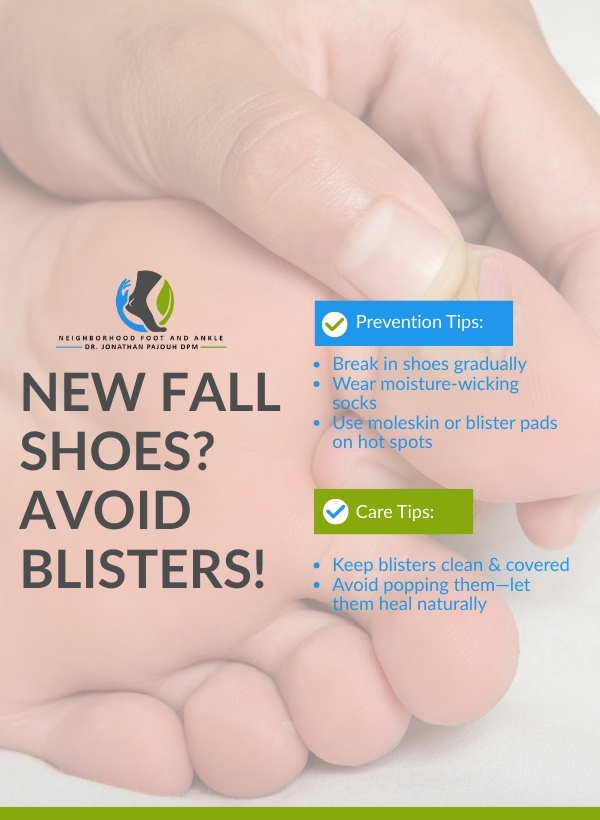
Fall is the season for cozy boots, stylish closed-toe shoes, and all the charm that comes with cooler weather. But as you pull out your favorite footwear or shop for the latest styles, one common and painful problem can quickly put a damper on your autumn adventures: blisters.
Blisters are a frequent complaint when breaking in new shoes, especially boots and other fall footwear. These small, fluid-filled sacs can cause discomfort and sometimes even lead to infections if not properly managed. Fortunately, with a few simple prevention and care tips, you can enjoy the season pain-free and step confidently into every pair.
In this blog, Dr. Jonathan Pajouh, DPM, a trusted podiatrist at NMC Foot & Ankle in Dallas, shares expert advice on how to avoid blisters and care for them if they do appear.
Why Do Blisters Form?
Blisters develop due to friction and pressure on the skin. When your feet rub against the inside of a shoe, especially new or stiff footwear, heat builds up, damaging the outer layers of skin. The body responds by creating a pocket of fluid to protect the damaged area, resulting in a blister.
While blisters may seem minor, they can cause significant pain and interfere with daily activities like walking or exercising. If left untreated or popped prematurely, blisters may become infected, leading to more serious foot problems.
Prevention Tips: How to Avoid Blisters This Fall
Here are some simple tips from NMC Foot & Ankle to help you sidestep blisters this fall—so you can break in those new boots or shoes without breaking a sweat (or your skin):
1. Break in Your Shoes Gradually
New shoes need time to mold to your feet. Start by wearing them for short periods—about 20 to 30 minutes a day—and slowly increase the duration. This gradual break-in reduces the risk of excessive friction and pressure.
2. Wear Moisture-Wicking Socks
Moisture and sweat increase friction inside shoes, making blisters more likely. Opt for socks made from synthetic fibers designed to wick moisture away from your skin. Avoid cotton socks, which tend to trap moisture and cause rubbing.
3. Use Protective Padding
If you know certain areas of your feet tend to blister, apply moleskin or blister pads before wearing new shoes. These cushions act as a barrier between your skin and the shoe, reducing friction.
4. Choose Properly Fitting Shoes
Shoes that are too tight or too loose can cause rubbing and blisters. Make sure your footwear fits well, with enough room in the toe box to wiggle your toes but without excessive movement.
5. Rotate Your Footwear
Wearing the same pair every day can cause pressure points and increase blister risk. Rotating your shoes allows them to dry out and prevents repeated friction in the same spots.
6. Keep Feet Dry
If your feet sweat a lot, consider foot powders or antiperspirants designed for feet. Keeping your feet dry minimizes friction and helps prevent blisters.
What to Do If You Get a Blister
Despite your best efforts, blisters can still happen. Here’s how to care for them properly:
Keep Blisters Clean and Covered
Gently wash the blistered area with soap and water. Cover it with a sterile bandage or blister-specific dressing to protect it from further irritation and bacteria.
Avoid Popping Blisters
Although it may be tempting, popping blisters can increase the risk of infection. The fluid inside protects the underlying skin and helps it heal faster. Let blisters heal naturally whenever possible.
Watch for Infection
If you notice redness, swelling, warmth, or pus around the blister, seek medical attention immediately. These could be signs of infection requiring prompt treatment.
Use Soothing Treatments
Applying aloe vera gel or an antibacterial ointment can help soothe pain and prevent infection. Always consult a healthcare professional for recommendations.
Choose Comfortable Footwear During Healing
Avoid tight or restrictive shoes until the blister has healed. Open-toed shoes or sandals are ideal during recovery.
When to See Dr. Jonathan Pajouh, DPM
If blisters become recurrent, unusually large, or infected, it’s important to consult a podiatrist. Dr. Jonathan Pajouh at NMC Foot & Ankle in Dallas specializes in diabetic and general foot care and can help identify underlying causes, offer treatment, and provide personalized advice on footwear and foot health.
Early intervention can prevent complications and get you back on your feet faster. Whether you need help with blister care or want to ensure your new fall shoes fit properly, Dr. Pajouh is ready to assist.
Final Thoughts
Enjoying the fall season shouldn’t mean dealing with painful blisters. With gradual shoe break-in, moisture-wicking socks, protective padding, and proper care, you can keep your feet comfortable all season long. Remember, healthy feet are essential for an active and happy lifestyle.
Don’t let blisters slow you down this fall. Book your appointment with Dr. Jonathan Pajouh, DPM, at NMC Foot & Ankle in Dallas today to ensure your feet stay healthy and comfortable.