
 Connect With Our Team
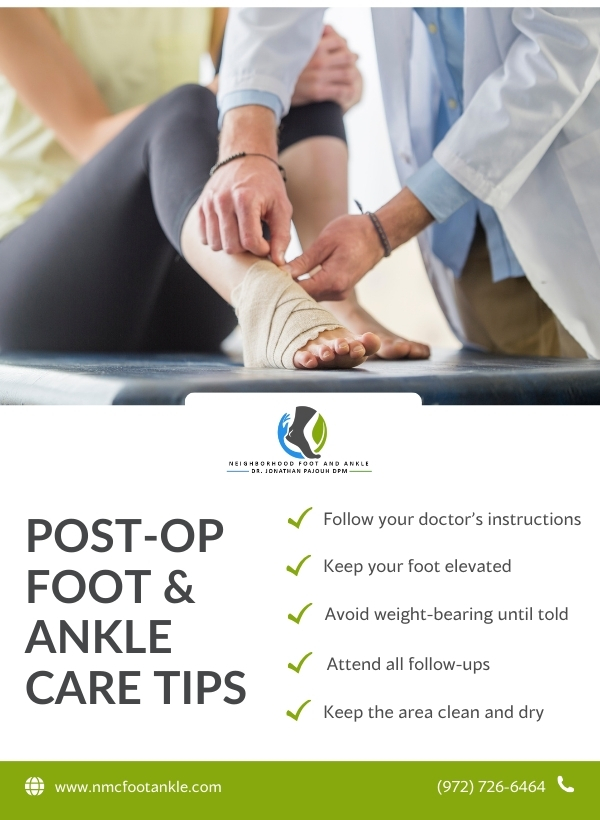
Recovering from foot or ankle surgery is a crucial step in improving mobility and quality of life, but the real challenge lies in the recovery process. Proper post-operative care is essential for preventing complications, speeding up healing, and returning to your normal routine. Since each surgery and individual recovery is unique, it’s important to follow a personalized care plan tailored to your specific needs, ensuring the best possible healing experience. This blog highlights the importance of personalized post-operative care for foot or ankle surgery, emphasizing how proper recovery can prevent complications, speed healing, and ensure a smooth return to normal activities.
Here are key post-op care tips for a smooth recovery:
Follow Your Doctor’s Instructions
The most important factor in your recovery is adhering to your doctor’s instructions. These guidelines are based on the type of surgery you’ve had and may include:
-
Restrictions on movement
-
How to care for the surgical site
-
When to begin weight-bearing or physical therapy
Dr. Jonathan Pajouh, DPM at NMC Foot & Ankle in Dallas, understands that each recovery journey is unique. While general tips apply to most cases, a personalized approach will help you heal safely and efficiently. Which is why he provides personalized care plans to get you on your feet faster.
Elevate Your Foot
Elevation plays a critical role in reducing swelling and encouraging circulation. Keeping your foot elevated above heart level, especially within the first 48 hours post-surgery can be helpful. Here are some tips to elevate your foot effectively:
-
Prop it up with pillows when resting or sleeping
-
Elevate as often as possible to manage swelling
-
Focus on elevation during the initial recovery period
Keeping your foot elevated helps reduce inflammation and promotes blood flow to the surgical site, improving healing.
Avoid Weight-Bearing Until Cleared
After foot or ankle surgery, it’s important to avoid putting weight on your foot until your doctor, such as Dr. Pajouh, gives you the go-ahead. Whether using crutches, a boot, or a cast, following your doctor’s advice on weight-bearing is crucial.
-
Why it matters: Weight-bearing too soon can delay healing, cause more pain, or lead to re-injury.
-
When to start: Dr. Pajouh will advise when it's safe to begin bearing weight, gradually allowing more movement as healing progresses.
Listening to your doctor and being patient will support your recovery and ensure that your surgical site heals properly.
Keep the Area Clean and Dry
Preventing infection is a vital part of post-surgery care. Dr. Pajouh at NMC will provide instructions on how to clean your surgical site and change any bandages. Be sure to:
-
Keep the wound clean and dry to reduce the risk of infection
-
Avoid getting the area wet while showering or bathing, unless given specific instructions on how to protect the site
-
Follow any wound care guidelines Dr. Pajouh gives you, including when to change dressings or bandages
If you notice any signs of infection—such as redness, swelling, or unusual discharge—contact Dr. Pajouh's office at Neighborhood Medical Center in Dallas immediately for guidance.
Attend All Follow-Up Appointments
Regular check-ins with Dr. Pajouh are essential to monitor your progress. These appointments allow him to:
-
Examine your surgical site for healing
-
Address any concerns or complications
-
Advise when it’s safe to resume activities, like walking or exercising
These visits also help determine if you’re ready to begin physical therapy or other rehabilitation exercises. Attending all follow-up appointments ensures you're healing as expected and allows Dr. Jonathan Pajouh to provide ongoing care.
Additional Tips for a Smooth Recovery
-
Stay Hydrated and Eat Well: A well-balanced diet rich in vitamins and minerals can aid in healing. Drink plenty of water and eat foods that support tissue repair.
-
Manage Pain: Pain is common after surgery. Dr. Pajouh may prescribe medications to manage discomfort, or suggest over-the-counter options. Always follow prescribed dosages and recommendations.
-
Be Patient: Recovery takes time, and healing speeds up differently for each person. Avoid rushing through the process—allow your body the time it needs to heal fully.
Book Your Post-Op Appointment Today!
If you’ve had foot or ankle surgery, Dr. Jonathan Pajouh at NMC Foot & Ankle in Dallas is here to support your recovery with personalized care. By following his expert advice and sticking to your post-op care plan, you’ll be on your way to full recovery in no time. Whether you have questions about pain management, recovery timelines, or follow-up care, Dr. Jonathan Pajouh, DPM at NMC Foot & Ankle in Dallas is ready to assist.