
 Connect With Our Team
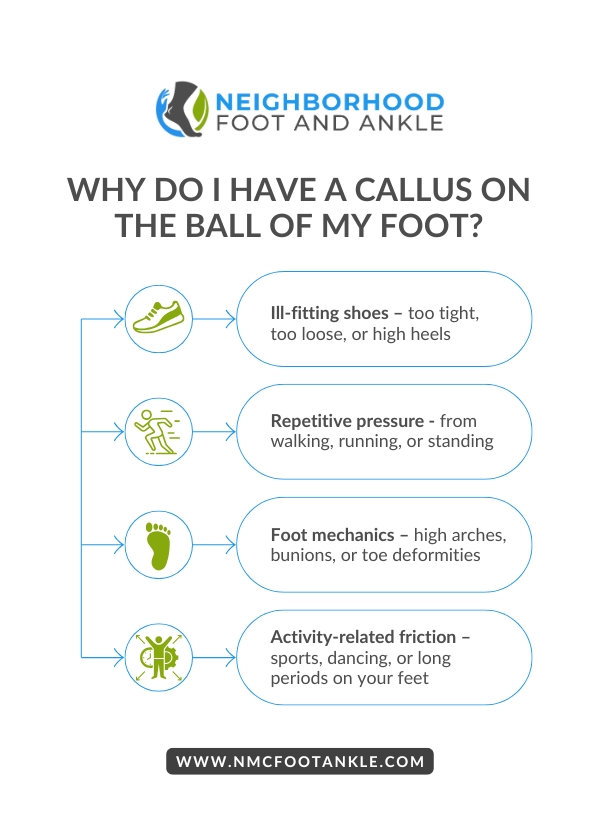 Calluses are thickened areas of skin that develop when the body tries to protect itself from repeated pressure or friction. Many people notice them on the ball of the foot because this part of the foot absorbs a large amount of weight with every step. While calluses are common, they can become uncomfortable or painful if the underlying cause continues.
At Neighborhood Foot & Ankle in Dallas, patients often visit for evaluation when calluses begin to affect comfort during daily activities. The practice regularly treats individuals from nearby communities including Plano, Frisco, and McKinney, Texas. Identifying the underlying cause of calluses is an important step in preventing them from returning and improving overall foot comfort.
What Causes Calluses on the Ball of the Foot
The ball of the foot experiences significant pressure during walking, standing, and physical activity. When the skin repeatedly encounters friction or pressure, it responds by thickening to create a protective barrier.
Several factors can contribute to this process.
- Ill-fitting shoes that are too tight, too loose, or place extra pressure on the forefoot
- High heels that shift body weight forward onto the ball of the foot
- Repetitive activities such as running, dancing, or long periods of standing
- Foot structure differences such as high arches or bunions
- Changes in walking mechanics that increase pressure on certain areas
Over time, the repeated pressure may cause the skin to harden and thicken. While some calluses remain painless, others may become sensitive, especially if pressure continues in the same spot.
When Does a Callus Become Painful?
Not every callus causes discomfort, but pain may develop when the thickened skin grows deeper or when the underlying pressure continues. This is especially common on the ball of the foot because it supports much of the body's weight during movement.
Pain may occur when:
- The callus becomes very thick
- Pressure from shoes pushes directly on the area
- The skin cracks or becomes irritated
- Walking patterns continue to place stress on the same spot
If a callus begins to feel tender or interferes with walking, evaluation by a foot specialist can help determine whether changes in footwear, padding, or treatment may help reduce pressure.
At Neighborhood Foot & Ankle in Dallas, podiatrist Dr. Jonathan Pajouh works with patients to identify the underlying cause of foot pressure patterns. As he often explains to patients, “Calluses usually form because the foot is trying to protect itself from repeated pressure. When we identify what is creating that pressure, we can often help reduce the irritation and make walking more comfortable.”
How Are Ball-of-Foot Calluses Treated?
Treatment focuses on both relieving discomfort and addressing the reason the callus formed in the first place. Simply trimming the skin without correcting the pressure can allow the callus to return.
At Neighborhood Foot & Ankle, treatment plans from our licensed podiatrists are tailored to each patient based on the cause of the pressure and how it affects walking.
- Careful professional removal of thickened skin
- Protective padding to reduce pressure on the ball of the foot
- Footwear recommendations that improve support and cushioning
- Custom orthotics designed to redistribute pressure across the foot
These approaches can help reduce friction on the affected area and support more balanced pressure during walking.
Many patients also benefit from simple adjustments to daily habits, such as choosing shoes with better forefoot cushioning or avoiding footwear that compresses the toes.
Could Foot Structure Be Causing the Callus?
Certain foot shapes naturally place more stress on the ball of the foot. High arches, bunions, or toe alignment changes can shift body weight forward and concentrate pressure on specific areas.
When this occurs, the skin may repeatedly respond by forming calluses as a protective layer.
Foot specialists often evaluate walking mechanics, arch height, and pressure distribution to better understand why calluses are forming. Addressing these structural factors can often reduce the likelihood of recurring irritation.
Orthotics, supportive footwear, and pressure-relieving padding are commonly used to help improve weight distribution and reduce friction.
Early evaluation may help prevent calluses from becoming thicker or more painful over time.
Better Foot Support for Everyday Movement
Calluses on the ball of the foot often develop because of repeated pressure, friction, or underlying foot mechanics. When discomfort begins to affect walking or daily activities, evaluation can help identify the cause and reduce irritation.
Patients from Dallas and surrounding communities including Plano, Frisco, McKinney, and Irving visit Neighborhood Foot & Ankle for podiatry care focused on improving foot comfort and mobility. Scheduling an appointment can help determine the most appropriate treatment approach.
Schedule Your Appointment
Educational purposes only. Not medical advice.