
 Connect With Our Team
Plantar fasciitis is one of the most common causes of heel pain, affecting millions of adults each year. That sharp, stabbing pain in the heel—especially with your first steps in the morning—can make even simple daily activities feel challenging. While treatments like stretches, physical therapy, and orthotics play a crucial role, one of the simplest ways to reduce pain often starts with what’s on your feet: your shoes.
At NMC Foot & Ankle in Dallas, podiatrists Dr. Jonathan Pajouh, DPM, and Dr. Devaraju, DPM, see firsthand how the wrong footwear can worsen plantar fasciitis symptoms. Conversely, the right pair of shoes can significantly reduce strain on the plantar fascia and improve overall comfort. Here’s a guide to help you evaluate your footwear and protect your feet.
Arch Support: Foundation for Healthy Feet
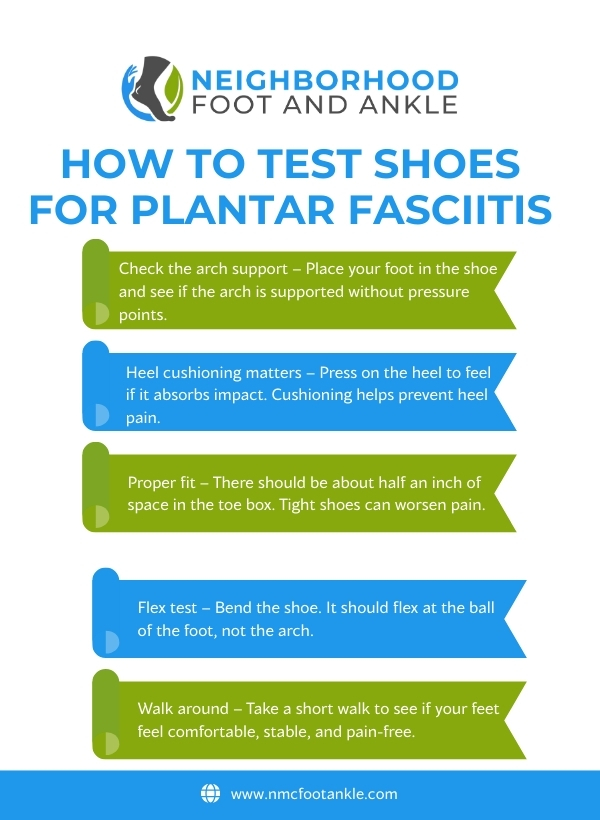
Proper arch support is essential for anyone with plantar fasciitis. Your arch helps absorb shock as you walk, and inadequate support can overstretch the plantar fascia, increasing pain. To check your shoes, place your foot inside and see if the arch is cradled comfortably without creating pressure points.
The NMC Foot & Ankle team provides evaluations and guidance on proper footwear and arch support. They can recommend custom orthotic inserts designed to fit your unique foot structure, offering relief from plantar fasciitis and supporting long-term foot health.
Heel Cushioning: Soften the Impact
The heel absorbs a significant amount of force every time you step. Shoes with proper cushioning can reduce this impact and help protect the plantar fascia from further irritation.
To test your shoes, press on the heel area to see how much give it offers. A well-cushioned heel should compress slightly under pressure but still feel firm enough to provide support. Our podiatrists at NMC Foot & Ankle emphasize that proper heel cushioning acts as a shock absorber, which is especially important for people who spend long hours on their feet or walk on hard surfaces regularly.
Proper Fit: Give Your Feet Room
Even the most supportive shoes won’t help if they don’t fit properly. Shoes that are too tight can compress the foot, worsen heel pain, and contribute to inflammation. Ideally, there should be about half an inch of space between your longest toe and the end of the shoe.
Additionally, the shoe should hold your foot securely without rubbing or pinching. Try shoes on at the end of the day when your feet are slightly swollen to ensure a comfortable fit.
Flex Test: The Right Bend Matters
When selecting shoes for plantar fasciitis, the way a shoe bends can make a big difference. Ideally, shoes should flex at the ball of the foot—not the arch. Shoes that bend in the middle can strain the plantar fascia with every step.
A simple test is to hold the shoe with both hands and try to bend it. If the bend occurs at the arch, it’s likely putting extra stress on your plantar fascia. Shoes that flex correctly support the foot’s natural movement and reduce strain over time.
Walk Around: Comfort Check in Action
Finally, nothing replaces actually trying on the shoes and walking around. A brief walk can reveal pressure points, heel slippage, or other issues that may not be obvious while standing. Your feet should feel stable, supported, and most importantly, pain-free.
Even a shoe with great arch support and cushioning won’t help if it doesn’t feel right while walking. Drs. Pajouh and Devaraju can evaluate your feet, recommend the best footwear, and provide treatment to reduce plantar fasciitis pain.
Additional Tips for Managing Plantar Fasciitis
While choosing the right shoes is a major step, it’s often part of a larger plan to relieve plantar fasciitis pain. Other tips include:
- Stretching and strengthening exercises: Regular calf stretches and foot exercises can help reduce tension in the plantar fascia.
- Weight management: Carrying extra weight increases stress on the feet, especially the heels.
- Night splints: Some patients benefit from night splints that keep the foot in a stretched position while sleeping.
- Professional evaluation: Persistent heel pain should always be evaluated by a podiatrist to rule out other conditions and ensure proper treatment.
At NMC Foot & Ankle in Dallas, Drs. Pajouh and Devaraju specialize in diagnosing and treating plantar fasciitis. They provide personalized care plans, including footwear recommendations, custom orthotics, advanced treatment options, or surgical procedures to relieve pain and restore mobility.
Step Forward with Confidence
Don’t let plantar fasciitis slow you down. The right shoes, combined with expert guidance from Dr. Pajouh and Dr. Devaraju, can make every step more comfortable. Protect your feet, reduce heel pain, and get back to the activities you enjoy.