
 Connect With Our Team
The midfoot is a crucial part of your foot’s anatomy. Positioned between the forefoot and hindfoot, it forms the arch and helps absorb impact with every step. Because of its structural importance, even minor midfoot injuries here can significantly affect mobility, causing pain, swelling, and difficulty walking.
At NMC Foot & Ankle in Dallas, Dr. Jonathan Pajouh, DPM, and Dr. Veena Devaraju (Dr. D) specialize in diagnosing and treating midfoot injuries. We offer same-day emergency appointments to help patients regain comfort, restore function, and prevent future complications.
Trauma: Sudden Injuries
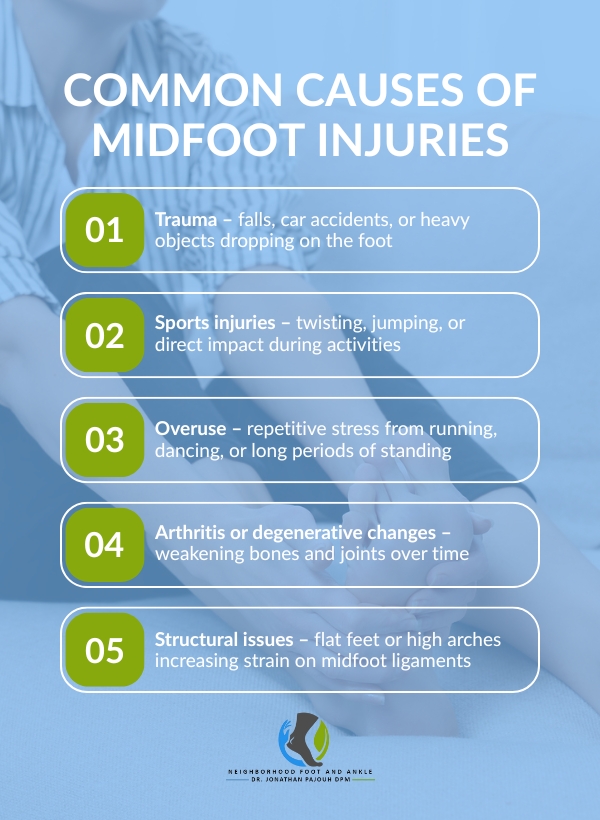
Trauma is one of the most common causes of midfoot injuries. A fall, car accident, or heavy object landing on the foot can result in fractures or ligament tears. Such injuries often lead to immediate pain, swelling, bruising, and difficulty bearing weight.
Common examples of traumatic midfoot injuries include:
- Fractures: Small cracks or complete breaks in the midfoot bones
- Sprains: Tears or stretching of ligaments connecting midfoot bones
- Dislocations: Bones shifting out of position due to severe impact
Even injuries that seem minor at first should be evaluated promptly. Left untreated, trauma can lead to chronic pain, reduced mobility, and deformities over time.
Sports Injuries: Twists, Turns, and Impacts
Athletes and active adults are especially prone to midfoot injuries caused by sports. High-impact activities or sudden movements can place extreme stress on the midfoot.
- Twisting or turning suddenly: Common in basketball, soccer, or tennis
- Jumping and landing: In gymnastics, volleyball, or track events
- Direct impacts: Collisions with players, equipment, or hard surfaces
Repetitive strain can weaken ligaments and increase injury risk. Dr. Pajouh and Dr. D treat sports-related midfoot injuries with personalized care plans. Proper footwear, warm-ups, and strength training are all important for reducing the risk.
Overuse: Repetitive Stress
Not all midfoot injuries happen suddenly. Repetitive stress from running, dancing, or prolonged standing can gradually wear down bones, ligaments, and joints. Patients often notice pain that worsens during activity and improves with rest.
Signs of overuse injuries may include:
- Persistent midfoot pain
- Swelling or tenderness
- Stiffness after activity
- Difficulty walking or standing for long periods
Early intervention is essential. At NMC Foot & Ankle our team of podiatrists provide care for overuse injuries using rest, custom orthotics, physical therapy, and activity modifications to reduce strain, restore mobility, and prevent long-term complications.
Arthritis and Degenerative Changes
Age-related factors such as arthritis or other degenerative changes can weaken the midfoot. Osteoarthritis, for example, leads to cartilage breakdown, joint stiffness, and chronic pain, making everyday activities more difficult.
Degenerative changes can sometimes follow a previous injury or develop gradually over time. Supportive shoes, lifestyle adjustments, and strengthening exercises can help maintain midfoot function and slow progression.
Dr. Pajouh and Dr. D provide treatment and guidance for midfoot arthritis and degenerative conditions. Typical treatment may include: using supportive footwear, custom orthotics, targeted exercises, lifestyle guidance, and advanced interventions when needed to reduce pain, improve mobility, and preserve long-term foot function.
Structural Issues: Foot Anatomy
Certain structural conditions, such as flat feet or high arches, can increase strain on midfoot ligaments. This strain makes injuries or overuse problems more likely.
- Flat feet: Lack of arch support increases ligament stress
- High arches: Concentrates pressure on midfoot bones
- Uneven gait or posture: Can exacerbate strain during daily activities
Addressing structural issues early with custom orthotics, supportive shoes, and targeted exercises can prevent recurring injuries and improve overall foot health. Our NMC Foot & Ankle expert team offers comprehensive care for structural foot issues.
Comprehensive Care at NMC Foot & Ankle
Midfoot injuries can interfere with daily life if left untreated. Our Dallas based podiatrists provide expert evaluation and personalized treatment plans. Their care focuses on restoring mobility, reducing pain, and preventing future injury.
Treatment may include:
- Rest and immobilization for fractures or severe sprains
- Physical therapy to strengthen ligaments and muscles
- Orthotics and supportive footwear for structural issues
- Advanced interventions for severe or chronic injuries
Whether your midfoot injury is caused by trauma, sports, overuse, arthritis, or structural conditions, early assessment and intervention are key. Timely care can prevent further damage, improve mobility, and help you return to your normal activities.
Same-Day Emergency Appointments
When urgent symptoms or sudden concerns arise, same-day emergency appointments ensure patients get timely evaluation and care. The medical team is equipped to quickly assess pressing issues, provide immediate guidance, and help prevent complications. Fast access to expert support gives patients peace of mind and the prompt attention they need when something just can’t wait.