
 Connect With Our Team
Swelling, aching, or heavy legs can be more than just a sign of fatigue—they may indicate venous stasis, a condition where the veins in your legs struggle to return blood efficiently to the heart. Over time, this can lead to discomfort, skin changes, or even ulcers. Early recognition and treatment are key to protecting your legs and maintaining mobility.
What Is Venous Stasis?
Venous stasis occurs when blood pools in the veins of the lower legs due to weakened vein walls or damaged valves. This pooling reduces circulation and can cause swelling, pain, and changes in skin texture or color. Without treatment, venous stasis may progress, leading to chronic discomfort, ulcer formation, or mobility issues.
At NMC Foot & Ankle in Dallas, Dr. Jonathan Pajouh, DPM evaluates patients with leg swelling and other signs of venous stasis to determine the cause and severity. He creates individualized care plans that relieve symptoms and protect long-term leg health.
Common Signs of Venous Stasis
Typical symptoms of venous stasis include:
-
Swelling in the ankles or lower legs, especially after standing
-
Aching, heavy, or tired legs
-
Skin changes, including discoloration or thickening
-
Itching or tenderness along the veins
-
Slow-healing sores or ulcers in advanced cases
Early recognition of these signs is important to prevent complications like skin breakdown, infections, or worsening circulation. Dr. Pajouh, in Dallas, provides thorough evaluations to determine the underlying causes and recommend a personalized treatment plan, helping patients maintain healthy circulation and protect their legs over the long term.
Risk Factors for Developing Venous Stasis
Certain factors can increase the risk of developing venous stasis. Age-related weakening of veins, a family history of circulation issues, obesity, a sedentary lifestyle, previous leg injuries or surgeries, and medical conditions like heart or kidney disease can all contribute to poor blood flow. Understanding these risks allows patients to take proactive steps to protect their leg health. At NMC Foot & Ankle Dr. Pajouh can help identify individual risk factors and recommend strategies to reduce the likelihood of complications.
How Venous Stasis Is Diagnosed
Diagnosing venous stasis involves a careful combination of clinical evaluation and imaging studies to pinpoint the underlying cause:
-
Physical Exam: Checking for swelling, tenderness, and visible vein changes
-
Medical History: Understanding risk factors such as family history, past injuries, or prolonged standing
-
Imaging Tests: Ultrasound or Doppler studies assess blood flow and detect vein insufficiency
This comprehensive approach allows Dr. Pajouh to determine the severity of venous stasis and develop a personalized treatment plan that targets both symptoms and underlying causes, helping patients improve circulation, reduce discomfort, and prevent complications.
Treatment Options for Venous Stasis
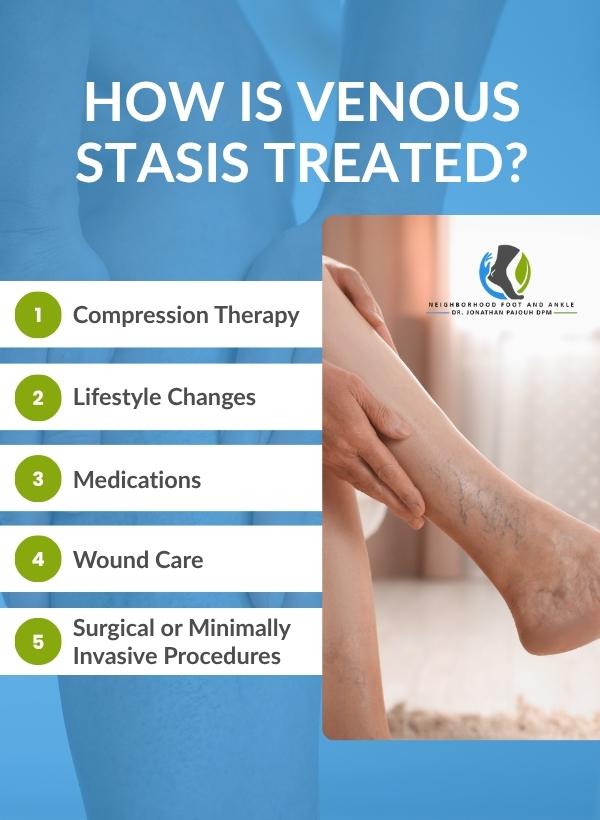
Treatment focuses on improving circulation, reducing swelling, and preventing complications:
- Compression Therapy: Medical-grade stockings support blood flow and minimize swelling
- Lifestyle Changes: Elevating legs, exercising, and maintaining a healthy weight help prevent blood pooling
- Medications: Reduce swelling or enhance vein function as needed
- Wound Care: For ulcers or skin breakdown, proper care promotes healing
- Surgical or Minimally Invasive Procedures: In severe cases, damaged veins may be repaired or removed
Dr. Pajouh reviews all treatment options, recommending the safest, most effective plan tailored to each patient’s needs.
Lifestyle and Daily Care to Support Vein Health
Alongside medical treatment, adopting simple daily habits can help reduce symptoms and prevent venous stasis from worsening. Elevating the legs regularly can decrease swelling, while low-impact exercises such as walking or swimming promote healthy circulation. Maintaining a healthy weight reduces stress on the veins, and avoiding prolonged periods of sitting or standing can prevent blood from pooling in the lower legs. Additionally, keeping the skin moisturized and monitoring for sores or changes supports overall leg health. When combined with professional care from Dr. Pajouh, at NMC Foot & Ankle in Dallas, these practices help protect vein health and support long-term comfort.
Don’t Ignore Swollen or Achy Legs
Persistent leg swelling, discomfort, or visible vein changes can be signs of venous stasis. Early assessment is important to prevent complications such as ulcers, infections, or chronic pain. At NMC Foot & Ankle in Dallas, Dr. Jonathan Pajouh, DPM, oversees patients’ treatment with effective options—ranging from conservative therapies to minimally invasive procedures—aimed at reducing discomfort, improving circulation, and supporting long-term leg health.