
 Connect With Our Team
Heel pain is one of the most common foot complaints among adults, yet many people try to push through it, assuming it will resolve on its own. When pain becomes sharp, persistent, or most noticeable with the first steps in the morning, a heel spur may be part of the problem. Heel spurs are small bony growths that develop on the heel bone over time, often linked to ongoing strain, inflammation, or stress placed on the foot.
At NMC Foot & Ankle, patients frequently seek care after heel pain begins to interfere with walking, work, or daily routines. Early evaluation helps determine whether a heel spur is present and what is contributing to the discomfort, allowing treatment to focus on long-term relief rather than temporary fixes.
What Is a Heel Spur?
A heel spur is a calcium deposit that builds up gradually on the underside or back of the heel bone. It does not appear overnight and often develops after months or years of repetitive stress. Activities that place repeated strain on the plantar fascia, Achilles tendon, or heel bone can contribute to this process.
Heel spurs are commonly associated with conditions such as plantar fasciitis, altered foot mechanics, or chronic inflammation. While the spur itself may not always be painful, the surrounding soft tissue irritation often causes the symptoms patients feel.
What Are the Early Signs of a Heel Spur?
Heel spurs often develop quietly at first, which is why symptoms are sometimes dismissed until pain becomes harder to ignore.
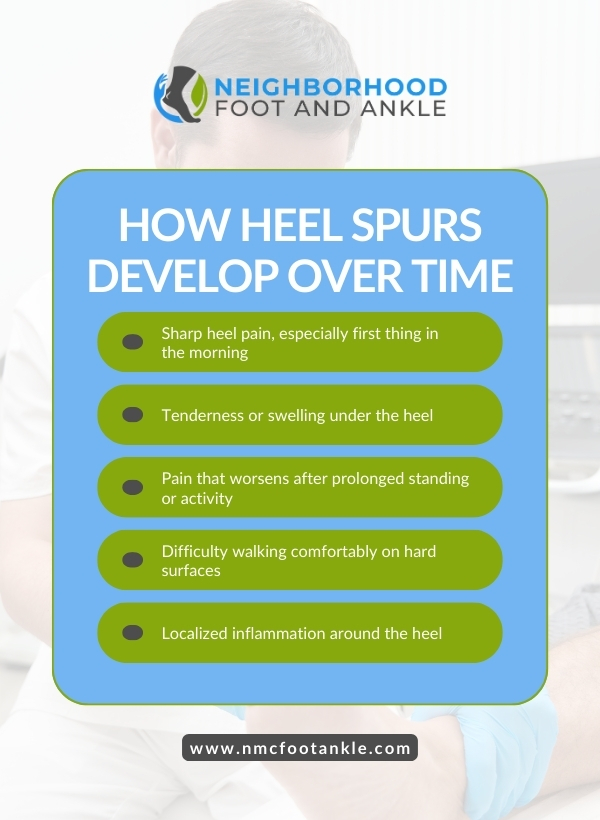
Early warning signs may include:
- Sharp or stabbing heel pain, especially with the first steps in the morning
- Tenderness or swelling under or around the heel
- Pain that worsens after prolonged standing, walking, or physical activity
- Difficulty walking comfortably on hard surfaces
- Localized inflammation near the heel
These symptoms may fluctuate from day to day, but ongoing discomfort is a signal that something more than routine soreness may be occurring.
Heel Pain Is Often Ignored
Many adults continue normal activities despite heel pain, adjusting their stride or limiting movement without realizing it. Temporary improvement with rest can create the impression that the issue is resolving, even as stress and inflammation continue to build within the foot. Over time, compensation can lead to additional strain on other joints, including the ankle, knee, or lower back.
Seeking evaluation early allows the underlying cause of heel pain to be identified accurately and addressed before it becomes more disruptive.
How Are Heel Spurs Evaluated and Treated?
Diagnosis begins with a thorough clinical exam and may include imaging to confirm whether a heel spur is present and to assess foot structure, alignment, and soft tissue involvement. Treatment is guided by symptom severity, activity level, and contributing biomechanical factors.
Conservative care is often effective and may include:
- Anti-inflammatory medications to reduce pain and swelling
- Ice therapy to calm inflammation in the heel
- Shoe modifications or supportive footwear to reduce heel stress
- Custom orthotics to improve foot alignment and distribute pressure more evenly
- Stretching or physical therapy to improve flexibility and reduce strain on the plantar fascia or Achilles tendon
- Injection therapy when inflammation needs more direct relief
As Dr. Jonathan Pajouh explains, “Heel pain is often the result of ongoing strain rather than a sudden injury. Treating the underlying stress on the foot is what leads to lasting relief.”
Treatment plans are individualized to fit daily demands, whether that involves long hours on your feet, regular exercise, or simply staying comfortable during routine activities.
Importance of Early Care
Heel spurs do not disappear on their own. Delaying care can allow pain and inflammation to worsen, making recovery take longer and limiting treatment options. Early intervention helps reduce discomfort, protect mobility, and prevent recurring flare-ups that interrupt daily life.
If heel pain has become a regular part of your day or is affecting how you walk, it may be time for a professional evaluation. Early diagnosis and personalized care can help restore comfort and support long-term foot health.
Appointments are available at NMC Foot & Ankle in Dallas, Texas for comprehensive evaluation and treatment planning.