
 Connect With Our Team
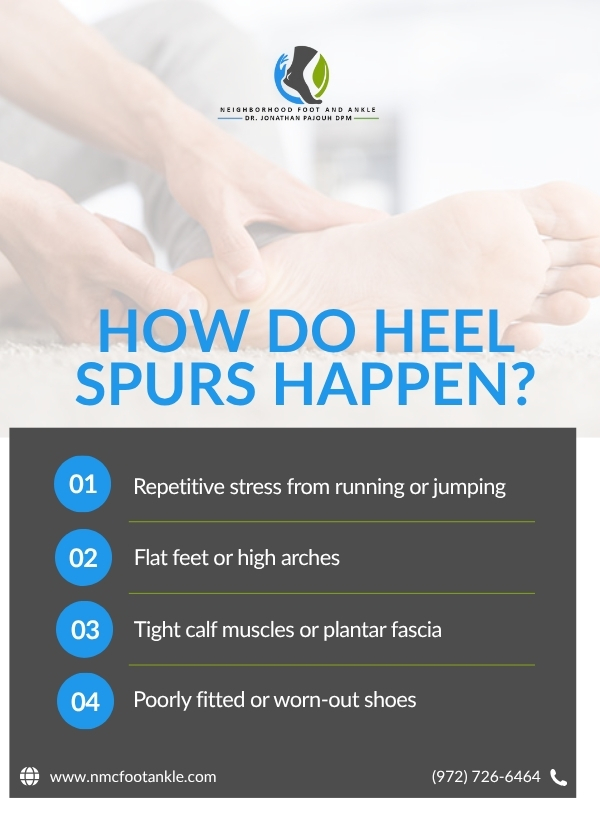
Ever felt a sharp pain in your heel — like you’re stepping on a small rock? You might be dealing with a heel spur. While these bony growths can develop slowly over time, understanding why they form can help you prevent pain and protect your feet.
A heel spur is a small, bony protrusion on the bottom of the heel bone. It forms when calcium builds up in response to repeated stress or strain on the foot. Tiny tears in the soft tissue of the heel trigger inflammation, and over time, these calcium deposits harden into a spur.
Common Causes of Heel Spurs
-
Repetitive stress from running, jumping, or other high-impact activities
-
Foot structure issues such as flat feet or high arches
-
Tight calf muscles or plantar fascia increasing pressure on the heel
-
Poorly fitted or worn-out shoes that fail to provide support
These factors create a cycle of stress, inflammation, and calcium buildup, sometimes resulting in sharp or stabbing heel pain when standing or walking.
At NMC Foot & Ankle in Dallas, Dr. Jonathan Pajouh, DPM provides comprehensive evaluation and treatment for heel spurs and related foot pain. With a personalized approach focused on long-term relief and mobility, Dr. Pajouh helps patients understand what’s causing their discomfort and the best steps toward healing.
Heel Spurs and Plantar Fasciitis
Heel spurs aren’t always painful on their own. Discomfort usually comes from plantar fasciitis, inflammation of the thick tissue along the bottom of the foot.
Most people with heel spurs experience pain with the first steps in the morning, ache after long periods of standing or walking, or tenderness when pressing the heel. Addressing plantar fasciitis early can reduce pain and sometimes prevent the heel spur from worsening.
At Dr. Pajouh, helps patients identify whether their heel pain is caused by plantar fasciitis, a heel spur, or both. By combining diagnostic imaging, gait assessment, and customized treatment plans, he focuses on relieving pain, reducing inflammation, and restoring natural movement — so patients can get back on their feet with lasting comfort.
The Link Between Activity Level and Heel Spurs
-
High-impact stress: Running, jumping, or standing for long hours puts extra pressure on the heel and plantar fascia.
-
Low-impact strain: Walking long distances on hard surfaces or wearing unsupportive shoes can still trigger inflammation and calcium buildup.
-
Smart prevention: Choose supportive footwear, stretch regularly, and balance activity with rest.
-
Expert guidance: If heel pain persists, a foot specialist, such as Dr. Pajouh, can tailor activity adjustments to promote healing and long-term foot health.
How Heel Spurs Are Diagnosed vs. Other Heel Conditions
Because heel pain can have many causes, an accurate diagnosis is key. In Dallas, Dr. Pajouh evaluates whether discomfort stems from a heel spur, plantar fasciitis, tendonitis, or nerve issues. Through exams and imaging like X-rays, he identifies the source and creates a targeted treatment plan for lasting relief and mobility.
Treatment Options
Most heel spurs can be managed without surgery. Common strategies include rest, supportive footwear or orthotics, stretching exercises for the plantar fascia and calf muscles, ice and anti-inflammatory measures, and physical therapy. Night splints or shockwave therapy may also be recommended to reduce inflammation and promote healing.
In cases where conservative treatments fail, Dr. Pajouh may discuss minimally invasive surgical options to remove the heel spur or release tension in the surrounding tissue. With expert guidance, many patients find significant heel pain relief and return to daily activities with greater comfort and stability.
Prevention Tips
By following these tips, you can reduce the risk of heel spurs and associated pain, keeping your feet comfortable and healthy:
- Rest and supportive footwear or orthotics
- Stretching for the plantar fascia and calves
- Ice and anti-inflammatory care
- Physical therapy or night splints
- Shockwave therapy to reduce inflammation and promote healing
If pain persists, Dr. Pajouh may recommend minimally invasive surgery to remove the spur or release tight tissue, helping restore comfort and mobility.
Don’t Ignore Heel Pain
Chronic heel pain can affect mobility, daily activities, and quality of life. Early evaluation by a foot and ankle specialist can prevent further damage and help you return to comfortable, pain-free walking.
Dr. Jonathan Pajouh, DPM at NMC Foot & Ankle in Dallas provides comprehensive care for heel spurs, plantar fasciitis, and other foot conditions, helping patients restore comfort, mobility, and healthy feet.