
 Connect With Our Team
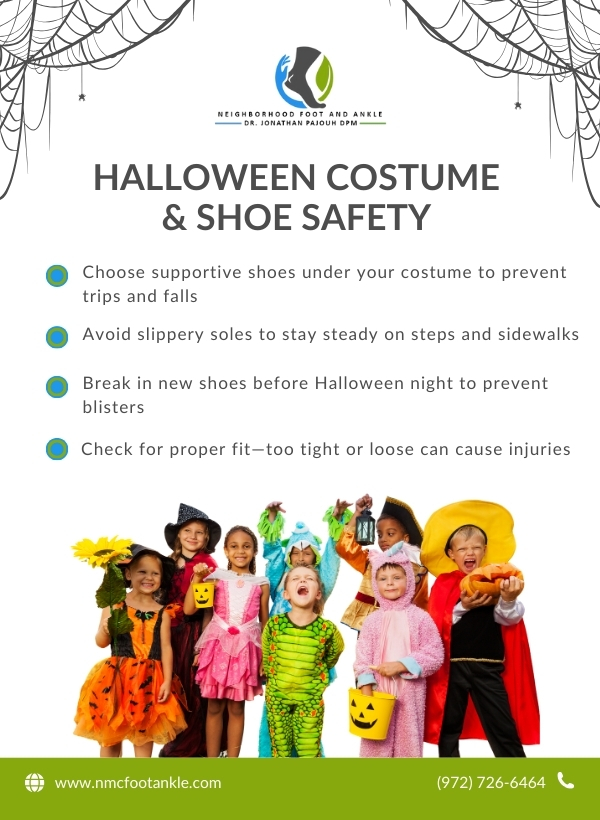
Halloween is all about fun—costumes, candy, and community events—but one thing that can quickly turn a night of excitement into a painful experience is poor footwear. Whether you’re walking long distances with kids or dancing at a party, your feet play a bigger role in your plans than you might think.
The wrong shoes can lead to blisters, sprains, or even long-term discomfort—especially when they don’t offer enough support for all the walking and standing that comes with Halloween festivities. It is important to wear supportive shoes and pay attention to proper fit during the fall season.
Keep the Tricks Fun—Not on Your Feet
A night of costumes and candy should be enjoyable, not painful. Choosing the right shoes and fit helps ensure your Halloween memories don’t include blisters or twisted ankles. With a few smart habits, you can stay comfortable and prevent injuries while enjoying every moment of Halloween fun.
Here are a few tips from Dr. Jonathan Pajouh at NMC Foot & Ankle in Dallas, Tx:
Choose Supportive Shoes—Even Under Your Costume
It might be tempting to wear shoes that perfectly match your costume, but those pirate boots, high heels, or flimsy flats are rarely designed for hours of walking. Instead, prioritize comfort and support.
Shoes with cushioned insoles and arch support help reduce strain and fatigue. Athletic sneakers are often a good option—especially for trick-or-treating, outdoor events, or standing for long periods. Supportive footwear helps protect your feet from pain and minimizes the risk of injury, even if your costume requires a creative compromise in style.
If your costume demands less practical shoes, consider adding supportive inserts or padding to improve comfort.
Avoid Slippery Soles
Halloween nights can mean damp grass, slick sidewalks, or uneven terrain. Shoes with smooth soles increase your risk of slipping or falling, particularly in low light. Selecting footwear with good traction helps you stay steady and secure as you move from house to house or across party floors.
Proper traction is key to preventing ankle sprains or falls—two of the most common Halloween-related foot injuries. Grippy soles can make all the difference between a safe evening and an unwanted trip to the doctor.
Break In New Shoes Before Halloween Night
New shoes can cause blisters and soreness if they haven’t been worn in yet. If you’ve purchased new footwear for your costume, wear them around the house a few times before the big night. This helps soften stiff materials and allows your feet to adjust.
If you notice rubbing or pinching, try using gel pads or cushioned bandages in pressure areas to prevent irritation. Even small blisters can become painful and, if left untreated, lead to infection.
Check for Proper Fit
Shoes that are too tight can cause discomfort, while those that are too loose increase the risk of tripping or instability. Choose shoes that fit snugly but comfortably, leaving enough room to move your toes.
If you’re wearing thick socks or tights as part of your costume, make sure to try on your shoes with those layers to confirm the fit. For children, this is especially important—kids’ feet grow quickly, and shoes that were comfortable last month may already be too small.
Well-fitted footwear helps prevent blisters, calluses, and toe injuries—allowing you to focus on the fun instead of your feet.
Watch Your Step in the Dark
Between long costumes, dim lighting, and crowded sidewalks, it’s easy to overlook tripping hazards. Make sure costume hems don’t drag on the ground, and consider carrying a flashlight or wearing reflective gear when walking at night.
Parents should remind children to slow down between houses, and adults should be cautious on dance floors or outdoor steps. Simple awareness can help prevent ankle sprains and other injuries that often occur when people rush or lose visibility.
Give Your Feet a Little TLC After the Fun
Once the night is over, take a few minutes to care for your feet. Soak them in warm water with Epsom salt to relax sore muscles, stretch your ankles and toes, and apply moisturizer to prevent dryness or cracking as cooler weather sets in.
If you notice swelling, persistent pain, or blisters that don’t heal, it’s a good idea to schedule an evaluation. The team at NMC Foot & Ankle in Dallas, under the care of Dr. Jonathan Pajouh, DPM, specializes in diagnosing and treating foot and ankle injuries—from mild strains to more complex conditions. Early evaluation can help prevent minor problems from turning into long-term issues.
Step Into Halloween with Confidence
Halloween should be about fun—not foot pain. By choosing supportive shoes, checking for good traction, and paying attention to fit, you can enjoy the festivities comfortably and safely.
At NMC Foot & Ankle, Dr. Jonathan Pajouh and his team are committed to keeping your feet healthy year-round, so you can stay active and injury-free through every season.
Book an appointment today to learn more about proper footwear, injury prevention, and personalized care for all your foot and ankle needs.