
 Connect With Our Team
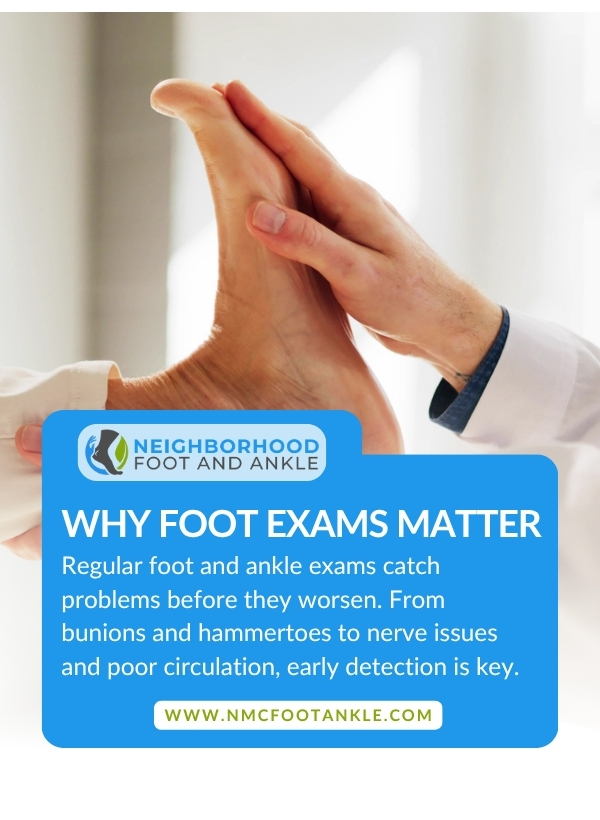
Why Regular Foot Exams Matter
Foot and ankle health often gets overlooked until pain or discomfort starts interfering with daily life. However, many common conditions begin gradually and can worsen over time if not addressed early. At Neighborhood Foot and Ankle in Dallas, Texas, routine foot exams are an important part of preventing long-term issues and maintaining overall mobility. Many patients also visit from nearby Irving and Mesquite for evaluations focused on early detection and personalized care.
What can a routine foot exam detect early?
A comprehensive foot and ankle exam looks beyond surface-level symptoms. It helps identify structural changes, pressure points, and underlying conditions that may not yet be causing noticeable discomfort.
Common issues that can be detected early include:
- Bunions and hammertoes
- Flat feet or arch abnormalities
- Nerve-related conditions such as tingling or numbness
- Circulation concerns that affect healing and sensation
- Early signs of skin or nail conditions
Catching these concerns early allows for more conservative treatment options and can help slow or prevent progression.
How do foot exams support long-term mobility?
Your feet play a critical role in how your body moves, balances, and absorbs impact. When something is off, even slightly, it can affect alignment throughout the body.
Foot exams help support long-term mobility by:
- Evaluating gait and walking patterns
- Identifying imbalances that increase fall risk
- Assessing joint flexibility and stability
- Detecting areas of excess pressure or strain
Dr. Veena Devaraju explains, “Even small shifts in how your feet move can build up over time. Catching those early makes it much easier to keep things on track and prevent bigger issues later.”
This proactive approach helps maintain comfort, reduce injury risk, and support overall movement as you stay active.
What to expect during your visit
A foot exam is a straightforward process designed to give a clear picture of your foot health. It focuses on both structure and function to create a well-rounded understanding of how your feet are performing.
During your visit, your provider may:
- Examine the skin, nails, and overall foot structure
- Assess range of motion and flexibility
- Evaluate your gait and how you distribute weight
- Check circulation and nerve response
- Discuss any symptoms or concerns you’ve noticed
This evaluation helps guide a plan that fits your lifestyle and addresses both current and potential concerns.
Personalized care based on how your feet function
No two feet function exactly the same, which is why treatment plans are tailored to each individual. Recommendations are based on how your feet move, your daily activity level, and any early signs identified during the exam.
Care plans may include:
- Footwear recommendations to improve support
- Custom orthotics to correct alignment and reduce strain
- Stretching or strengthening exercises
- Preventive care for skin and nail health
These strategies are designed to be realistic and easy to incorporate into your routine, helping you maintain results over time.
When should you schedule a foot exam?
You don’t need to wait for pain to schedule a foot exam. Preventive care can help you stay ahead of issues before they become more difficult to manage.
Consider scheduling an exam if you:
- Notice changes in foot shape or alignment
- Experience occasional discomfort or fatigue in your feet
- Have a history of foot or ankle injuries
- Spend long hours standing or walking
- Want to stay proactive about your overall health
Regular evaluations provide a baseline for your foot health and make it easier to detect changes early.
Staying proactive with your foot health
Foot health plays a larger role in overall wellness than many people realize. From balance and stability to daily comfort, your feet support nearly every movement you make.
If you are due for an evaluation or have noticed subtle changes, book an appointment with our team at Neighborhood Foot and Ankle in Dallas to stay ahead of potential issues and keep your feet moving comfortably.
Educational purposes only. Not medical advice.