
 Connect With Our Team
Foot and Ankle Lumps: When to Check a Ganglion Cyst
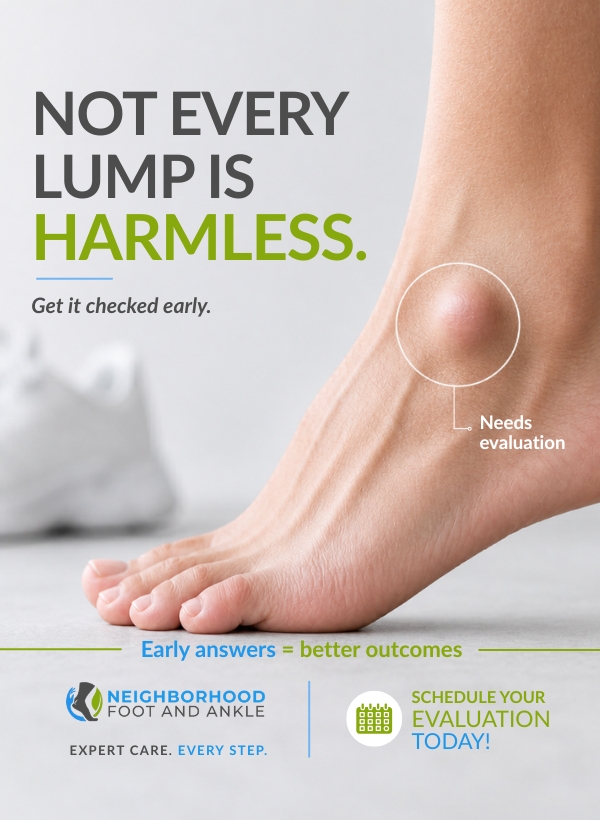
Not every lump on the foot or ankle is serious, but it should be checked. A new bump can be unsettling, especially when it causes pressure in shoes, tenderness, tingling, or changes in how the foot moves. One common cause is a ganglion cyst, which is a fluid-filled lump that often forms near a joint or tendon.
Ganglion cysts can appear on the top of the foot, around the ankle, near the toes, or close to tendons. Some are painless and easy to ignore. Others can press on nearby tissue, rub against footwear, or make walking uncomfortable. Because lumps can have different causes, an evaluation helps determine what it is and what should happen next.
At Neighborhood Foot and Ankle in Dallas, Dr. Pajouh and Dr. Devaraju evaluate foot and ankle lumps by looking at the location, size, symptoms, movement, and possible connection to nearby joints or tendons.
What Is a Ganglion Cyst on the Foot or Ankle?
A ganglion cyst is a noncancerous, fluid-filled sac that often develops near a joint, tendon, or ligament. The fluid inside is usually thick and jelly-like. These cysts may feel firm or soft, and they can change in size over time.
Some ganglion cysts form after repeated irritation, pressure, or joint stress, though the exact cause is not always clear. They may become more noticeable after activity or when shoes press directly over the area.
Common signs may include:
- A visible lump or bump on the foot or ankle
- Pressure or discomfort in certain shoes
- Tenderness when the area is touched
- Tingling, numbness, or irritation near the bump
- Changes in size over time
- Discomfort with walking or movement
Dr. Pajouh explains: “A lump on the foot may be harmless, but we still want to know what it is. The location, texture, symptoms, and how long it has been there all help us decide whether it can be monitored or needs treatment.”
Ganglion cysts are one possible explanation, but they are not the only one. Foot and ankle lumps may also be related to soft tissue masses, bone spurs, bursitis, tendon sheath swelling, plantar fibromas, cysts, or other growths. That is why guessing based on appearance alone is not always reliable.
A lump that is painless today may still become irritating later, especially if it sits in an area where shoes rub or where tendons glide during movement. Early evaluation can help avoid unnecessary discomfort and give patients a clearer answer.
When Should a Foot Lump Be Evaluated?
A foot lump should be evaluated if it is new, painful, growing, changing, or affecting how you walk. Even if the lump does not hurt, it is still helpful to have it checked so the cause is understood.
It may be time to schedule an appointment if the lump:
- Gets larger or changes shape
- Causes shoe pressure or rubbing
- Feels painful, tender, or irritated
- Causes tingling, numbness, or burning
- Limits movement or affects walking
- Comes back after going away
During an evaluation, one of our licensed podiatrists may examine the lump, check the surrounding joints and tendons, and ask when it first appeared. Imaging such as X-rays, ultrasound, or MRI may be recommended when needed to better understand the structure, rule out bone involvement, or evaluate deeper soft tissue.
Getting a clear diagnosis can help prevent a small lump from becoming a bigger source of discomfort.
Treatment depends on the type of mass, symptoms, location, and how much it interferes with daily activity. If a ganglion cyst is small and not painful, monitoring may be enough. If it causes discomfort, shoe irritation, nerve pressure, or movement problems, treatment may be recommended.
Care options may include shoe modifications, padding, activity changes, aspiration or drainage, anti-inflammatory support, or surgical removal when needed. Drainage may reduce the size of a cyst, but some cysts can return. Surgery may be considered if the cyst is painful, recurring, or located where it continues to create pressure.
The goal is to choose the most appropriate option based on the diagnosis, not just remove a lump without understanding what is causing it.
Getting Clear Answers About Foot and Ankle Masses
Finding a lump on your foot or ankle can be frustrating, but it does not have to lead to guesswork. Some bumps are harmless and can be watched, while others may need treatment because of pain, pressure, growth, or location.
Neighborhood Foot and Ankle provides evaluations for ganglion cysts, soft tissue masses, and other foot and ankle concerns. If you notice a lump, bump, or area of swelling that does not feel normal, scheduling an evaluation can help you understand what it is and what steps may help you stay comfortable.
Schedule Your Foot Exam Today
Published by Neighborhood Foot and Ankle | Dr. Pajouh and Dr. Devaraju | Serving Dallas and surrounding DFW | 972-726-6464.
Educational purposes only. Not medical advice.