
 Connect With Our Team
Foot and Ankle Cysts: When a Lump Needs Treatment
A lump on the foot or ankle can be easy to dismiss at first, especially if it is small or not painful. But when that lump starts rubbing against shoes, causing pressure, changing in size, or making walking uncomfortable, it deserves a closer look.
Foot and ankle cysts are fluid-filled lumps that often develop near joints, tendons, or soft tissue structures. One common type is a ganglion cyst, which may feel firm or rubbery and can sometimes appear suddenly. While many cysts are benign, that does not mean they should be ignored.
At Neighborhood Foot and Ankle in Dallas, Texas, Dr. Jonathan Pajouh and Dr. Veena Devaraju evaluate foot and ankle lumps to help determine what they are, why they may have developed, and whether treatment is needed.
What Causes a Foot or Ankle Cyst?
A foot or ankle cyst can form when fluid collects near a joint or tendon. In some cases, this may happen because of irritation, repetitive pressure, past injury, joint stress, or tendon-related changes. The cyst may grow slowly over time or fluctuate in size depending on activity and pressure.
Some cysts are painless and only noticeable because of their appearance. Others can cause discomfort, especially when they press against shoes, nerves, tendons, or nearby tissue. A cyst on the top of the foot may become irritated by tight footwear, while a cyst near the ankle may interfere with movement or create pressure during walking.
Common symptoms may include:
- A visible lump on the foot or ankle
- Pressure or discomfort in shoes
- Pain with walking or activity
- Tingling, burning, or numbness nearby
- A lump that grows, shrinks, or returns
Not every lump is a cyst. Soft tissue masses, bone spurs, inflammatory conditions, infections, and other concerns can sometimes look or feel similar. That is why evaluation is important before assuming the lump is harmless.
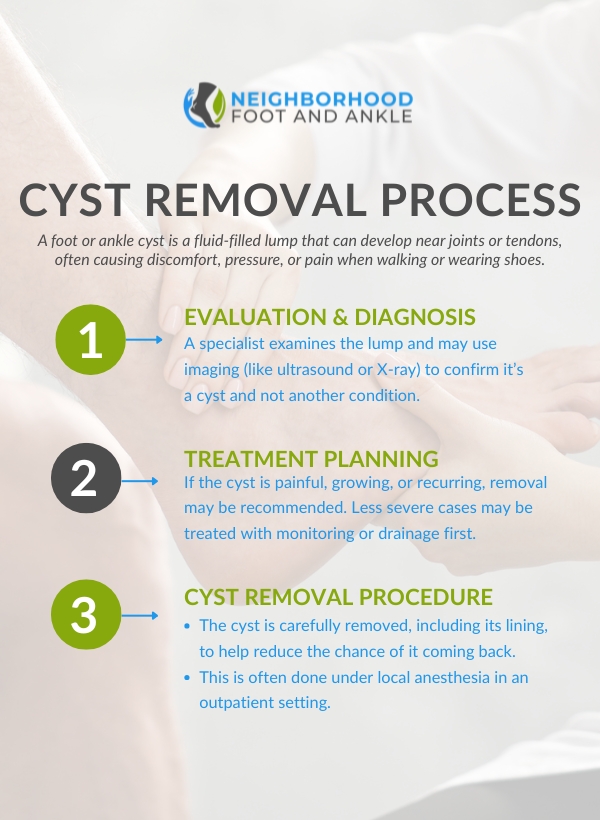
A podiatrist may examine the area, ask about symptoms, review how long the lump has been present, and determine whether imaging is needed. X-rays may be used to evaluate bone involvement, while ultrasound or other imaging may help assess soft tissue structures.
When Should a Cyst Be Removed?
Not every foot or ankle cyst needs surgery. If the cyst is small, painless, and not interfering with shoes or activity, monitoring may be recommended. In some cases, padding, shoe changes, or draining the cyst may be considered.
However, cyst removal may be recommended when the it's painful, growing, recurring, pressing on nearby nerves, or making it difficult to walk comfortably. A cyst that continues to return after drainage may also need a more definitive treatment plan.
“I tell patients that the goal is not just to remove a bump. The goal is to understand what it is, why it is causing symptoms, and how we can reduce the chance of it coming back,” says Dr. Jonathan Pajouh.
What Happens During Foot or Ankle Cyst Removal?
When cyst removal is appropriate, the procedure typically involves carefully removing the cyst and its lining. This helps reduce the chance of recurrence. Depending on the cyst’s location, size, and complexity, the procedure may often be performed in an outpatient setting with local anesthesia.
Before removal, the podiatrist will explain what to expect, including incision placement, wound care, activity limits, shoe restrictions, and recovery timeline. Some patients may need a surgical shoe or limited activity while the area heals.
Recovery varies from person to person. A cyst in a high-pressure area of the foot may require more protection during healing than one in a less weight-bearing location. Follow-up visits help monitor healing and reduce the risk of complications.
Get a Foot or Ankle Lump Evaluated
A lump on the foot or ankle should not be ignored, especially if it is painful, growing, rubbing in shoes, or returning after previous treatment. While many cysts are benign, an accurate diagnosis helps determine whether monitoring, drainage, or cyst removal is the right next step.
At Neighborhood Foot and Ankle, Dr. Pajouh and Dr. Devaraju help patients throughout Dallas and surrounding DFW understand their options for foot and ankle cysts, soft tissue masses, painful lumps, and related concerns.
If you have a lump on your foot or ankle that is causing discomfort or concern, schedule an evaluation. Getting answers early can help protect comfort, mobility, and long-term foot health.
Schedule Your Appointment
Published by Neighborhood Foot and Ankle | Dr. Pajouh and Dr. Devaraju | Serving Dallas and surrounding DFW | 972-726-6464
Educational purposes only. Not medical advice.