
 Connect With Our Team
Foot Anatomy Simplified
The human foot is a complex structure designed to support your entire body, absorb impact, and help you move efficiently throughout the day. Despite its importance, many people do not think about how their feet function until discomfort or injury begins to interfere with daily activities.
Understanding basic foot anatomy can help you recognize early signs of problems, improve performance, and make better decisions about footwear and care. At Neighborhood Foot and Ankle in Dallas, Texas, education is an important part of helping patients stay active and avoid preventable issues.
What Are the Main Parts of the Foot?
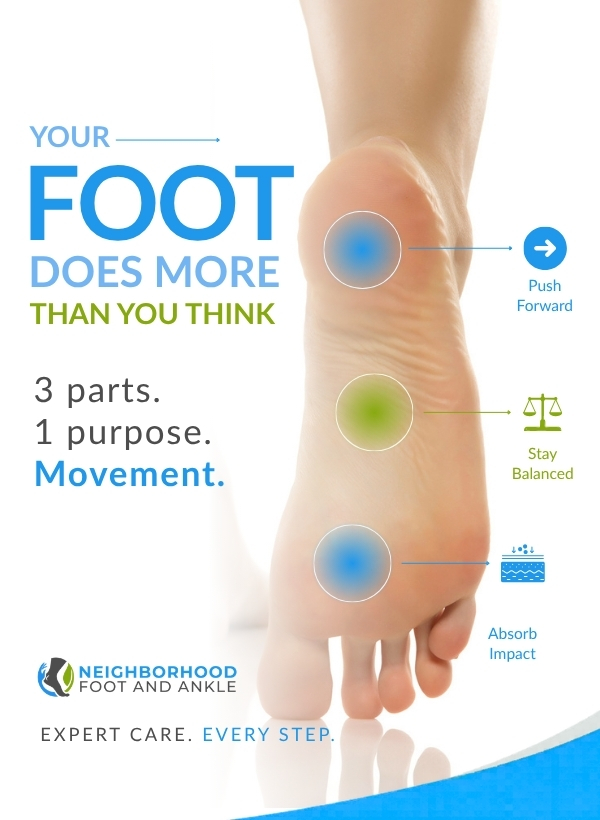
The foot is made up of three primary regions that work together with every step you take.
- Hindfoot – includes the heel and ankle area, responsible for absorbing shock when your foot hits the ground
- Midfoot – forms the arch, helping distribute weight and maintain balance
- Forefoot – includes the toes and ball of the foot, playing a key role in propulsion and forward movement
Each region has a specific job, but they are all interconnected. When one area is not functioning properly, it can affect the entire foot and even lead to discomfort in the ankles, knees, hips, or lower back.
Why Does Foot Structure Matter?
Foot structure directly affects how you walk, stand, and move. Even small imbalances can lead to increased strain over time, especially for individuals who are active or spend long hours on their feet.
Common structural variations include:
- Flat feet, which may lead to overpronation and strain on joints
- High arches, which can reduce shock absorption and increase pressure on certain areas
- Misalignment in the toes or forefoot, which may contribute to conditions like bunions or hammertoes
“Most people think foot pain starts where they feel it, but that is not always the case,” says Dr. Devaraju, DPM. “Sometimes the issue begins with how the foot is built or how pressure is being distributed with each step.”
How Do These Regions Work Together During Movement?
Walking and running rely on a coordinated sequence of motion across all three regions of the foot. This process happens quickly but involves multiple phases.
- The hindfoot absorbs impact as your heel strikes the ground
- The midfoot stabilizes your body and adapts to uneven surfaces
- The forefoot pushes off to move you forward
When this sequence is smooth, movement feels natural and efficient. However, disruptions in any part of the foot can lead to compensation patterns, which often result in pain or fatigue over time.
This is why issues like plantar fasciitis, tendon strain, or joint discomfort often develop gradually rather than suddenly.
What Are Common Signs Something Is Not Working Properly?
Foot problems do not always appear as sharp pain right away. In many cases, the body gives subtle signals first.
Signs to watch for include:
- Foot fatigue after standing or walking
- Pain in the heel, arch, or ball of the foot
- Uneven wear patterns on shoes
- Frequent ankle rolling or instability
- Discomfort that worsens with activity
These symptoms may seem minor at first, but they can indicate underlying alignment or structural concerns. Addressing them early can help prevent more serious conditions from developing.
How Can You Support Better Foot Function?
Maintaining healthy foot mechanics involves a combination of awareness, proper support, and early intervention when needed.
- Wear supportive footwear that matches your foot structure
- Replace worn-out shoes that no longer provide stability
- Stretch and strengthen muscles that support the foot and ankle
- Use custom orthotics when recommended to improve alignment
- Seek evaluation if pain or discomfort becomes consistent
Small adjustments can make a noticeable difference in how your feet feel throughout the day. Over time, better support and alignment can also improve overall movement efficiency.
Neighborhood Foot and Ankle lisenced podiatrists provides evaluations that focus on how your feet function as a whole, not just where pain is located. Patients from McKinney and Frisco often seek care when symptoms begin to affect daily routines, while others travel from Little Elm and Allen for more detailed assessments and long-term support.
The Role of Early Evaluation in Preventing Injury
One of the most effective ways to protect foot health is to address concerns early. Waiting until pain becomes severe can make treatment more complex and prolong recovery time.
Early evaluation allows providers to:
- Identify structural imbalances
- Recommend targeted treatments
- Prevent progression of common conditions
- Support long-term comfort and mobility
By understanding how your feet are designed to function, you can take a more proactive approach to your health and avoid unnecessary setbacks.
Supporting Long-Term Foot Health
Your feet carry you through every part of your day, from simple daily tasks to more demanding physical activity. When they function properly, you may not notice them at all. When something is off, even small issues can become difficult to ignore.
If you are starting to notice changes in comfort, movement, or performance, scheduling an evaluation can help you stay ahead of potential problems and keep your foundation strong.
Schedule Your Foot Exam Now
Published by Neighborhood Foot and Ankle | Dr. Pajouh and Dr. Devaraju | Serving Dallas and DFW communities | (972)-726-6464
Educational purposes only. Not medical advice.