
 Connect With Our Team
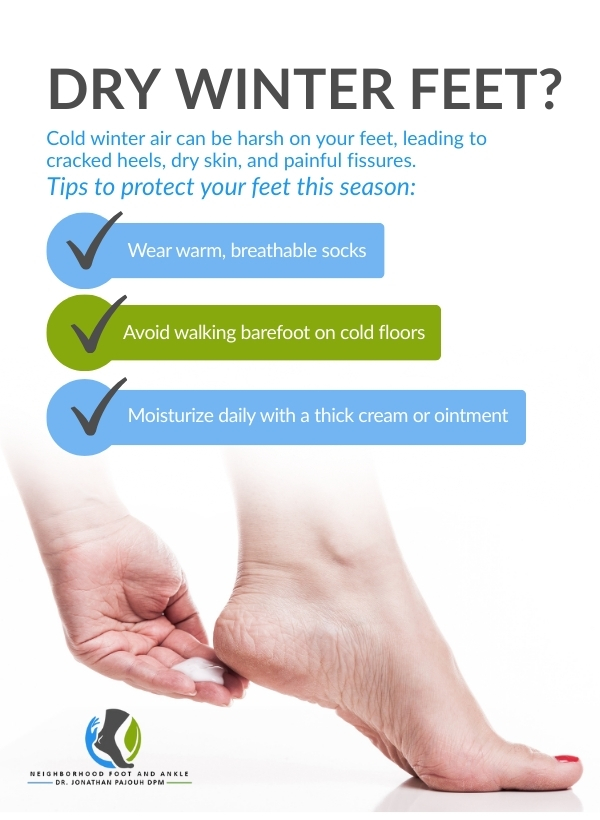
As the temperature drops, many of us focus on staying warm with coats, scarves, and gloves — but our feet often get overlooked. Cold winter air can be harsh, stripping moisture from the skin and leading to common foot problems like cracked heels, dryness, and painful fissures. While these issues may seem minor, neglecting them can lead to significant discomfort and even infection. Prioritizing foot care during the colder months is essential for staying comfortable, mobile, and healthy all winter long.
Why Winter Weather Affects Your Feet
The combination of cold air, low humidity, and indoor heating can quickly dehydrate the skin. Feet are especially vulnerable because the thick skin on the heels and soles contains fewer oil glands, making it harder to retain moisture. As the skin dries out, it becomes more prone to cracking. Deep fissures can be painful, and in some cases, may create openings where bacteria can enter and cause infection. Foot specialists often see an increase in cracked heels during the winter months.
At NMC Foot & Ankle, in Dallas, Texas, Dr. Jonathan Pajouh, DPM, and Dr. Veena Devaraju, DPM, help patients manage and treat these issues, emphasizing the importance of early care—especially for individuals with diabetes, circulatory issues, or chronic dryness.
Simple Habits to Protect Your Feet
Taking a few consistent, easy-to-follow steps can make a big difference in preventing dryness, cracks, and discomfort. By incorporating daily care routines and mindful habits, you can help your feet stay healthy, comfortable, and protected throughout the winter season.
Foot Care Tips From NMC Foot & Ankle, Dallas:
Moisturize Daily
Using a thick foot cream or ointment every day is one of the most effective ways to combat dryness. Ingredients like urea, glycerin, hyaluronic acid, or shea butter help lock in moisture and soften the skin. Applying moisturizer right after a shower can help seal in hydration.
Wear Warm, Breathable Socks
Socks made from wool or moisture-wicking materials help keep feet warm without trapping sweat. Breathable materials reduce irritation and help maintain the skin’s natural moisture barrier. Avoid overly tight socks, which can restrict circulation.
Avoid Walking Barefoot on Cold Floors
Cold floors can draw moisture from the skin and increase the risk of cracking. Wearing slippers or cushioned socks at home provides warmth and protection.
Practice Gentle Exfoliation
Exfoliating once or twice a week helps remove dead, thickened skin that can contribute to cracking. A gentle pumice stone or foot file can be effective, but it’s important not to over-scrub, as this can cause irritation or micro-injuries.
Footwear and Activity Modifications
Proper footwear is critical in preventing winter foot problems. Shoes or boots that fit well, provide cushioning, and allow for breathability help reduce pressure on the heels and maintain skin hydration. Avoid wearing stiff, non-breathable boots for long periods, and consider rotating footwear to give feet a break.
Additionally, staying active with indoor exercises or winter-friendly outdoor activities encourages circulation, which supports skin health and overall foot function.
When to See a Foot Specialist
While many cases of cracked heels or winter dryness can be managed at home, some situations need professional evaluation. Deep fissures, persistent pain, extensive dryness, or any signs of infection—such as redness, swelling, or drainage—are reasons to seek medical care.
The team at NMC Foot & Ankle provides advanced treatment options for more severe cases. Dr. Pajouh and Dr. Devaraju offer care for issues such as deep cracks, fissures, and chronic dryness, using treatments that may include debridement, specialized dressings, and guidance to support healing. They also help patients identify contributing factors and recommend long-term strategies to protect the skin and prevent future problems, ensuring comprehensive foot care throughout the winter season and beyond.
Long-Term Foot Care Tips
Keeping feet healthy throughout the winter doesn’t stop with moisturizing. Here are some habits that support overall foot health:
- Stay Hydrated: Drinking enough water helps support skin hydration from within.
- Choose Proper Footwear: Winter shoes and boots should offer cushioning, warmth, and breathability to reduce strain and prevent dryness.
- Schedule Routine Checkups: Regular foot evaluations can help detect early signs of dryness, fungal infections, or skin breakdown before they become serious problems.
Keep Your Feet Healthy This Winter
Healthy feet are essential for staying active and comfortable during the colder months. With a combination of smart at-home care and timely professional support, you can avoid painful cracks, prevent infections, and keep your feet in great condition all season long.
The specialists at NMC Foot & Ankle—including Dr. Pajouh and Dr. Devaraju—are committed to helping patients maintain strong, healthy feet year-round. Whether you need treatment for severe heel cracks, evaluation for underlying conditions, or expert guidance on winter foot care, their team provides comprehensive, supportive care for adults of all ages.