
 Connect With Our Team
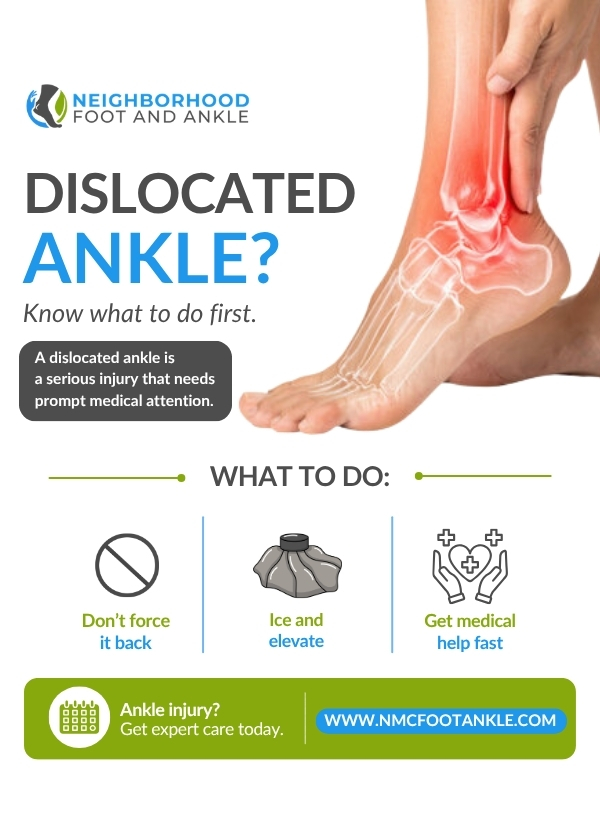
Dislocated Ankle: What You Need to Know
A dislocated ankle is a serious injury that occurs when the bones of the ankle joint are forced out of their normal position. Unlike a simple sprain, this type of injury often involves damage to ligaments, surrounding tissue, and sometimes fractures. Immediate care is critical to reduce the risk of long-term complications and restore proper function.
At Neighborhood Foot and Ankle in Dallas, Texas, our licensed podiatrists evaluate ankle injuries, check for fractures or joint damage, and create a treatment plan designed to support proper healing and long-term stability.
Because the ankle plays a key role in stability and movement, a dislocation can significantly impact your ability to walk, stand, and stay active.
What Happens During an Ankle Dislocation?
The ankle joint is made up of bones, ligaments, and tendons that work together to provide stability and mobility. A dislocation typically happens when excessive force—such as a fall, sports injury, or accident—pushes the joint beyond its normal range.
This can result in:
- Bones shifting out of alignment
- Tearing or stretching of ligaments
- Possible fractures around the joint
- Swelling and visible deformity
An ankle dislocation is not something to wait on. Early treatment is essential to protect the joint and reduce the risk of long-term instability.
What Should You Do Immediately After the Injury?
Acting quickly and correctly can help minimize damage before you receive medical care.
- Do not attempt to realign the ankle yourself
- Keep the ankle immobilized and avoid weight-bearing
- Apply ice using a barrier to protect the skin
- Elevate the ankle above heart level if possible
- Seek immediate medical attention
These steps are meant to stabilize the injury temporarily until proper evaluation and treatment can be performed.
How Is a Dislocated Ankle Treated?
Treatment depends on the severity of the dislocation and whether fractures or ligament damage are present. The primary goal is to safely realign the joint and support healing.
Common treatment approaches include:
- Manual realignment performed by a medical professional
- Imaging such as X-rays or advanced scans to assess damage
- Immobilization with a splint, cast, or brace
- Surgical intervention if the joint is unstable or fractures are involved
Patients from McKinney often seek urgent care when injuries occur, while others travel from Frisco for comprehensive evaluation and follow-up treatment.
What Does Recovery Look Like?
Recovery from an ankle dislocation takes time and requires a structured approach to restore strength, stability, and mobility.
Typical recovery includes:
- Following instructions for immobilization and protection
- Gradual return to weight-bearing as advised
- Rehabilitation to rebuild strength and range of motion
- Avoiding high-impact activities until fully healed
“Recovery is not just about healing the joint—it’s about restoring function and preventing future injuries,” says Dr. Pajouh, DPM. “Rehabilitation plays a key role in getting patients back to their normal activity level.”
How Can You Prevent Future Ankle Injuries?
While not all injuries can be avoided, certain habits can reduce your risk of dislocation or instability.
- Strengthen the muscles that support the ankle
- Wear supportive, well-fitting footwear
- Be cautious on uneven or slippery surfaces
- Use proper technique during sports and exercise
- Address minor ankle sprains early to prevent instability
Building strength and stability over time can help protect the joint and improve overall movement.
When Should You Seek Medical Care?
An ankle dislocation is considered a medical emergency. Delaying care can lead to complications such as chronic instability, reduced mobility, or long-term joint damage.
Seek care immediately if you notice:
- Severe pain or inability to move the ankle
- Visible deformity or misalignment
- Significant swelling or bruising
- Numbness or tingling
Prompt evaluation ensures proper alignment, protects surrounding structures, and supports a more complete recovery.
Protecting Your Long-Term Mobility
An ankle dislocation can be a serious setback, but with early treatment and proper rehabilitation, most patients can return to their normal activities. The key is addressing the injury quickly and following a structured recovery plan.
If you experience a significant ankle injury, schedule an evaluation with our Neighborhood Foot and Ankle lisenced podiatrists in Dallas, Texas, to get the care you need and protect your long-term mobility.
Book Your Ankle Evaluation Online
Published by Neighborhood Foot and Ankle | Dr. Pajouh and Dr. Devaraju | Serving Dallas and DFW communities | (972)-726-6464
Educational purposes only. Not medical advice.