
 Connect With Our Team
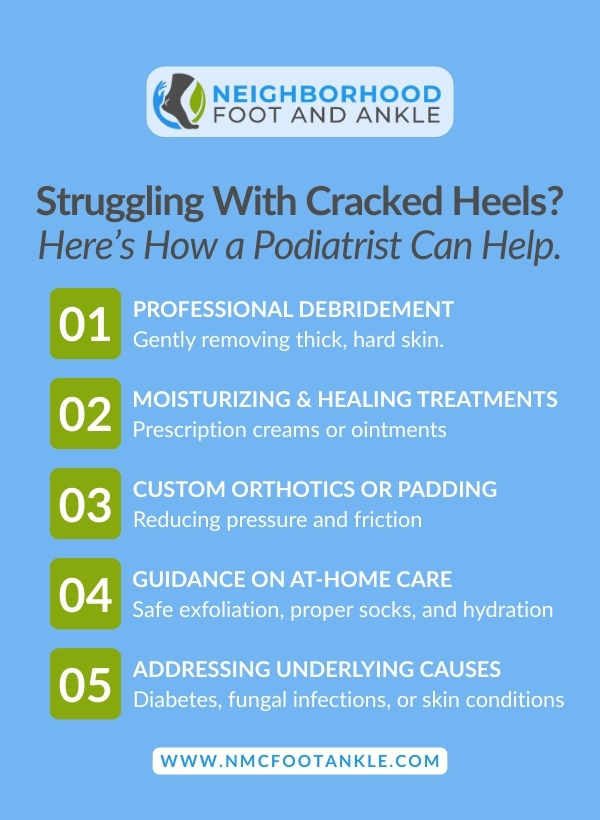
Cracked heels may seem like a minor cosmetic concern, but they can quickly become painful and problematic if ignored. What starts as dry, thickened skin can deepen into fissures that bleed, sting, and increase the risk of infection. In Dallas, where dry weather, open-back shoes, and long hours on your feet are common, heel fissures are a frequent reason patients seek podiatric care.
At Neighborhood Foot & Ankle, Dr. Devaraju, DPM and Dr. Pajouh, DPM, treat cracked heels with a medical approach focused on healing, prevention, and addressing underlying causes. Proper treatment not only restores smoother skin but also protects against complications.
Why Do Cracked Heels Become a Medical Concern?
The skin on your heels naturally thickens to withstand pressure from standing and walking. However, when that thickened skin becomes excessively dry, it can lose flexibility. Repeated pressure causes the skin to split, forming painful cracks known as heel fissures.
Several factors increase the risk of developing cracked heels:
- Prolonged standing on hard surfaces
- Fungal infections or underlying skin conditions
- Wearing open-back or unsupportive footwear
- Obesity or increased pressure on the heels
- Diabetes or circulation concerns
- Cold or dry environmental conditions
When fissures deepen, they can bleed and create an entry point for bacteria. For patients with diabetes or compromised circulation, even small skin openings can lead to more serious infections. Early evaluation helps prevent progression and protects overall foot health.
How Do Podiatrists Treat Cracked Heels?
Medical treatment goes beyond over-the-counter lotions. At Neighborhood Foot & Ankle, care is customized based on the severity of the fissures and any contributing medical conditions.
Professional treatment may include:
- Professional debridement to gently remove thick, hardened skin
- Prescription-strength moisturizing creams or ointments
- Padding or custom orthotics to reduce pressure and friction
- Evaluation for fungal infections or inflammatory skin conditions
- Guidance on safe at-home exfoliation and hydration
Professional debridement is performed carefully to reduce thick callused skin without causing injury. Removing excess buildup allows moisturizers to penetrate more effectively and promotes healing.
Dr. Devaraju, DMP, explains, “Cracked heels are more than a cosmetic issue. When we treat the underlying dryness and pressure points early, we can prevent painful fissures and reduce the risk of infection.”
For some patients, biomechanical factors such as excessive heel pressure or poor arch support contribute to repeated cracking. Custom orthotics can redistribute weight more evenly across the foot, reducing strain on the heels during walking.
Safe at Home Care
At-home care plays an important role in maintaining results after in-office treatment and preventing future cracking. Consistency is key. Daily habits directly affect how well your skin retains moisture and how much pressure your heels experience. While regular care is helpful, aggressive self-trimming, metal graters, or sharp tools can cause cuts that increase the risk of infection and delayed healing.
Safe at-home strategies may include:
- Daily use of physician-recommended moisturizers
- Wearing supportive, closed-back shoes
- Using gentle exfoliation methods as directed
- Keeping feet clean and dry
- Monitoring for redness, swelling, or drainage
Applying moisturizer at night and wearing breathable socks can help improve hydration. Avoid walking barefoot on hard surfaces for prolonged periods, as this increases stress on the heels and may worsen fissures.
Patients with diabetes, neuropathy, or circulation concerns should avoid attempting to trim thickened skin themselves. Even small cuts can become serious. Professional podiatric care is the safest option when thick calluses or cracks begin to develop.
When Should You Schedule an Evaluation?
If your heels are painful, bleeding, or not improving with basic moisturizers, it is time to seek professional care. You should also schedule an appointment if you have diabetes, neuropathy, or circulation issues and notice cracking or skin breakdown.
Signs that require evaluation include:
- Deep or widening fissures
- Bleeding or signs of infection
- Persistent pain when walking
- Recurring thick callus buildup
- Skin that remains dry despite regular moisturizing
Ignoring cracked heels can allow the condition to worsen gradually. What begins as dryness may progress into chronic fissures that interfere with walking and daily comfort.
At Neighborhood Foot & Ankle in Dallas, Dr. Pajouh, DPM and Dr. Devaraju, DPM provide comprehensive heel care tailored to your individual needs. Early treatment helps restore smooth, healthy skin and prevents painful complications.
If you are experiencing cracked heels or persistent heel pain, schedule a professional evaluation to protect your foot health year-round.
*For educational purposes only. Not medical advice