
 Connect With Our Team
Cracked Heels: Causes, Nutrient Concerns, and Treatment in Dallas
Cracked heels can begin as rough, dry skin, but they become painful when the splits deepen. Heel fissures can bleed, make walking uncomfortable, or create an opening where bacteria can enter. That is why cracked heels should not always be treated as a cosmetic concern.
At Neighborhood Foot and Ankle, Dr. Jonathan Pajouh and Dr. Veena Devaraju evaluate heel cracking to determine whether pressure, footwear, dry skin, or an underlying condition may be contributing. Understanding why it developed can help keep it from returning.
Why Do Heels Crack?
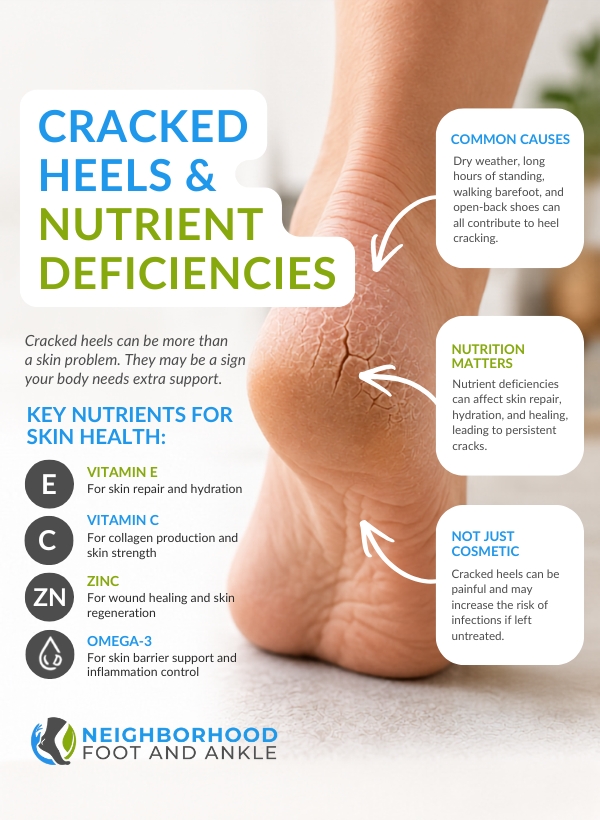
The skin around the heel is placed under pressure during standing and walking. When that skin becomes dry, thick, or less flexible, pressure on the heel pad can cause the edges to split.
Several everyday habits may increase the likelihood of cracked heels:
• Standing or walking for long periods
• Wearing sandals or open-back shoes
• Walking barefoot on hard surfaces
• Taking long, hot showers
• Using harsh soaps that strip moisture
Dry weather can make the problem worse. When the air contains less moisture, skin may lose water more quickly. Without regular moisturizing and protection, the heel can become rough and callused before cracks appear.
Some people are more prone to fissures because of their gait, foot structure, excess heel pressure, or callused skin. Lotion may provide temporary relief, but it may not correct the pressure or thickened skin that keeps reopening the area.
When Cracked Heels Point to More Than Dry Skin
Persistent or severe cracking may sometimes be associated with an underlying health concern. Diabetes can contribute to very dry skin and slower healing. Reduced sensation may also make it harder to notice a crack before it becomes deeper or infected.
Other possible contributors include circulation problems, thyroid disease, eczema, psoriasis, fungal infections, and certain medications. A podiatric evaluation can help distinguish ordinary dryness from a condition that requires additional care.
“Many patients assume cracked heels only need more lotion, but when the skin keeps splitting, becomes painful, or starts bleeding, we need to look at pressure, skin health, circulation, and medical history,” explains Dr. Pajouh.
People with diabetes should be especially cautious about treating heel cracks themselves. Cutting away thick skin or using sharp tools can cause an injury that may be slow to heal. Deep cracks, redness, warmth, drainage, swelling, or increasing pain should be evaluated promptly.
Can Nutrition Affect Heel and Skin Health?
Nutrition supports normal skin maintenance and wound healing, but cracked heels alone do not prove that someone has a vitamin or mineral deficiency. Most heel fissures are related to dryness, pressure, thickened skin, footwear, or a combination of factors.
Still, certain nutrients play important roles in skin health. Vitamin C is needed for collagen production and normal wound healing. Zinc supports tissue repair, while inadequate zinc levels can delay healing. Essential fatty acids help support the skin barrier, and vitamin E functions as an antioxidant that helps protect cells.
Food sources may include:
• Citrus fruits, berries, peppers, and broccoli for vitamin C
• Meat, seafood, beans, nuts, and dairy for zinc
• Fish, walnuts, flaxseed, and chia seeds for omega-3s
• Nuts, seeds, vegetable oils, and leafy greens for vitamin E
Supplements should not automatically be used to treat cracked heels. Large doses may be unnecessary and may interfere with medications or other nutrients. A physician can determine whether symptoms, diet, or testing suggest a deficiency.
How Cracked Heels Are Treated
Treatment depends on the depth of the cracks and their cause. Mild cases may improve with consistent moisturizing, protective footwear, and changes to bathing or skin-care habits. Thick creams or ointments generally hold moisture better than thin lotions.
A licensed podiatrists, like Dr. Devaraju at Neighborhood Foot and Ankle, may carefully reduce excess callused skin, recommend products containing ingredients such as urea, evaluate shoe fit, or suggest heel cups and other pressure relief. Patients should avoid aggressive scraping, cutting, or peeling because removing too much skin can lead to bleeding and infection.
Helpful daily steps include applying moisturizer after bathing, wearing socks with closed-back supportive shoes, avoiding prolonged barefoot walking, and checking the heels for deeper cracks or changes.
Schedule a Cracked Heel Evaluation in Dallas
Cracked heels often improve with the right care, but recurring, painful, or bleeding fissures deserve attention. An evaluation can identify skin buildup, pressure patterns, infection risk, and medical factors that may be slowing healing.
Contact us to schedule an appointment with Neighborhood Foot and Ankle in Dallas, Texas, if your heels remain cracked despite home care or if you have diabetes, poor circulation, numbness, redness, drainage, or pain. Early care can help protect the skin and keep you walking comfortably.
Book Your Appointment Online
Published by Neighborhood Foot and Ankle | Dr. Pajouh and Dr. Devaraju | Serving Dallas and surrounding DFW | 972-726-6464.
Educational purposes only. Not medical advice.