
 Connect With Our Team
Heel Fissures and Cracked Heel Treatment in Dallas
Cracked heels can start as dry, rough skin, but they can become painful when the skin splits open. These cracks are called heel fissures. They may appear as thin lines around the heel or deeper openings in thickened skin. In some cases, heel fissures can bleed, sting, make walking uncomfortable, or increase the risk of infection.
The heel carries pressure with every step. When the skin is dry, thick, or unsupported, that pressure can cause cracking. At Neighborhood Foot and Ankle in Dallas, Texas, Dr. Pajouh and Dr. Devaraju evaluate cracked heels to determine what is causing the skin breakdown and how to treat it safely. For patients traveling from Highland Park, early care can help prevent cracked heels from becoming more painful.
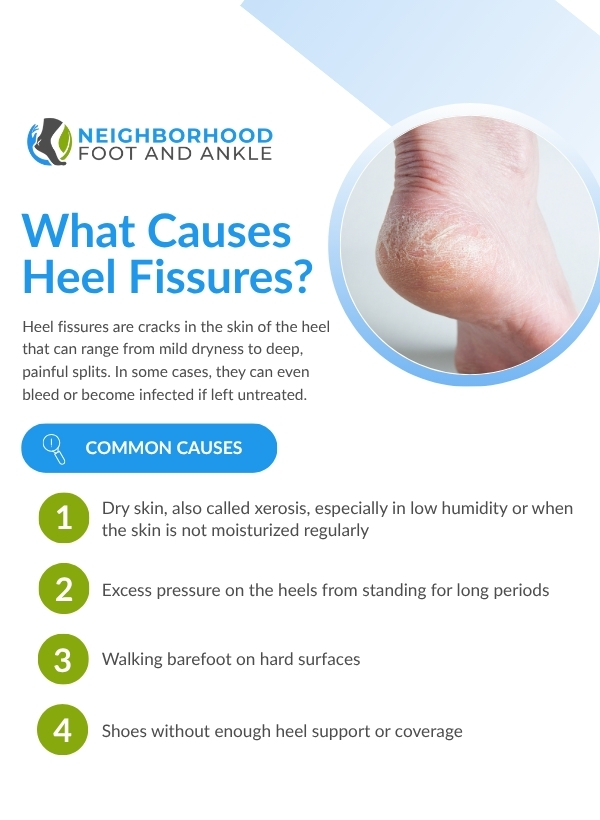
What Causes Heel Fissures?
Heel fissures often develop when dry skin, pressure, and friction occur together. Dry skin, also called xerosis, is one of the most common causes. When the skin loses moisture, it becomes less flexible. As body weight presses down on the heel, the dry skin may split.
Standing for long periods can also increase pressure on the heels, especially for people who work on hard floors or spend much of the day on their feet. Shoes can play a role too. Open-back shoes, thin sandals, or footwear without enough heel support may allow the heel pad to spread outward, placing more stress on already dry skin.
Other contributing factors may include:
- Walking barefoot on hard surfaces
- Not moisturizing the feet regularly
- Thick calluses around the heel
- Low humidity or frequent dry conditions
- Aging skin that holds less moisture
- Diabetes, circulation issues, or nerve concerns
Heel fissures may seem like a simple skin issue, but the cause matters. Treating only the surface crack without addressing dryness, pressure, callus buildup, or medical risk factors may allow the problem to return.
When Should Cracked Heels Be Evaluated?
Cracked heels should be evaluated when the fissures are painful, deep, bleeding, worsening, or not improving with home care. Evaluation is also important if there is redness, warmth, swelling, drainage, odor, or tenderness around the crack. These can be warning signs of infection.
Patients with diabetes, poor circulation, neuropathy, or immune system concerns should be especially careful. Even a small crack in the heel can become more serious when healing is delayed or sensation is reduced.
Dr. Pajouh says: “Cracked heels are not always just cosmetic. When the skin splits, it creates an opening that can become painful or infected. We want to treat the skin safely and understand why the cracking is happening.”
A podiatric evaluation may include checking the depth of the fissures, looking for infection, reviewing skin thickness, and discussing footwear, activity level, and medical history. If calluses are contributing to the cracking, professional care may be needed to reduce thickened skin safely.
Safe Treatment for Heel Fissures
Treatment depends on the severity of the cracking and whether infection or other health concerns are present. Mild dryness may improve with daily moisturizing and better footwear support. Deeper fissures may need more structured care.
A licensed podiatrist, like those at Neighborhood Foot and Ankle, may recommend thick moisturizers, including urea-based creams, to soften dry and thickened skin. In some cases, medicated creams, protective dressings, or professional callus care may be needed. If infection is suspected, treatment may include additional medical care.
Patients should avoid cutting thickened skin at home or aggressively filing the heels. This can create wounds, irritation, or uneven pressure that makes cracking worse. Gentle exfoliation may help some people, but it should be done carefully and only when the skin is not open or bleeding.
Preventing Cracked Heels From Coming Back
Prevention focuses on keeping the heel skin moisturized, protected, and supported. Daily care is often more effective than waiting until cracks become painful.
Helpful habits include:
- Moisturizing daily with a thick foot cream
- Wearing supportive, closed-back shoes when possible
- Avoiding barefoot walking on hard floors
- Using socks to help lock in moisture after applying cream
- Gently exfoliating thickened skin when safe
Patients who stand for long periods may also benefit from better shoe cushioning and support. Reducing pressure on the heel can help protect the skin and lower the chance of recurring fissures.
Healthier Heels Start With Proper Foot Care
Heel fissures can be uncomfortable and sometimes risky if the skin opens deeply. While mild dryness may improve with consistent home care, painful or recurring cracks deserve professional attention.
At Neighborhood Foot and Ankle in Dallas, Texas, Dr. Pajouh and Dr. Devaraju provide evaluation and treatment for cracked heels, dry skin concerns, calluses, and related foot problems. If heel fissures are making it painful to walk or are not healing well, contact our team so we can help you protect your feet.
Book Your Foot Evaluation Now
Published by Neighborhood Foot and Ankle | Dr. Pajouh and Dr. Devaraju | Serving Dallas and surrounding DFW | 972-726-6464.
Educational purposes only. Not medical advice.