
 Connect With Our Team
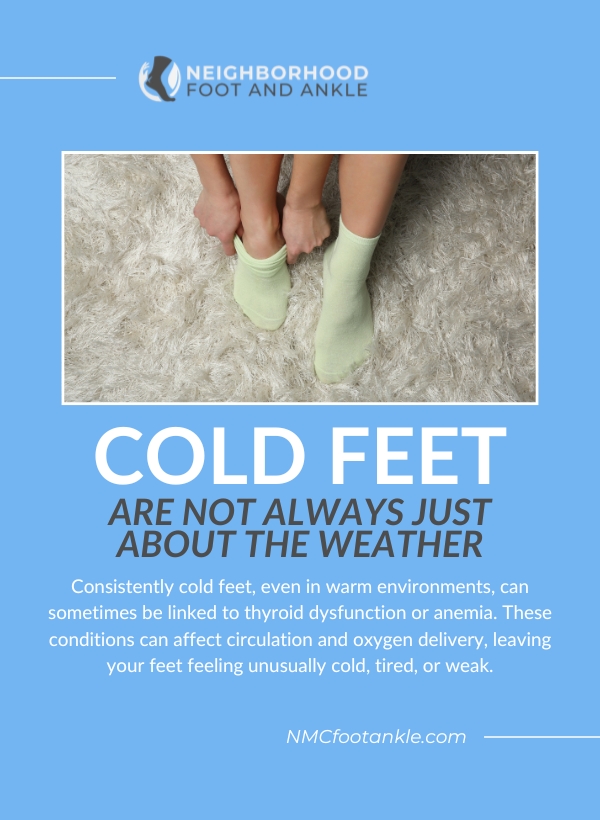
Cold Feet Are Not Always Just About the Weather
Cold feet can happen on a chilly day, after being outside, or when you are walking around barefoot on cold floors. In those cases, the reason may be simple.
But when your feet consistently feel cold, even in warm environments, it may be worth paying closer attention. Ongoing coldness in the feet can sometimes point to changes in circulation, nerve function, metabolism, oxygen delivery, or another underlying health concern.
At Neighborhood Foot and Ankle in Dallas, Texas, Dr. Jonathan Pajouh and Dr. Veena Devaraju evaluate foot symptoms that patients may be tempted to dismiss, including cold feet, tingling, numbness, color changes, and circulation concerns.
Cold Feet Can Be a Clue
The feet are far from the heart, so changes in blood flow, nerve signaling, or body temperature regulation may be noticed there first. Some patients describe their feet as cold all the time. Others notice that their toes feel icy, their skin looks pale or bluish, or their feet feel cold along with tingling, discomfort, or fatigue.
Occasional cold feet may not be unusual. Persistent cold feet are different, especially when the symptom keeps returning, affects daily comfort, or appears with other changes.
Why Can Thyroid Dysfunction Make Feet Feel Cold?
One possible contributor is hypothyroidism. With hypothyroidism, the thyroid does not produce enough hormones to properly regulate metabolism. When metabolism slows, the body may produce less heat and circulation can feel less efficient.
For some people, this may lead to unusually cold hands or feet. It may also be connected with dry skin, fatigue, sluggishness, weight changes, or feeling cold more easily than usual.
Cold feet alone do not automatically mean someone has a thyroid condition. However, when cold feet are persistent and occur with other whole-body symptoms, it may be a sign that further evaluation is needed.
How Can Anemia Affect the Feet?
Anemia is another possible cause of cold feet. With anemia, the body does not have enough healthy red blood cells to carry oxygen efficiently. When oxygen delivery is reduced, the hands and feet may feel colder than usual.
Anemia may also cause fatigue, weakness, shortness of breath, dizziness, pale skin, tingling, or general low energy. Some people notice that their feet feel cold even when the room is warm or when others feel comfortable.
Because anemia affects oxygen delivery throughout the body, cold feet may be only one part of the picture.
Other Causes Should Not Be Overlooked
Thyroid dysfunction and anemia are common contributors, but they are not the only possibilities. Cold feet may also be related to circulation problems, vascular conditions, nerve irritation, diabetes-related nerve changes, smoking history, certain medications, or pressure on nerves.
The pattern matters. A foot that is suddenly cold, painful, discolored, or very different from the other side should be taken seriously. Coldness with numbness, wounds, skin color changes, or worsening pain should also be evaluated.
Dr. Pajouh explains, “If someone tells me their feet feel cold all the time, I want to know what else is happening. Is there numbness? Color change? Pain? Fatigue? Those details help us figure out whether it is a foot issue, a circulation concern, or something that needs a deeper look.”
A Foot and Ankle Evaluation May Include:
A podiatry evaluation can help determine whether the cold sensation appears related to the foot and ankle, circulation, nerve function, skin changes, or another health concern.
The exam may include checking:
• Skin temperature and color
• Circulation in the feet
• Sensation and nerve response
• Areas of pain, numbness, or tingling
• Skin condition, wounds, or pressure points
If symptoms suggest a broader medical issue, your Neighborhood Foot & Ankle podiatrist may recommend additional testing or coordination with another healthcare provider.
Do Not Ignore Persistent Cold Feet
Cold feet are not always just about the weather. When your feet feel cold again and again, even in warm settings, your body may be giving you a clue that something needs attention.
Thyroid dysfunction, anemia, poor circulation, nerve issues, and vascular conditions can all play a role. The goal is not to assume the worst, but to understand the pattern and identify the cause.
If you are dealing with persistent cold feet, tingling, numbness, skin color changes, or circulation concerns, contact Neighborhood Foot and Ankle in Dallas, Texas now.
Schedule Your Evaluation Online
Published by Neighborhood Foot and Ankle | Dr. Pajouh and Dr. Devaraju | Serving Dallas and surrounding DFW | 972-726-6464.
Educational purposes only. Not medical advice.