
 Connect With Our Team
Understanding Bunions and Big Toe Joint Pain
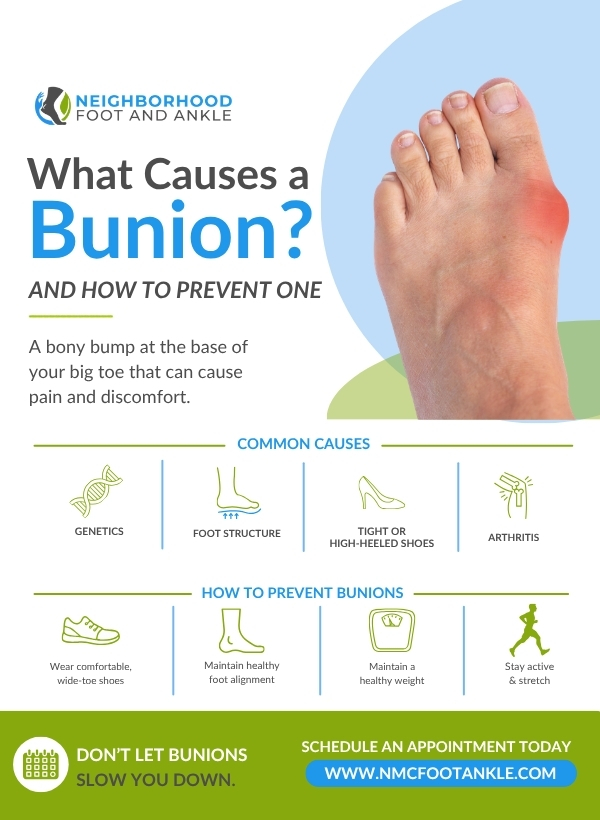
A bunion is a bony bump that forms at the base of the big toe when the joint shifts out of its normal alignment. As the big toe begins to lean toward the second toe, the joint at the base of the toe can become more prominent, irritated, swollen, and painful. For some people, bunions develop slowly over time. For others, discomfort becomes noticeable when shoes start rubbing the area or walking becomes uncomfortable.
Neighborhood Foot and Ankle helps patients understand what is causing their foot pain and what can be done to manage it early. Dr. Pajouh and Dr. Devaraju evaluate bunions, toe alignment concerns, shoe-related irritation, and related foot structure issues to help patients find the right treatment approach based on their symptoms, activity level, and long-term foot health.
Bunions are common, but they should not be ignored. Even when the bump starts small, changes in the big toe joint can gradually affect balance, walking, shoe fit, and comfort during everyday activities.
What Causes a Bunion?
Several factors can contribute to bunion formation, and many patients have more than one risk factor. Bunions are not always caused by shoes alone. They often develop because of inherited foot structure, abnormal pressure patterns, or joint instability that changes how the foot moves over time.
Common causes and risk factors include:
- Genetics: Bunions often run in families, especially when certain foot shapes or joint mechanics are inherited.
- Foot structure: Flat feet, low arches, excessive pronation, or abnormal bone alignment can place added stress on the big toe joint.
- Tight shoes: Narrow shoes or pointed toe boxes can crowd the toes and increase irritation around the joint.
- High heels: Shoes that push body weight toward the front of the foot can worsen pressure on the big toe joint.
- Arthritis: Inflammatory types of arthritis, including rheumatoid arthritis, may contribute to joint changes and deformity.
- Repetitive stress: Jobs, sports, or activities that place repeated pressure on the forefoot may aggravate symptoms.
A bunion can also lead to secondary problems. As the big toe shifts, pressure may transfer to the smaller toes, sometimes contributing to calluses, hammertoes, corns, or pain under the ball of the foot. The earlier these changes are evaluated, the easier it may be to manage discomfort and slow progression.
Early Signs of a Bunion
Bunions are not always painful at first. Many people first notice a change in the shape of the foot or difficulty finding comfortable shoes. Over time, the area may become more sensitive, especially after standing, walking, or wearing dress shoes.
Signs to watch for include:
- A visible bump at the base of the big toe
- Redness, swelling, or tenderness around the joint
- Big toe leaning toward the second toe
- Pain when walking or standing for long periods
- Difficulty wearing certain shoes
- Calluses or thickened skin near the big toe or second toe
- Stiffness or reduced motion in the big toe joint
“Bunions are easier to manage when we understand what is causing the pressure in the first place,” says Dr. Pajouh. “The goal is not just to look at the bump, but to look at how the foot is moving, how the shoes are fitting, and how we can help reduce pain before it gets worse.”
This type of evaluation matters because bunions can progress differently from person to person. Some remain mild for years, while others become more painful or limiting over time.
How Can You Help Prevent a Bunion From Getting Worse?
While not every bunion can be fully prevented, especially when genetics or inherited foot structure play a role, there are steps that may help reduce irritation and slow progression. Prevention is often about improving support, reducing pressure, and addressing symptoms before they begin interfering with daily life.
Helpful prevention strategies may include:
- Choose shoes with a wider toe box so the toes are not squeezed together.
- Avoid frequent use of high heels or narrow dress shoes.
- Wear supportive footwear that helps control excess motion.
- Use padding when shoes rub against the bunion area.
- Stretch the feet and calves to support better movement.
- Consider custom orthotics if foot structure is contributing to pressure.
- Schedule an evaluation if pain, swelling, or alignment changes continue.
Footwear plays a major role in comfort. A shoe should allow the toes to spread naturally without forcing the big toe inward. Supportive shoes may also help improve how weight is distributed across the foot.
For patients traveling from Frisco and McKinney, Neighborhood Foot and Ankle provides foot and ankle evaluations focused on identifying the source of discomfort, not just the visible symptom.
When to See a Podiatrist for Bunion Pain
A podiatrist should evaluate a bunion when pain becomes frequent, shoes become difficult to wear, the toe continues shifting, or swelling does not improve with simple changes. Waiting until the pain becomes severe can make treatment more complicated.
Treatment may begin with conservative options such as shoe changes, padding, custom orthotics, activity adjustments, anti-inflammatory support when appropriate, or monitoring the bunion over time. If symptoms become severe or the deformity significantly affects function, surgical options may be discussed based on the patient’s needs and exam findings.
Dr. Devaraju and Dr. Pajouh, licensed podiatrists, help patients understand their options clearly so they can make informed decisions about their foot health.
Supporting Long-Term Foot Comfort
Bunions can be frustrating, especially when they affect the shoes you wear, how far you can walk, or how comfortable you feel on your feet. The good news is that early evaluation and proper care can make a meaningful difference.
If you are noticing a bump near your big toe, ongoing soreness, swelling, or changes in how your shoes fit, Neighborhood Foot and Ankle can help you take the next step with a professional foot evaluation.
Schedule Your Exam
Published by Neighborhood Foot and Ankle | Dr. Pajouh and Dr. Devaraju | Serving Dallas and DFW communities | (972)-726-6464
Educational purposes only. Not medical advice.