
 Connect With Our Team
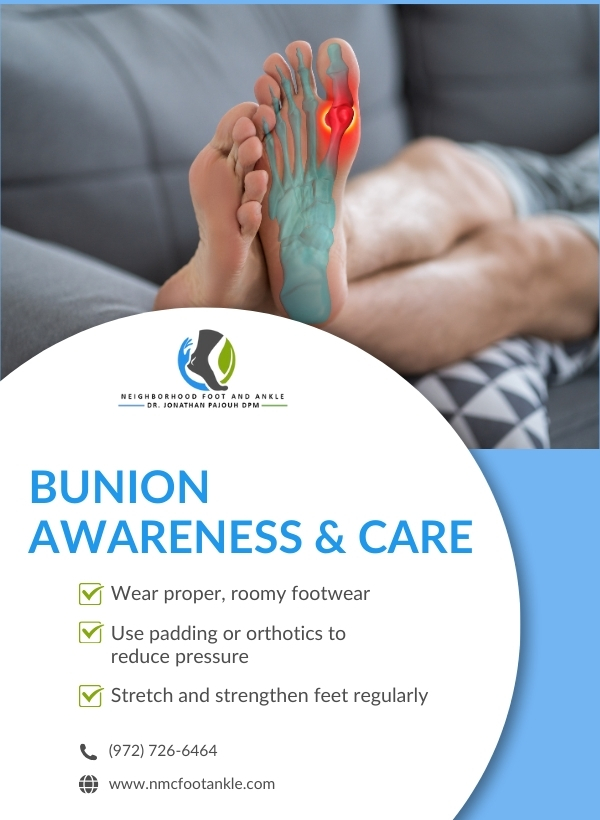
Bunions aren’t just a cosmetic concern—they can impact your daily life, causing pain, swelling, and changes in the way you walk. Recognizing bunions early and understanding how to care for them can make a big difference in preventing progression and maintaining foot health.
What is a Bunion?
A bunion is a bony bump that forms at the base of the big toe when the joint shifts out of alignment. The big toe gradually leans toward the other toes, which can cause discomfort, redness, and swelling. Bunions often develop due to a combination of genetics, foot structure, and footwear choices. Tight or narrow shoes, high heels, or prolonged pressure on the forefoot can accelerate bunion formation, but not everyone who wears restrictive shoes develops them—genetics and foot mechanics play a significant role.
Dr. Jonathan Pajouh, DPM at NMC Foot & Ankle in Dallas, provides expert evaluation and care to help manage bunions and maintain healthy, pain-free feet.
Why Early Care Matters
Your feet carry you through every part of your day, so even minor bunion discomfort can affect your mobility and quality of life. Ignoring bunions can lead to increased pain, inflammation, and difficulty finding comfortable shoes.
Signs You Shouldn’t Ignore
-
Persistent pain or swelling around the big toe joint
-
Difficulty walking or wearing shoes comfortably
-
Redness, calluses, or corns developing near the bunion
-
Noticeable shift in the alignment of your big toe
These symptoms can worsen over time, leading to chronic discomfort and changes in gait that affect your knees, hips, and back. If you notice any of these warning signs, it’s time to seek professional evaluation. Dr. Pajouh in Dallas offers comprehensive treatment for bunions.
Non-Surgical Bunion Care
Not every bunion requires surgery. Many patients find relief through conservative measures that reduce pressure on the joint and improve foot function:
-
Proper, roomy footwear: Shoes with a wide toe box and soft materials help reduce friction and pressure on the bunion.
-
Padding and orthotics: Custom or over-the-counter padding can cushion the bunion, while orthotic inserts support proper foot alignment.
-
Stretching and strengthening exercises: Regular exercises targeting the toes, arches, and calves can improve foot flexibility and reduce discomfort.
Incorporating these strategies early can slow bunion progression, relieve pain, and prevent secondary problems like calluses, corns, or changes in gait.
Lifestyle Habits to Support Bunion Health
In addition to exercises and proper footwear, certain lifestyle habits can help slow bunion progression and reduce discomfort. Maintaining a healthy weight decreases pressure on your feet, while low-impact activities like swimming or cycling allow you to stay active without aggravating the bunion. Stretching your feet and calves regularly, taking breaks from prolonged standing, and avoiding shoes that squeeze the toes can all contribute to long-term foot comfort.
Incorporating these habits into your daily routine complements professional care from NMC Foot & Ankle in Dallas, helping you manage bunions effectively and maintain mobility for everyday activities.
When Surgery May Be Needed
If bunions continue to cause pain despite conservative measures, surgical intervention may be considered. Bunion surgery realigns the joint and removes the bony bump to restore comfort and function. Dr. Jonathan Pajouh, DPM, specializes in foot and ankle procedures and can guide patients through both non-surgical and surgical options, tailoring care to individual needs.
Tips for Daily Foot Health
-
Avoid high heels or tight shoes that squeeze the toes
-
Apply ice to inflamed bunions to reduce swelling
-
Perform gentle toe stretches and foot exercises daily
-
Monitor changes in your feet and address discomfort early
Regular foot care and awareness of bunion symptoms are key to maintaining mobility and comfort.
Importance of Professional Evaluation
Bunions can lead to more than just localized pain—they can affect your posture, balance, and overall mobility. Early evaluation by a podiatrist helps identify the underlying causes, determine the severity, and create a personalized care plan. ankle services, from bunion management to advanced treatments, supporting patients in staying active and pain-free.
Take Action for Your Foot Health
If you’ve noticed changes in your big toe, persistent discomfort, or difficulty finding comfortable shoes, don’t wait. Early intervention is essential to prevent bunions from worsening and to maintain your mobility.