
 Connect With Our Team
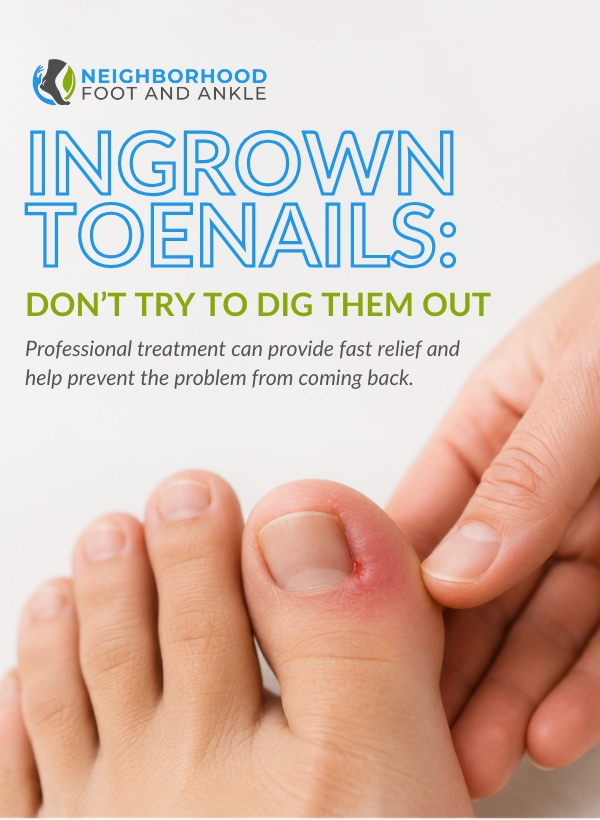
Ingrown Toenails: Why You Should Not Dig Them Out
An ingrown toenail may begin as a small area of tenderness along the side of the nail. Before long, wearing shoes, walking, or even letting a bedsheet touch the toe can become uncomfortable.
It can be tempting to grab a pair of clippers and dig into the painful corner. Unfortunately, cutting deeply into the nail or surrounding skin may make the problem worse. It can leave behind a sharp nail edge, create a wound, introduce bacteria, or cause the nail to grow back into the same area.
For patients dealing with ongoing pain, swelling, or repeated ingrown toenails, Neighborhood Foot and Ankle offers professional care in Dallas. Licensed podiatrists Dr. Jonathan Pajouh and Dr. Veena Devaraju evaluate how the nail is growing, whether the surrounding skin is irritated or infected, and what may be causing the problem to return..
What Causes an Ingrown Toenail?
An ingrown toenail develops when the side or corner of the nail presses or grows into the surrounding skin. The big toe is affected most often, although the problem can occur on any toe.
Improper nail trimming is a common contributor. Cutting the nail too short or rounding the corners can encourage the edge to grow into the skin rather than over it. Tight shoes may also place repeated pressure on the nail and toe.
Other contributing factors may include:
• Naturally curved or wide toenails
• Shoes that crowd the toes
• Repeated pressure from sports or activity
• An injury to the nail or toe
• Sweaty feet that soften the surrounding skin
Some people inherit a nail shape that makes ingrown toenails more likely. Thickened or difficult-to-trim nails can also increase the risk, particularly when the corners cannot be seen or reached easily.
Signs the Nail Is Becoming Irritated
Early symptoms may include tenderness when pressure is placed on the toe. The skin along the nail may look red, swollen, or raised. As irritation increases, the area can become painful during walking or while wearing closed-toe shoes.
Signs that the condition may be worsening include:
• Increasing redness or swelling
• Warmth around the nail
• Drainage or pus
• Bleeding or broken skin
• Pain that spreads beyond the nail edge
An untreated ingrown toenail can sometimes become infected, especially when the skin has opened. People with diabetes, poor circulation, nerve damage, or reduced feeling in the feet have a greater risk of complications and should seek professional care rather than attempting treatment at home.
Dr. Devaraju explains, “Patients often try to cut out the painful corner themselves, but that can leave an even sharper piece of nail behind. Once we can see exactly where the nail is pressing into the skin, we can treat the problem safely.”
Why Can Digging at the Nail Make It Worse?
When a nail edge is painful, it may feel as though removing the corner will bring immediate relief. However, cutting down the side of the nail often creates a narrow spike that remains hidden beneath the skin.
As the nail continues to grow, that sharp edge can press farther into the toe. Digging may also damage the surrounding tissue and increase the chance of infection. Using unclean clippers, tweezers, needles, or other sharp tools adds another layer of risk.
Repeatedly cutting the same corner can also change how the nail grows and contribute to a cycle of recurring symptoms. Professional treatment focuses on removing the portion causing pressure without unnecessarily damaging the surrounding nail or skin.
Mild cases may sometimes improve with warm soaks, roomy shoes, and avoiding pressure on the toe. However, patients should not attempt to cut out or remove the ingrown portion themselves.
Professional Ingrown Toenail Treatment
Treatment depends on the severity of the pain, whether infection is present, and whether the problem has happened before.
For a mild ingrown toenail, care may focus on reducing pressure, protecting the skin, and helping the nail grow in a healthier direction. When the edge is deeply embedded or the area is severely inflamed, part of the nail may need to be removed.
During a partial nail procedure, the toe is numbed with a local anesthetic before the problem section is carefully removed. For recurring ingrown toenails, treatment may also address the nail root so that the troublesome edge is less likely to grow back. Complete nail removal is not always necessary.
Aftercare instructions may include keeping the area clean, wearing shoes that do not press on the toe, limiting certain activities temporarily, and watching for signs that the toe is not healing normally.
Preventing Future Ingrown Toenails
Toenails should generally be trimmed straight across rather than deeply rounded at the corners. Leave enough length so the nail is not cut below the surrounding skin.
Choose shoes with enough space for the toes to move without rubbing or crowding. People who have difficulty reaching their feet, reduced sensation, thick nails, diabetes, or circulation concerns may benefit from professional nail care.
Schedule an Ingrown Toenail Evaluation in Dallas
Do not wait until every step hurts. An ingrown toenail that remains painful, keeps returning, or shows signs of infection should be evaluated.
Neighborhood Foot and Ankle provides ingrown toenail care for patients in Dallas and nearby Richardson and surrounding DFW communities. Contact our office at 972-726-6464 or visit online to schedule an appointment.
Published by Neighborhood Foot and Ankle | Dr. Pajouh and Dr. Devaraju | Serving Dallas and surrounding DFW | 972-726-6464.
Educational purposes only. Not medical advice.