
 Connect With Our Team
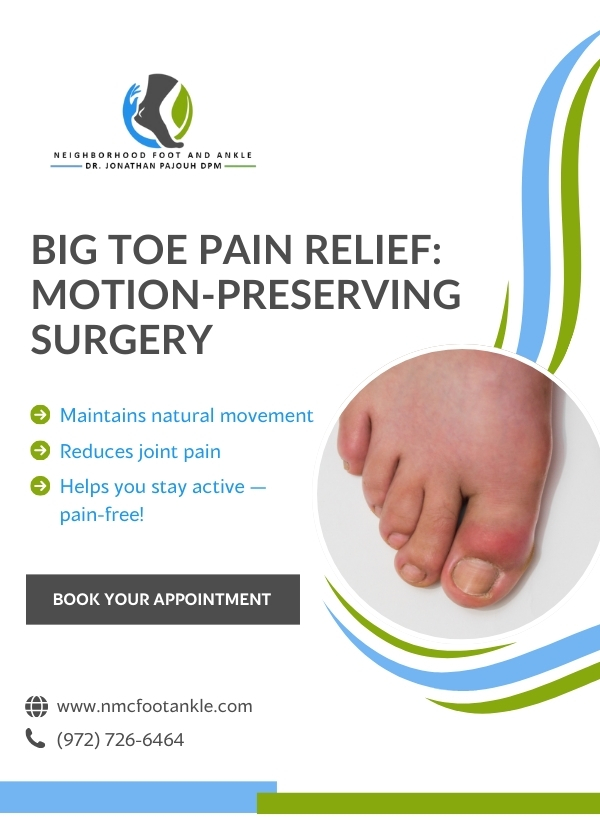
Foot pain, especially in the big toe, is a common issue that many people experience at some point in their lives. Big toe stiffness and discomfort can severely limit mobility and quality of life. While many believe fusion surgery is the only solution, big toe motion preservation surgery offers a transformative alternative that maintains the natural movement of your toe while alleviating pain. In this blog, we’ll explore how this innovative procedure works, its benefits, and the recovery process. If you're ready to take control of your toe pain and return to an active lifestyle, read on to learn more.
Understanding Big Toe Anatomy
To fully appreciate the benefits of motion preservation surgery, it’s important to understand the anatomy of the big toe. The big toe, or hallux, has two primary joints:
-
Metatarsophalangeal (MTP) Joint: This is where the big toe connects to the foot. It plays a vital role in weight distribution and proper gait.
-
Interphalangeal (IP) Joint: This joint lies between the two bones of the big toe and is responsible for its flexion and extension.
When these joints suffer from injury or degenerative conditions, pain and stiffness can occur, making activities like walking, running, and standing difficult. Dr. Jonathan Pajouh, DPM, at NMC Foot & Ankle in Dallas specializes in diagnosing and treating conditions such as this, offering solutions like motion preservation surgery to relieve pain while preserving natural toe movement and improving overall function.
Common Causes of Big Toe Pain
Several conditions can lead to big toe pain, including:
-
Osteoarthritis: This degenerative condition causes the breakdown of cartilage in the joints, leading to pain, swelling, and stiffness, particularly after physical activity.
-
Hallux Valgus (Bunions): A bunion forms when the big toe deviates laterally, causing the joint to bulge and become inflamed.
-
Turf Toe: A sprain of the MTP joint caused by hyperextension, common in athletes, which results in pain and limited toe movement.
What Is Big Toe Motion Preservation Surgery?
Big toe motion preservation surgery is a cutting-edge procedure designed to relieve pain while preserving the natural movement of the toe. The process typically includes the following steps:
-
Assessment and Diagnosis: A comprehensive evaluation, including X-rays or MRIs, is done to assess the extent of damage to the toe joints.
-
Procedure: The surgery may involve techniques such as:
-
Resecting bone spurs,
-
Realigning the toe, or
-
Joint resurfacing.
These methods focus on alleviating pain while maintaining joint mobility.
-
-
Post-Surgery Rehabilitation: After surgery, physical therapy is essential to restore mobility and strength in the toe, gradually easing it back into normal use.
Benefits of Motion Preservation Surgery
Compared to traditional fusion surgery, which locks the joint in place, motion preservation surgery offers several advantages:
-
Maintains Natural Movement: You can retain flexibility and range of motion, which helps preserve your lifestyle and physical activities.
-
Reduces Pain: Most patients experience a significant reduction in pain after surgery, allowing them to return to a pain-free lifestyle.
-
Faster Recovery: The recovery time for motion preservation surgery is often shorter than that of traditional fusion, enabling you to get back to your routine sooner.
-
Improved Function: By keeping the toe joint mobile, this surgery helps improve walking mechanics and reduces the risk of gait-related complications.
Recovery and Aftercare
After undergoing motion preservation surgery, the recovery process is crucial to regaining function:
-
Post-Operative Care: You may need to wear a walking boot or splint to support your foot in the initial recovery stages.
-
Physical Therapy: A customized rehab program will focus on strengthening and mobilizing the toe while minimizing stress on the joint.
-
Follow-Up Appointments: Regular check-ups with your doctor will monitor progress and ensure that your rehabilitation is on track.
When to Seek Treatment
If you experience persistent pain, swelling, or difficulty moving your big toe, it’s time to consult a foot and ankle specialist like Dr. Pajouh at NMC Foot & Ankle in Dallas. A thorough assessment will help determine if motion preservation surgery is the right solution for your condition.
Maintaining Foot Health Post-Surgery
Once you’ve recovered from motion preservation surgery, ongoing foot care is essential to maintaining your results:
-
Practice Good Foot Hygiene: Regularly wash and dry your feet to avoid infections.
-
Wear Proper Footwear: Select shoes that provide adequate support and fit properly to avoid re-injury.
-
Stay Active: Engage in low-impact exercises to keep your foot muscles strong without putting excess stress on the joint.
Final Thoughts
Big toe motion preservation surgery offers a life-changing alternative to fusion, preserving the natural movement of your toe while relieving pain and improving mobility. If you're tired of dealing with chronic big toe pain and stiffness, consider speaking with Dr. Pajouh at NMC Foot & Ankle in Dallas to explore your treatment options. By taking action now, you can get back to living your life without the limitations of toe pain.