
 Connect With Our Team
Understanding Corns on the Feet and How to Treat Them
Corns are small, hardened areas of skin that develop when the foot experiences repeated pressure or friction. While they may look minor, corns are actually the body’s way of protecting the underlying tissue from irritation. Over time, however, the thickened skin can become uncomfortable or even painful, especially when walking or wearing certain types of shoes.
At Neighborhood Foot & Ankle in Dallas, Texas, our licensed podiatrists Dr. Pajouh and Dr. Devaraju frequently help individuals who are dealing with painful corns. Addressing both the corn itself and the underlying cause is key to preventing them from returning.
What Causes Corns to Form?
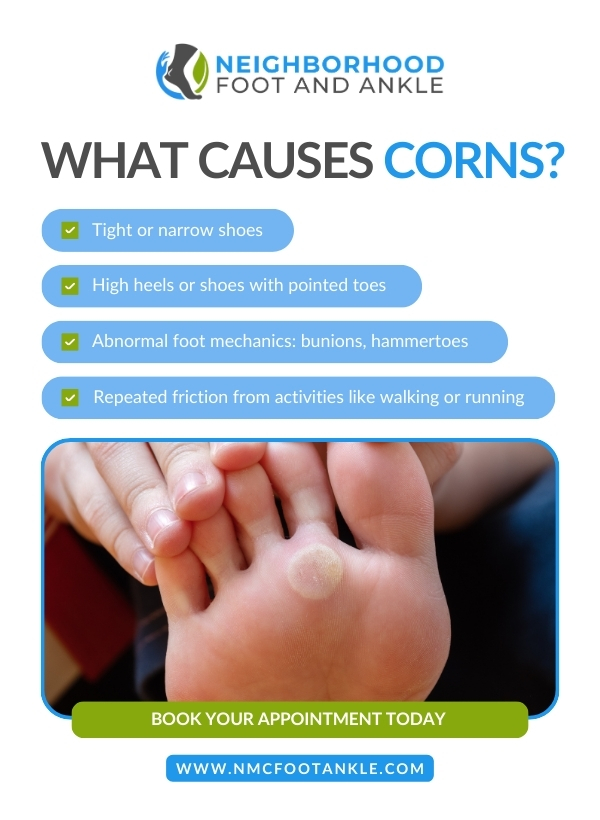
Corns develop when the skin is repeatedly exposed to pressure or rubbing. The body responds by thickening the outer layer of skin in that area. This protective response can help shield the foot at first, but when pressure continues, the hardened skin may begin pressing into deeper layers, creating discomfort.
Several factors commonly contribute to the formation of corns.
- Tight or narrow shoes that squeeze the toes together
- High heels that place extra pressure on the front of the foot
- Shoes with pointed toes that increase friction around the toes
- Repeated friction from walking, running, or prolonged standing
Footwear plays a major role because shoes that do not provide enough space for the toes can cause constant rubbing. Over time, the skin reacts by building up thicker layers.
How Do Corns Affect Foot Comfort?
Corns most often develop on the tops or sides of the toes, where shoes commonly rub against the skin. In some cases, they may also form between the toes where moisture and pressure combine to irritate the skin.
These hardened areas may start small but can become painful as they grow. When pressure is applied, the thickened skin can push inward toward sensitive tissue below the surface. At Neighborhood Foot & Ankle our team evaluates these pressure points to determine what may be causing the irritation and how to relieve it.
Common symptoms associated with corns include:
- A small, raised bump with a hardened center
- Tenderness when pressure is applied
- Discomfort while walking or wearing shoes
- Skin that feels rough or thick in a specific area
Because corns develop slowly, many people ignore them at first. However, when pressure continues, they may interfere with normal daily activities.
Are Certain Foot Conditions Linked to Corns?
Structural changes in the foot can increase the likelihood of developing corns. When the shape of the foot causes certain areas to bear more pressure, the skin may respond by thickening.
Some of the most common contributing conditions include:
- Bunions that shift the alignment of the toes
- Hammertoes that cause toes to bend and rub against shoes
- Uneven walking patterns that place extra pressure on specific areas
- Changes in foot structure that alter weight distribution
“These pressure points often develop because of the way the foot moves or the shape of the toes,” explains Dr. Pajouh. “When we evaluate corns, we look closely at footwear and foot mechanics so we can reduce the irritation that caused them in the first place.”
Identifying the root cause is important because simply trimming the thickened skin without correcting the pressure may allow the corn to return.
When Should You See a Podiatrist for Corns?
Many people attempt to manage corns at home, but professional care can help prevent complications and recurring pain. A licensed podiatrist, such at Dr. Devaraju, can safely remove the hardened skin while also identifying the mechanical issues that led to the problem.
Treatment may involve reducing the corn itself while addressing the pressure that caused it.
- Professional trimming or removal of thickened skin
- Recommendations for footwear that reduces friction
- Protective padding to relieve pressure points
- Evaluation of underlying foot structure
A professional evaluation is particularly important if the corn is painful, continues to return, or begins interfering with walking. Early treatment can often prevent the condition from worsening.
Prevention and Long-Term Foot Care
Preventing corns usually involves reducing friction and pressure on the feet. Small changes to footwear and daily habits can make a meaningful difference in keeping the skin healthy.
Shoes that allow enough room for the toes to move comfortably help reduce repeated rubbing. Cushioned insoles and supportive footwear may also improve how weight is distributed across the foot.
Monitoring areas that frequently develop thickened skin can also help identify pressure points early. When irritation is addressed sooner rather than later, corns are less likely to progress into painful spots.
For individuals who already experience recurring corns, a podiatrist can help determine whether foot structure or gait patterns are contributing factors.
Professional Corn Treatment in Dallas, Texas
Corns may seem minor at first, but persistent pressure can lead to ongoing discomfort if the underlying cause is not addressed. Proper evaluation helps ensure that both the corn and the source of irritation are treated effectively.
Dr. Devaraju and Dr. Pajouh provide comprehensive foot care at Neighborhood Foot & Ankle in Dallas, Texas. If a corn has become painful or continues to return, scheduling an evaluation can help identify the cause and determine the most appropriate treatment.
Schedule Your Foot evaluation
Educational purposes only. Not medical advice.