
 Connect With Our Team
Foot and ankle tendons are critical for walking, running, and everyday movement. Sometimes, however, these tendons can become injured, inflamed, or thickened, leading to persistent pain, limited mobility, or repeated injuries. When conservative treatments like rest, therapy, or medication aren’t enough, a tendoscopy can be a minimally invasive option to evaluate and treat tendon problems effectively, often preventing long-term damage.
Common Signs You Might Need a Tendoscopy
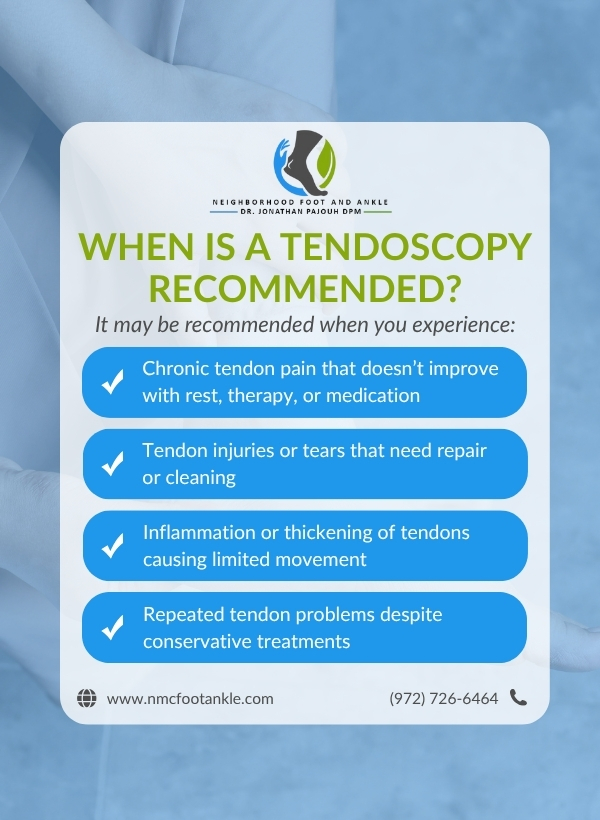
A tendoscopy is not necessary for every tendon issue, but it may be recommended in cases such as:
-
Chronic tendon pain that persists despite rest, anti-inflammatory measures, or physical therapy.
-
Partial tendon tears or injuries that require cleaning or repair.
-
Inflammation or thickening of tendons that restrict movement or cause discomfort.
-
Recurring tendon problems even after non-surgical interventions.
If you notice ongoing pain, swelling, or stiffness in your foot or ankle tendons, early evaluation by a foot and ankle specialist can prevent worsening damage, improve your recovery options, and reduce the risk of chronic tendon degeneration.
Dr. Jonathan Pajouh, DPM at NMC Foot & Ankle in Dallas, offers expert care for tendon injuries using advanced, minimally invasive techniques like tendoscopy. His approach focuses on accurate diagnosis, targeted treatment, and restoring mobility, helping patients return to daily activities with less pain and a quicker recovery.
What Tendoscopy Involves
During a tendoscopy, the surgeon uses a tiny camera inserted through a small incision to view the tendon sheath directly. This minimally invasive approach allows them to:
-
Precisely evaluate the tendon for tears, inflammation, or degeneration.
-
Perform targeted cleaning, repair, or release procedures.
It minimizes tissue damage compared to traditional open surgery and often allows patients to resume light activity sooner. Tendoscopy, with Dr. Pajouh, also helps reduce the likelihood of scar tissue formation and long-term tendon stiffness.
How Dr. Pajouh Helps With Tendon Injuries
At NMC Foot & Ankle in Dallas, Dr. Jonathan Pajouh, evaluates tendon health through a combination of physical exams, imaging studies, and functional assessments. This comprehensive approach ensures that the exact cause of tendon pain is identified, whether it stems from overuse, injury, inflammation, or structural abnormalities.
He creates a personalized treatment plan for each patient, which may include non-surgical interventions like rest, physical therapy, and orthoticsTargeted minimally invasive procedures, such as tendoscopy, when indicated.
Post-procedure rehabilitation and ongoing care help restore strength, mobility, and function, ensuring patients can return to their usual activities safely and confidently.
Benefits of Tendoscopy
Tendoscopy offers several advantages over traditional open surgery:
-
Smaller incisions reduce tissue trauma and scarring.
-
Precision treatment allows a reconstructive podiatric foot & ankle surgeon, such as Dr. Pajouh, to address specific tendon issues directly.
Patients often experience faster recovery, less post-operative pain, and an earlier return to daily activities. Additionally, tendoscopy can help prevent secondary complications, such as chronic tendon inflammation or limited joint mobility, that may arise from untreated tendon injuries.
Recovery and Rehabilitation
Even with minimally invasive procedures, proper post-procedure care is essential. Some treatment plans may include: gradual weight-bearing and activity adjustments, physical therapy exercises to restore flexibility, strength, and balance, and monitoring for signs of complications or persistent pain.
Following these guidelines helps ensure the best outcomes and supports long-term tendon health, allowing patients to regain confidence in their mobility and foot function.
Lifestyle Tips to Support Tendon Health
While tendoscopy can correct many tendon problems, preventing recurrence requires attention to daily habits:
-
Wear supportive footwear with adequate cushioning and stability.
-
Maintain low-impact exercise routines to strengthen foot and ankle tendons.
-
Avoid repetitive strain or overuse during athletic or work activities.
-
Stretch and warm up before physical activity to reduce tendon stress.
-
Seek early evaluation for persistent pain to prevent chronic damage.
By combining professional care with Dr. Pajouh, in Dallas, with smart lifestyle adjustments, patients can protect their tendons, enhance healing, and reduce the risk of future injuries.
Take Action for Persistent Tendon Pain
Persistent tendon pain can limit mobility, reduce activity levels, and affect quality of life. Early assessment by a foot and ankle specialist ensures accurate diagnosis and effective treatment.
Dr. Jonathan Pajouh, DPM at NMC Foot & Ankle in Dallas, provides expert evaluation and individualized care for tendon injuries. Whether through non-surgical measures or tendoscopy, he helps patients restore foot function, reduce discomfort, and return to the activities they enjoy, often more quickly and with lasting results.