
 Connect With Our Team
Sever’s Disease Heel Pain in Kids
Sever’s disease is one of the most common causes of heel pain in children and teens, especially during active growth years. Despite the name, it is not a disease but a temporary condition involving inflammation of the growth plate in the heel. This area is still developing, making it more sensitive to repeated stress and impact.
At Neighborhood Foot and Ankle in Dallas, Texas, our licensed podiatrists regularly treat this condition in active kids involved in sports and high-impact activities. Families often travel from nearby Irving and Mesquite for expert evaluation and guidance focused on keeping children comfortable and safely active.
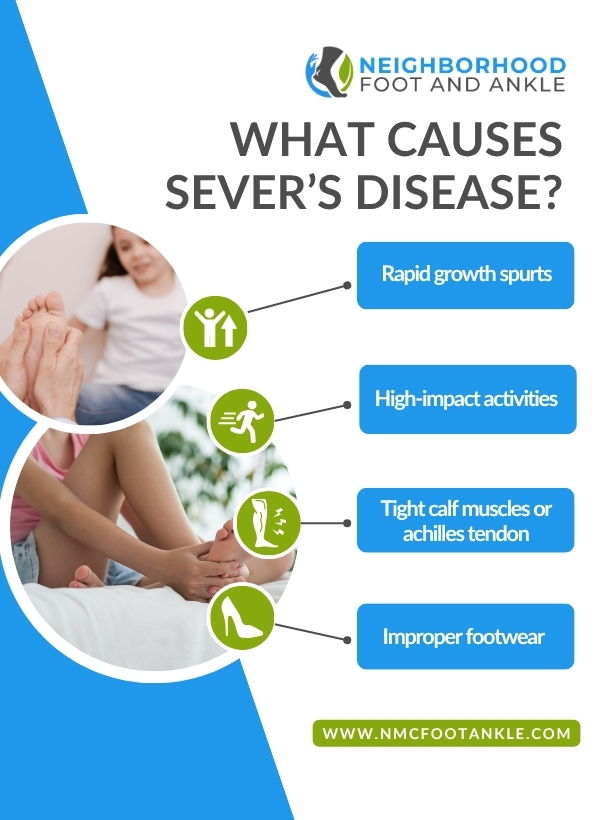
What Causes Sever’s Disease?
Sever’s disease develops when repeated stress is placed on the heel’s growth plate during periods of rapid growth. As bones grow quickly, muscles and tendons may not keep up, creating added tension where the Achilles tendon attaches to the heel.
Common causes and risk factors include:
- Rapid growth spurts where bones outpace muscle flexibility
- High-impact sports like soccer, basketball, or running
- Tight calf muscles or Achilles tendon increasing heel strain
- Unsupportive footwear lacking cushioning or stability
Because of these combined factors, active children are more likely to experience this type of heel pain, especially during sports seasons or periods of increased activity.
What Are the Signs of Sever’s Disease?
Heel pain is typically the first and most noticeable symptom. It may start gradually and worsen with activity, especially running or jumping. Many children will continue to stay active despite discomfort, which can lead to worsening symptoms over time.
Additional signs may include:
- Pain at the back or bottom of the heel
- Limping or walking on toes to reduce pressure
- Stiffness after activity or first thing in the morning
- Tenderness when the sides of the heel are squeezed
Symptoms often improve with rest but return once activity resumes. This pattern can make it easy to mistake the condition for simple soreness, which is why a proper evaluation is important when symptoms persist.
“Sever’s disease is very common during growth phases, but the good news is that it’s manageable with the right approach,” says Dr. Pajouh, DPM. “Our goal is to relieve pain while allowing kids to stay as active as safely possible.”
How Is Sever’s Disease Treated?
Treatment focuses on reducing stress on the heel while supporting healthy growth. Most cases respond well to conservative care and improve over time without the need for invasive treatment.
Recommended strategies may include:
- Temporary activity modification to limit high-impact stress
- Stretching exercises targeting the calf and Achilles tendon
- Supportive footwear designed to absorb shock and improve stability
- Heel cups or custom orthotics to reduce pressure on the growth plate
- Ice and anti-inflammatory measures to manage discomfort
Consistency is key when it comes to treatment. Following a structured plan can help reduce flare-ups and allow children to return to their normal routines more comfortably.
How Long Does Sever’s Disease Last?
The duration of Sever’s disease can vary depending on activity level, growth patterns, and how early treatment begins. In many cases, symptoms improve within a few weeks to a few months with proper care.
Because the condition is linked to growth, symptoms may come and go until the growth plate fully matures. During this time, managing activity levels and maintaining supportive habits can help minimize discomfort.
Parents should understand that while the condition is temporary, ignoring symptoms or continuing high-impact activity without modification can prolong recovery.
Licensed podiatrists at Neighborhood Foot and Ankle guide families through each stage of care, helping reduce flare-ups and support a smoother, more comfortable recovery.
When Should You See a Podiatrist for Heel Pain?
Heel pain in children should not be overlooked, especially when it begins to affect daily movement or participation in sports. Early evaluation helps confirm the diagnosis and ensures the right plan is in place.
You should seek care if your child experiences:
- Heel pain that lasts more than a few days
- Pain that worsens with activity or sports
- Difficulty walking, running, or keeping up with normal activities
- Recurring discomfort even after rest
Our licensed podiatrists take a comprehensive approach by relieving pain while also looking at factors like flexibility, footwear, and movement patterns. By addressing what is contributing to the stress on the heel, we help reduce the chances of the pain coming back and support healthier movement long term.
Sever’s disease is a temporary condition, but it can significantly impact a child’s comfort and activity level if left unmanaged. Early support, proper footwear, and guided treatment can make a meaningful difference in recovery and help kids stay active safely.
Schedule Your Child's Foot Exam Now
Educational purposes only. Not medical advice.