
 Connect With Our Team
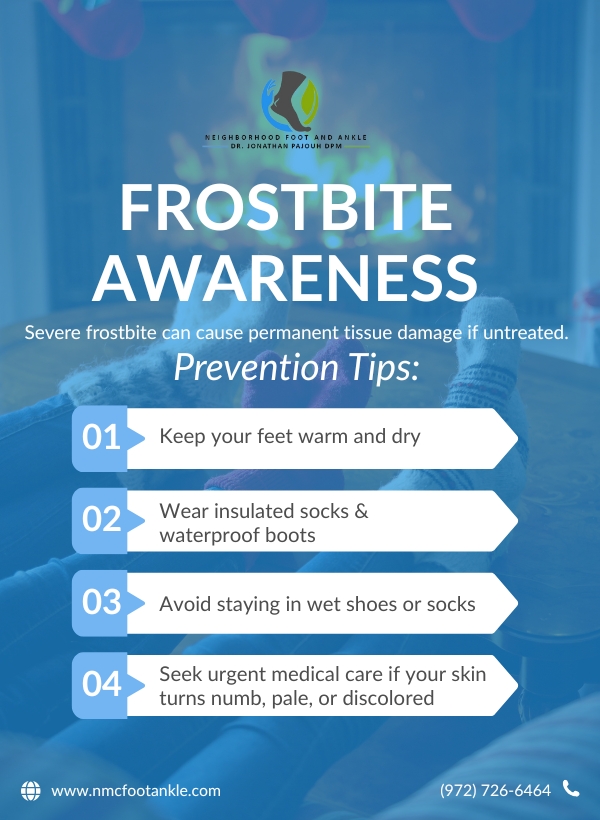
Winter can be a magical time of year—cozy sweaters, hot drinks, and crisp air—but it also brings risks for your feet. Cold temperatures, wind, and snow can make toes and heels particularly vulnerable to frostbite, a serious condition that occurs when skin and underlying tissues freeze. If not treated promptly, frostbite can cause permanent tissue damage, making prevention and early care essential for foot health.
Even brief exposure to freezing conditions can be enough to cause frostbite, especially for people who spend extended time outdoors. Early warning signs include numbness, tingling, pale or waxy skin, and in severe cases, blisters or discoloration. Anyone can be at risk, but certain conditions—like diabetes, poor circulation, or neuropathy—can increase susceptibility. Taking precautions before heading outside can make a meaningful difference in preventing frostbite and maintaining overall foot comfort and health.
What Frostbite Is and How NMC Foot & Ankle Can Help
Frostbite goes beyond simple cold feet. It happens when extreme cold damages skin and tissue, and early intervention is key to preventing long-term complications. At NMC Foot & Ankle in Dallas, Texas, Dr. Jonathan Pajouh, DPM, and Dr. Veena Devaraju, DPM, specialize in evaluating, treating, and preventing foot injuries, including those caused by frostbite.
Using their expertise in foot and ankle care, Drs. Devaraju and Pajouh can assess risk factors, recommend protective footwear, and provide guidance on safe warming techniques. Whether you are active outdoors, have a pre-existing condition that increases risk, or are simply trying to protect your feet during cold weather, their services are designed to keep your feet healthy and injury-free.
How Frostbite Affects Your Feet
Frostbite occurs when prolonged exposure to freezing temperatures reduces blood flow to extremities, causing the skin and underlying tissue to freeze. Toes and heels are particularly vulnerable because they are farthest from the heart and often less insulated than other areas.
As tissue freezes, small ice crystals form, damaging cells and nerves. Mild frostbite may cause numbness, tingling, or a pale appearance. Moderate frostbite can lead to blistering and discoloration, while severe frostbite may result in permanent tissue damage. Prompt medical attention is critical to minimize lasting effects. At NMC Foot & Ankle we offer same day emergency appointments.
Preventing Frostbite: Practical Tips
Keeping your feet warm and protected during winter can prevent frostbite.
Here are strategies recommended by NMC Foot & Ankle:
Keep Feet Dry and Warm – Moisture accelerates heat loss, so avoid wearing wet socks or shoes. Moisture-wicking socks layered under thicker insulating socks help maintain warmth while allowing proper circulation.
Wear Insulated, Waterproof Footwear – Boots designed for winter conditions provide insulation, protect against moisture, and help maintain body heat. Look for boots that fully cover the ankle for additional warmth and stability.
Limit Exposure to Extreme Cold – Try to avoid staying outdoors in freezing temperatures for long periods. Take frequent breaks indoors to allow feet to warm gradually. Rapid warming with direct heat sources like hot water or heating pads can worsen tissue damage, so gradual warming is safer.
Monitor Early Warning Signs – Numbness, tingling, pale or bluish skin, or persistent cold sensations are red flags. If any of these occur, move indoors immediately and seek medical care.
Protect High-Risk Individuals – Those with diabetes, peripheral artery disease, or neuropathy should take extra precautions, including regular foot checks, specialized footwear, and professional guidance on frostbite prevention.
Why Professional Guidance Matters
While basic precautions can prevent many frostbite cases, professional care ensures that your feet receive the attention they need if you are at higher risk. Dr. Pajouh and Dr. Devaraju provide comprehensive foot assessments to evaluate circulation, nerve function, and structural concerns that may increase susceptibility to frostbite.
In addition to risk assessment, they offer personalized guidance on protective footwear, proper layering of socks, and safe warming techniques. For individuals who experience cold-related injuries, our podiatrists at NMC Foot & Ankle provides treatment plans designed to promote healing, prevent complications, and restore comfort and mobility.
Long-Term Winter Foot Care
Even without frostbite, cold weather can dry out skin and cause discomfort, including cracked heels or stiff joints. Moisturizing feet regularly, wearing supportive footwear indoors and outdoors, and inspecting feet for injuries help maintain healthy circulation and prevent winter-related problems. Maintaining foot health during winter supports overall mobility, balance, and comfort.
Take Action to Protect Your Feet
Protecting your feet from frostbite requires awareness, preparation, and sometimes professional guidance. By keeping your feet dry, wearing insulated footwear, monitoring for warning signs, and seeking expert care when necessary, you can minimize risk and maintain healthy, comfortable feet throughout the season.