
 Connect With Our Team
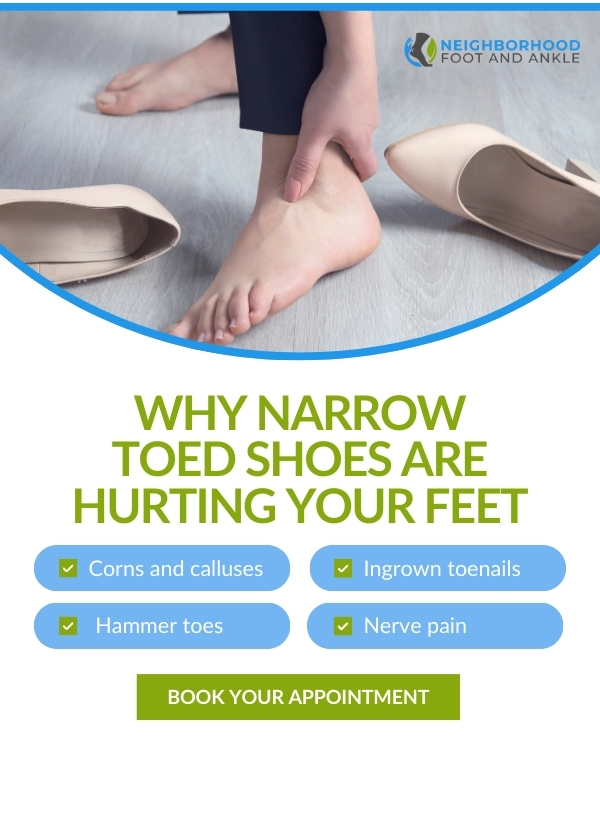
Fashion trends come and go, but your feet have to last a lifetime. While pointy, narrow-toed shoes may look stylish, consistently wearing them can lead to serious foot problems over time. The tight fit forces your toes into unnatural positions, increasing pressure on joints, nails, and soft tissues. Over months and years, this pressure can contribute to chronic conditions that are both painful and difficult to treat.
At NMC Foot & Ankle in Dallas, Texas, Dr. Jonathan Pajouh, DPM, and Dr. Devaraju, DPM often see patients with foot pain caused by ill-fitting footwear. They emphasize that prevention is always easier than correction, and making smarter shoe choices today can save you from years of discomfort and potential surgery later.
Common Foot Problems From Narrow-Toed Shoes
Wearing shoes that crowd your toes can lead to a range of issues. Some of the most common conditions include:
Bunions
A bunion is a painful bump that forms at the base of the big toe when the joint becomes misaligned. Narrow shoes squeeze the toes together, accelerating bunion development and increasing discomfort.
Corns and Calluses
Constant friction from tight shoes can cause thickened areas of skin, known as corns or calluses. These can become tender or even painful when walking, especially if not treated properly.
Hammer Toes
When smaller toes are forced into a bent position repeatedly, they can develop a permanent bend known as hammer toes. This condition can interfere with walking and often requires professional intervention.
Ingrown Toenails
Crowding in the toe box can cause nails to grow into the surrounding skin, leading to redness, swelling, and infection. Ingrown toenails can be extremely painful and may require minor procedures to correct.
Nerve Pain
Tight, narrow shoes can compress nerves in the forefoot, resulting in tingling, burning, or numbness. Over time, nerve compression can contribute to chronic discomfort and gait changes.
The Importance of a Wide Toe Box
The simplest way to prevent these issues is to choose shoes with a wide toe box. A shoe that allows your toes to spread naturally:
- Reduces pressure on the big toe joint and prevents bunion formation
- Minimizes friction that causes corns and calluses
- Helps maintain proper alignment of smaller toes
- Lowers the risk of ingrown toenails
- Supports natural foot mechanics, reducing strain on the forefoot and lower body
Comfort and foot health should always come before fashion. A slightly wider shoe may look different than the latest trends, but it protects your joints, nerves, and skin from years of wear-and-tear.
Protect Your Feet Without Sacrificing Style
You don’t have to give up on style to keep your feet healthy. Here are some practical tips from the podiatrists at NMC Foot & Ankle:
-
Opt for shoes with a spacious toe box – Look for footwear labeled as “wide” or “roomy” in the forefoot.
-
Check for flexibility – The toe area should bend easily with your foot, not compress it.
-
Rotate your shoes – Avoid wearing narrow-toed shoes every day; alternate with supportive sneakers or flats.
-
Use protective padding – Gel inserts or bunion cushions can reduce friction and pressure while you transition to wider shoes.
-
Mind your heels – High heels put extra pressure on the forefoot; limit wearing them to short periods and choose wider heels when possible.
Even small adjustments can significantly reduce foot pain and prevent long-term problems.
Signs It’s Time to See a Podiatrist
If you notice persistent pain, swelling, or changes in toe shape, it may be time to see a podiatrist. Narrow shoes can accelerate conditions like bunions, hammer toes, and nerve irritation, and early evaluation is key to preventing long-term damage.
At NMC Foot & Ankle, Dr. Pajouh and Dr. Devaraju assess foot structure, gait, and footwear habits to create a personalized treatment plan. Depending on the severity, care may include custom orthotics, padding, physical therapy exercises, or guidance on footwear choices. In advanced cases, surgical intervention may be recommended to correct structural issues safely and restore comfort.
Expert Care for Lifelong Foot Comfort
Healthy feet are essential for balance, mobility, and overall quality of life. Simple changes in footwear, combined with professional guidance when needed, can prevent chronic pain and keep your feet functioning at their best.
At NMC Foot & Ankle in Dallas, Texas, Dr. Jonathan Pajouh, DPM, and Dr. Devaraju, DPM work with patients to create personalized treatment plans that relieve pain, improve alignment, and maintain long-term foot health. Early intervention, proper shoe choices, and consistent care are key to staying comfortable and active for years to come.