
 Connect With Our Team
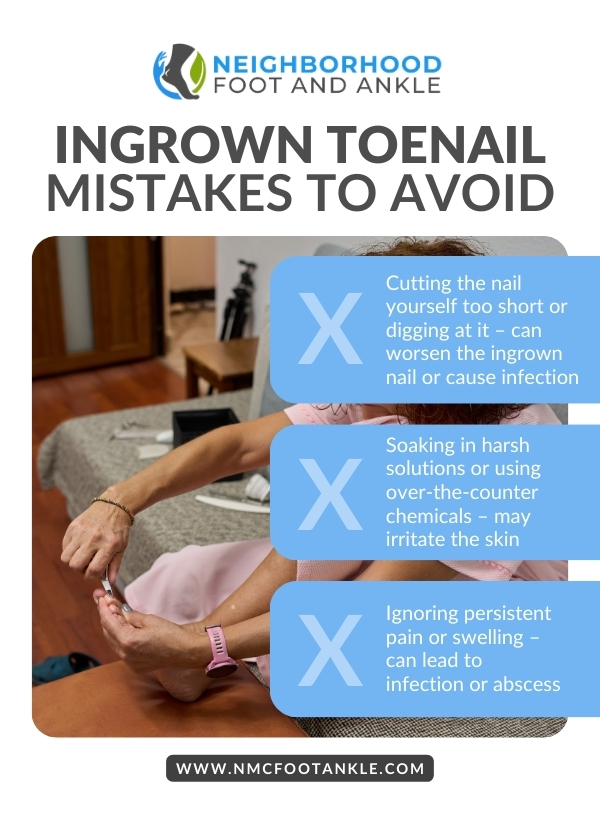
Ingrown toenails are a common foot problem that can quickly become painful if not managed properly. This condition occurs when the edge of a toenail grows into the surrounding skin, often leading to redness, swelling, and discomfort. In more severe cases, the area may become infected.
Dr. Pajouh and Dr. Devaraju, licensed podiatrists at At Neighborhood Foot & Ankle in Dallas, Texas, regularly help individuals dealing with painful ingrown toenails. While many people attempt quick fixes at home, certain habits can actually worsen the condition and increase the risk of infection.
Understanding what not to do can help protect the toe and prevent unnecessary complications.
Why Do Ingrown Toenails Develop?
Ingrown toenails most commonly affect the big toe and typically develop when the nail grows improperly into the skin. Several factors can contribute to this problem, including nail trimming habits, footwear choices, and the natural shape of the nail.
Some of the most common causes include:
- Cutting toenails too short or rounding the edges
- Wearing tight or narrow shoes that compress the toes
- Repeated pressure from walking, running, or sports
- Naturally curved or thick toenails
When pressure continues or the nail edge becomes embedded in the skin, inflammation may develop. Over time, the area can become increasingly sensitive and difficult to manage without professional care.
What Happens If an Ingrown Toenail Is Ignored?
Many people initially try to manage an ingrown toenail on their own. While mild irritation may sometimes improve temporarily, ignoring ongoing pain or swelling can allow the condition to worsen.
As the nail continues to press into the skin, the body responds with inflammation. The surrounding tissue may become swollen, tender, and red. If bacteria enter the irritated area, infection may develop.
Common symptoms may include:
- Pain along the side of the toenail
- Redness or swelling around the nail
- Tenderness when pressure is applied
- Drainage or signs of infection in more advanced cases
Persistent symptoms can make walking uncomfortable and may interfere with normal daily activities.
What Should You Avoid Doing at Home?
Certain at-home habits may seem helpful at first but can actually increase irritation or introduce bacteria into the area. Attempting to treat an ingrown toenail without proper technique may worsen the condition.
Common mistakes include:
- Cutting the nail too short or digging into the corner of the nail
- Attempting to remove the ingrown portion of the nail yourself
- Using harsh chemical treatments that irritate the skin
- Wearing tight shoes that place pressure on the toe
These actions can push the nail further into the skin or damage the surrounding tissue. In some cases, they may also increase the likelihood of infection.
“When people try to dig out an ingrown nail at home, they often end up creating more irritation or introducing bacteria,” explains Dr. Devaraju. “An evaluation allows us to safely relieve the pressure and treat the area before it becomes more serious.”
When Is Professional Care the Safer Option?
A podiatrist can safely evaluate an ingrown toenail and determine the most appropriate treatment. Professional care focuses on relieving pressure from the nail while protecting the surrounding skin.
Treatment may involve gently removing the portion of the nail causing irritation and addressing any infection that may be present. In some cases, additional steps may be recommended to help prevent the ingrown nail from returning.
Care may include:
- Safe removal of the ingrown nail edge
- Treatment for inflammation or infection
- Guidance on proper nail trimming techniques
- Recommendations for footwear that reduces pressure
Receiving care early often helps reduce discomfort and prevents the condition from becoming more severe.
Preventing Future Ingrown Toenails
Simple daily habits can help reduce the risk of developing ingrown toenails. Proper nail care and supportive footwear both play an important role in protecting the toes. Toenails should generally be trimmed straight across rather than rounded at the corners, which helps guide the nail to grow forward instead of into the surrounding skin.
Shoes that allow enough room for the toes to move comfortably can also reduce pressure along the edges of the nails. When the toes are not compressed, the likelihood of irritation decreases. Individuals who experience recurring ingrown toenails may benefit from a podiatric evaluation to identify contributing factors such as nail shape, pressure points, or walking patterns.
Ingrown Toenail Care in Dallas, Texas
Ingrown toenails can become increasingly painful when the nail continues to grow into the skin. Attempting to fix the problem at home may worsen irritation and increase the risk of infection.
Dr. Pajouh and Dr. Devaraju provide comprehensive podiatric care at Neighborhood Foot & Ankle in Dallas, Texas. If an ingrown toenail is causing persistent pain, swelling, or signs of infection, a professional evaluation can help relieve discomfort and prevent further complications.
Book an Appointment Now
Educational purposes only. Not medical advice.