
 Connect With Our Team
 Heel Pain Causes and Treatment Options | Neighborhood Foot and Ankle
Heel pain is one of the most common foot concerns, but it is often misunderstood. What starts as mild discomfort can quickly affect how you walk, stand, and move throughout the day. At Neighborhood Foot and Ankle in Dallas, Texas, heel pain is frequently evaluated in patients looking to stay active and avoid long-term limitations. Many individuals also come in from nearby Plano and Richardson for answers and relief.
What Causes Heel Pain to Develop?
Heel pain can come from several underlying conditions, each affecting the foot in a different way. Understanding the cause is key to choosing the right approach. The source of pain is not always obvious without a closer look at how your foot is functioning.
Common causes include:
- Plantar fasciitis
Irritation of the band of tissue along the bottom of the foot - Achilles tendinitis
Inflammation of the tendon connecting the calf to the heel - Overuse or repetitive stress
Common in individuals who spend long hours on their feet or increase activity suddenly - Heel spurs
Calcium deposits that develop over time due to strain
These conditions may develop gradually, often starting with mild discomfort that becomes more noticeable over time. Without proper attention, they can begin to affect daily movement and overall comfort. What feels minor at first can slowly interfere with your routine if left unaddressed.
Our Neighborhood Foot and Ankle licensed podiatrists focus on identifying the specific cause early so treatment can be more effective and recovery more manageable.
How Do You Know When Heel Pain Needs Attention?
Heel pain does not always appear suddenly. In many cases, it builds over time and becomes harder to ignore. Paying attention to patterns in your symptoms can help you recognize when something is not right.
Common symptoms include:
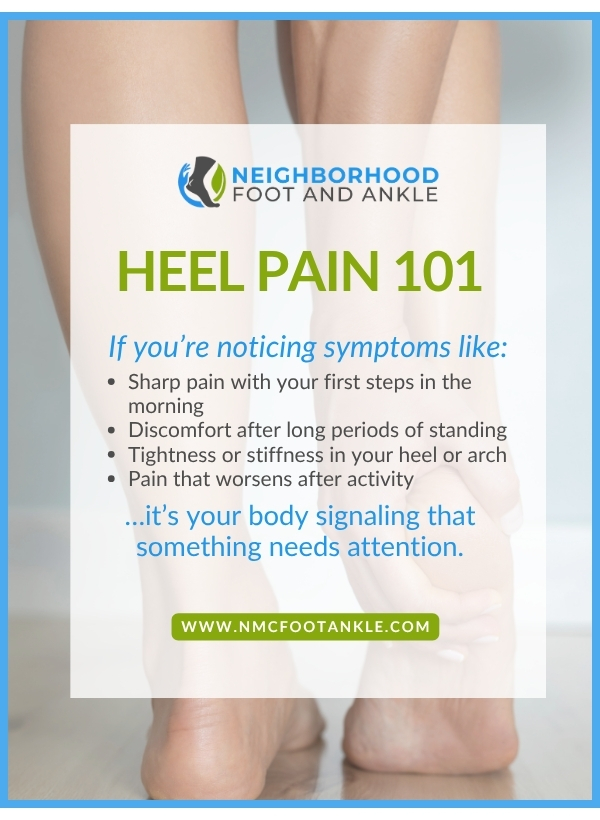
- Sharp pain with the first steps in the morning
- Discomfort after long periods of standing or rest
- Tightness in the heel or arch
- Pain that increases after activity rather than during it
“Most people wait until the pain starts interfering with their daily routine,” says Dr. Devaraju. “Catching it early usually means simpler treatment and a faster return to normal activity.”
Recognizing these signs early can make a meaningful difference in how quickly symptoms improve. Acting early can also reduce the risk of the condition becoming more persistent.
Common Symptoms Patients Should Watch For
Heel pain often presents in patterns that can help identify the underlying issue. These patterns can also help determine whether the condition is improving or getting worse.
You may notice:
- Pain that improves as you move but returns later
- Increased discomfort after exercise or long walks
- Sensitivity when pressing on the heel
- Changes in how you walk to avoid pressure
These changes are the body’s way of compensating, which can eventually affect other areas like the ankles, knees, or hips. Over time, compensation can create additional strain beyond the foot itself.
What Are the Best Ways to Manage Heel Pain Early?
Early care can help reduce strain and support recovery before the condition worsens. Taking small steps early can make a big difference in overall comfort.
Helpful strategies include:
- Wearing supportive footwear with proper cushioning
- Stretching the calf muscles and plantar fascia regularly
- Modifying activity levels to reduce repetitive stress
- Avoiding walking barefoot on hard surfaces
For many patients, these adjustments can improve symptoms when started early. Consistency with these habits often leads to better results over time. If discomfort continues, a more personalized evaluation can help guide next steps.
At Neighborhood Foot and Ankle, the goal is to help you stay active while addressing the source of the pain, not just the symptoms.
Preventing Heel Pain from Returning
Once heel pain improves, maintaining healthy habits is key to preventing it from coming back. Long-term prevention often depends on daily choices and consistency.
Ongoing support may include:
- Choosing shoes that fit well and provide adequate support
- Continuing simple stretching routines
- Gradually increasing activity rather than making sudden changes
- Paying attention to early warning signs
Patients traveling from Plano and Richardson often want long-term solutions that fit into their routine. Building these habits into your daily life can help maintain comfort and mobility. Small, consistent habits can go a long way in protecting foot health.
Heel pain does not have to limit your daily life. With early attention and the right approach, you can stay comfortable and keep moving.
Heel pain does not have to limit your daily life. Book an appointment with Neighborhood Foot and Ankle to get a clear diagnosis and a personalized plan to help you stay active and comfortable.
Book Your Appointment Online
Educational purposes only. Not medical advice.