
 Connect With Our Team
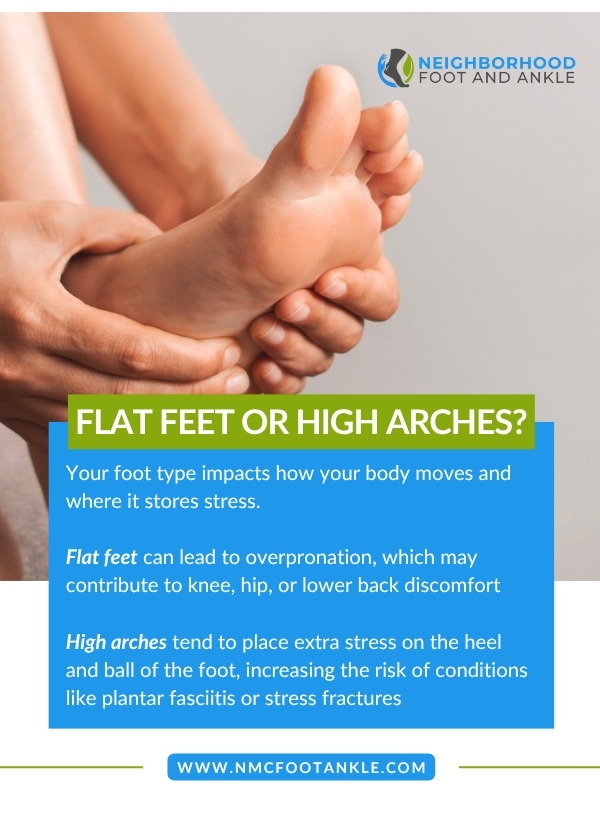
Flat Feet vs High Arches What It Means for Your Feet | Neighborhood Foot and Ankle
Your foot type plays a bigger role in your overall movement than most people realize. Whether you have flat feet or high arches, the way your feet absorb pressure affects everything from how you walk to how your joints handle stress. At Neighborhood Foot and Ankle in Dallas, Texas, evaluating foot structure is a key part of identifying the root cause of discomfort and preventing long-term issues. Many patients also visit from nearby Irving and Mesquite for personalized care focused on improving alignment and daily comfort.
What is the difference between flat feet and high arches?
Flat feet and high arches are two common structural variations that affect how weight is distributed across the foot. Each creates a different pattern of movement and pressure.
Flat feet occur when the arch collapses or remains low during standing and walking. This often leads to overpronation, where the foot rolls inward more than it should.
High arches, on the other hand, create a more rigid foot structure. Instead of evenly distributing pressure, weight is concentrated on specific areas like the heel and ball of the foot.
Both conditions can exist without symptoms, but when imbalance develops, discomfort and strain often follow.
How do these foot types affect the rest of your body?
Your feet act as the foundation for your entire body. When alignment is off, even slightly, it can create a chain reaction that affects other joints.
Flat feet can lead to:
- Increased strain on the ankles and knees
- Changes in walking mechanics
- Lower back discomfort over time
High arches may contribute to:
- Concentrated pressure points on the foot
- Reduced shock absorption during movement
- Higher risk of stress-related injuries
Dr. Jonathan Pajouh explains, “A lot of people don’t realize their arch type affects how their shoes feel, how quickly their feet get tired, and even how stable they feel walking. The right support can make a noticeable difference day to day.”
Understanding how your foot type affects movement helps guide more effective treatment and prevention strategies.
Common symptoms to watch for
Not everyone with flat feet or high arches experiences symptoms, but when issues develop, they often show up gradually. You may notice subtle changes first before discomfort becomes more consistent or noticeable.
Signs to watch for include:
- Foot fatigue after standing or walking
- Pain in the heel, arch, or ball of the foot
- Frequent ankle instability or rolling
- Uneven wear patterns on shoes
- Discomfort that worsens with activity
These symptoms may seem minor at first but can become more persistent if the underlying cause is not addressed. Over time, ignoring these signs can lead to more strain on the feet and surrounding joints.
Treatment options that restore balance
Treatment focuses on improving how the foot functions rather than simply addressing symptoms. The goal is to create better alignment and reduce unnecessary strain.
Common approaches include:
- Custom orthotics to support proper alignment
- Footwear recommendations based on your structure
- Stretching and strengthening exercises
- Activity modifications to reduce repetitive stress
These strategies are tailored to your specific needs, helping improve comfort while supporting long-term foot health. Following these recommendations can help prevent symptoms from returning over time.
When should you get your feet evaluated?
You do not need to wait for significant pain to have your feet evaluated. Early assessment can help identify imbalances before they lead to more serious problems.
Consider an evaluation if you:
- Notice discomfort during daily activities
- Have recurring foot, ankle, or knee pain
- Feel unstable when walking or exercising
- Are unsure what type of arch you have
A simple evaluation by one of our Neighborhood Foot and Ankle licensed podiatrists can provide clarity and help guide the right next steps.
Finding the right support for your feet
Your foot structure is unique, and understanding how it functions is the first step toward improving comfort and preventing long-term issues. Small adjustments can make a meaningful difference in how your body moves and feels each day.
If you are unsure whether you have flat feet or high arches, or if you are dealing with discomfort, schedule an appointment with our team at Neighborhood Foot and Ankle in Dallas to get a personalized evaluation and support that fits your routine.
Educational purposes only. Not medical advice.