
 Connect With Our Team
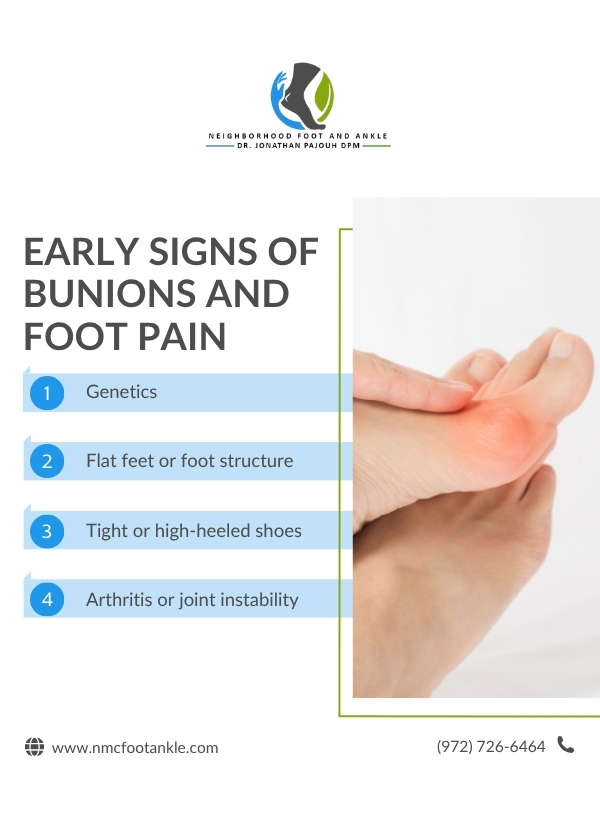
Did you know that over 23% of adults experience bunions? At NMC Foot & Ankle Center, Dr. Pajouh emphasizes that bunions affect both appearance and mobility, often causing significant discomfort. Understanding causes—whether genetics, shoe choices, or health factors—is key to prevention and treatment. This article explores bunion causes, symptoms, treatments, and tips to keep your feet healthy and pain-free.
Understanding Bunions: A Deep Dive
Bunions, medically known as hallux valgus, are characterized by a protrusion at the base of the big toe, resulting from a misalignment of the toe joint. This misalignment causes the big toe to lean toward the second toe, creating a bony bump that can become painful over time. Understanding the root problems behind bunions is essential for both prevention and effective management. Let’s explore the primary causes in detail:
1. Genetic Predisposition
One of the most significant contributors to developing bunions is genetics. If a parent or other family members have bunions, you may be more susceptible to this foot deformity. Genetic factors can influence the structure of your feet, placing you at heightened risk for various foot conditions, including bunions. If you suspect you have a predisposition due to your family history, it’s essential to monitor your foot health early.
2. Foot Structure and Flat Feet
The shape and size of your feet also play a critical role in the likelihood of developing bunions. Individuals with flat feet or specific structural abnormalities, such as an excessively flexible first metatarsal bone, are more prone to bunions. Flat feet can lead to uneven weight distribution while walking, causing additional pressure on the toe joint. If you have flat feet, consider consulting with a podiatrist for potential orthotic solutions.
3. Shoe Choices: Tight and High Heels
An often-overlooked cause of bunions is footwear choice. Wearing tight, narrow shoes or high heels can lead to misalignment over time. Such shoes restrict the natural movement of your toes and increase pressure on the big toe joint, contributing to the formation of bunions. It’s vital to wear shoes that offer adequate space for your toes while providing the proper support to prevent potential deformities.
4. Arthritis and Joint Instability
Arthritis, especially inflammatory arthritis such as rheumatoid arthritis, can accelerate bunion formation. A person with inflammatory joint disease can experience degradation and instability in joint structures, compounding the misalignment problem. If you have a history of arthritis, it's crucial to keep track of your foot health, as underlying conditions can exacerbate bunion symptoms and might call for more aggressive treatment measures.
Symptoms to Watch For
Bunions may start as a minor inconvenience but can quickly develop. Recognizing symptoms early on can help facilitate timely intervention. Key signs include:
- A noticeable bony bump on the side of the foot at the base of the big toe
- Pain or tenderness in the affected area, particularly after wearing tight shoes
- Restricted movement of the big toe, making it uncomfortable to walk
- Redness or swelling around the joint
If you’re experiencing any of these symptoms, it’s vital to seek advice from a healthcare professional, like Dr. Pajouh, before the condition worsens.
Diagnosis and Evaluation
Diagnosis of bunions is typically straightforward, involving a physical examination of the affected area. A podiatrist will assess your foot structure, look for signs of inflammation, and may request X-rays to evaluate the severity of the bunion and its impact on surrounding structures. Early detection and diagnosis will lead to better management options.
Management and Treatment Options
While bunions may seem daunting, several treatment options are available to help alleviate pain and minimize progression. Treatment usually falls into two categories: non-surgical and surgical.
Non-Surgical Solutions
- Proper Footwear: Ditching tight shoes for more accommodating footwear can significantly relieve pressure on your toe joints.
- Orthotics: Custom-made orthotic devices can help correct foot imbalances, thereby relieving the stress placed on your big toe joint.
- Ice Therapy: Applying ice can reduce swelling and analgesics can relieve pain in your bunion.
- Physical Therapy: Stretching and strengthening exercises can improve range of motion and bolster foot stability.
- Injections: Corticosteroid injections may be used for inflammation and pain relief.
Surgical Solutions
When non-surgical treatments fail to provide relief, surgical intervention may become necessary. Surgical options at NMC Foot & Ankle Center may include:
- Bunionectomy: Removal of the bony bump, realigning your toe joint
- Osteotomy: Repositioning the bones to correct alignment
- Fusion: Joining bones together to eliminate movement and pain
Your podiatrist can provide more specific recommendations based on the severity of your bunion and its impact on your daily life.
Prevention: Protecting Your Feet
Preventing bunions often boils down to conscious choices and habits. Here are several actionable tips to take home:
- Invest in Quality Footwear: Look for shoes with a wide toe box, good arch support, and adequate cushioning. Avoid high heels and pointy-toed shoes.
- Foot Exercises: Engage in regular foot strengthening exercises to maintain flexibility and balance.
- Maintain a Healthy Weight: Carrying excess weight can increase pressure on your feet, worsening bunions, so adopting a balanced diet and exercise regimen can be beneficial.
- Check Your Work Environment: If you're standing or walking for long periods, ensure you're wearing supportive shoes suitable for your job requirements.
Seeking Help from Specialists
If you’re experiencing bunion pain or noticing a bump forming on your foot, do not suffer in silence. Consult with a foot and ankle specialist to assess your condition. Based in Dallas, Dr. Jonathon Pajouh at NMC Foot & Ankle offers expertise in comprehensive foot and ankle care, specialized to meet individual needs. His comprehensive approach ensures personalized treatment options tailored to ensure your long-term foot health.
So Now What?
Bunions can pose a significant challenge, impacting your daily activities and overall quality of life. By understanding their causes—which range from genetic predisposition to improper footwear—you can take proactive steps to manage and potentially prevent bunions. Both non-surgical and surgical interventions exist to alleviate current conditions and improve foot health.
If you’re feeling discomfort or have questions regarding bunions, don’t wait until the problem escalates.