
 Connect With Our Team
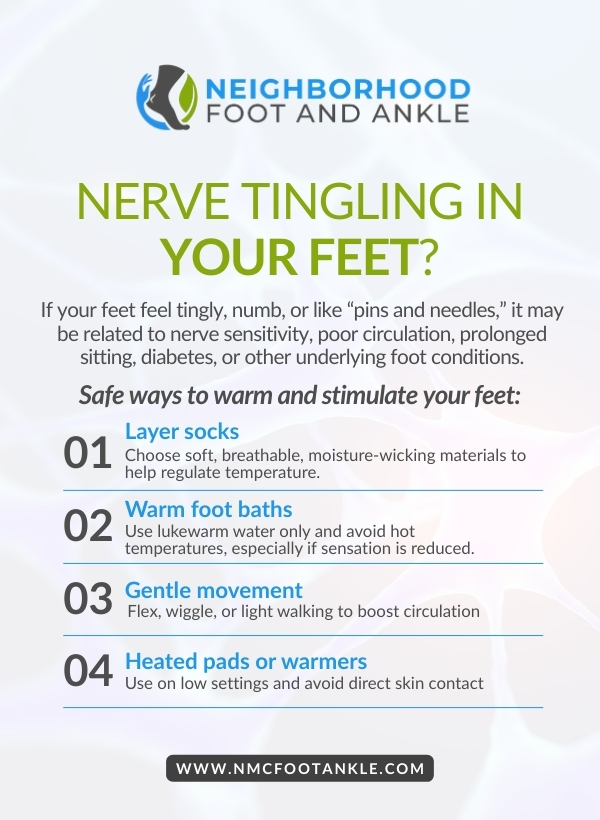
Even with steady temperatures in Texas, cold weather can still trigger tingling, numbness, or “pins and needles” in the feet. Cooler air can increase nerve sensitivity and temporarily reduce circulation, especially in individuals with underlying foot or nerve conditions. While keeping your feet warm is essential, not all warming methods are safe for sensitive skin or irritated nerves.
At NMC Foot & Ankle in Dallas, Texas, Dr. Pajouh, DPM and Dr. Devaraju, DPM regularly evaluate patients who experience increased nerve symptoms during colder weather. Understanding why this happens and how to respond safely can help protect your feet and prevent complications.
Why Does Cold Weather Make Nerve Tingling Worse?
Cold exposure causes blood vessels in the feet to constrict, which can temporarily reduce circulation. When circulation decreases, nerves may not receive optimal oxygen and nutrients, leading to increased sensitivity or abnormal sensations. For some individuals, this results in tingling, numbness, burning, or a prickling sensation. In colder environments, the body naturally prioritizes core warmth, which means the feet are often among the first areas to experience reduced blood flow.
Several underlying factors can make symptoms more noticeable in cooler temperatures:
- Burning neuropathy
- Circulatory concerns
- Diabetes-related nerve changes
- Compression from tight footwear
- Prolonged exposure to cold surfaces
Cold conditions can also stiffen joints, muscles, and soft tissues in the feet, contributing to discomfort and altered sensation. Reduced flexibility in surrounding tissues may place additional pressure on already sensitive nerves. In patients who already have nerve irritation, even mild temperature changes may trigger more noticeable or prolonged symptoms.
How Can You Warm Your Feet Safely Without Causing Damage?
Keeping your feet warm is important, but improper warming techniques can lead to burns or increased irritation. Individuals with reduced sensation may not realize when heat is too intense, which increases the risk of skin injury.
Safe warming strategies include:
- Layered socks: Choose soft, breathable, moisture-wicking materials to retain warmth without trapping sweat.
- Lukewarm foot baths: Use comfortably warm water, never hot, and test the temperature with your hand first.
- Gentle movement: Light walking, ankle circles, and toe flexing can naturally improve circulation.
- Low-setting heating pads: Use indirect heat and avoid placing heating devices directly against bare skin.
Avoid high-heat heating pads, electric blankets wrapped tightly around the feet, or hot water bottles placed directly on the skin. These methods may feel soothing at first but can cause burns, especially in patients with reduced nerve sensitivity.
When Should Tingling or Numbness Be Evaluated?
Occasional mild tingling that resolves with movement or warming may not be serious. However, persistent or worsening symptoms deserve professional evaluation. Numbness that does not improve, burning sensations, sharp pains, or changes in skin color may indicate an underlying nerve or circulation issue.
At NMC Foot & Ankle in Dallas, Dr. Pajouh and Dr. Devaraju perform comprehensive evaluations to determine the source of symptoms. This may include assessing circulation, nerve response, footwear habits, and medical history. Early diagnosis allows for targeted treatment and helps prevent long-term complications.
“Cold weather can intensify nerve symptoms, especially in patients who already have reduced sensation,” says Dr. Pajouh. “If tingling or numbness is persistent, it is important to evaluate circulation and nerve health early so we can prevent more serious complications.”
Patients with diabetes, known neuropathy, or vascular conditions should be especially cautious during periods of colder weather. Even minor injuries can go unnoticed if sensation is reduced, increasing the risk of infection or delayed healing.
Protecting Your Feet During Cold Weather
Preventive care is key to managing cold-related nerve symptoms. In addition to safe warming techniques, consider these protective habits:
- Wear properly fitted shoes with adequate toe room.
- Avoid prolonged standing on cold surfaces.
- Keep feet dry to reduce skin breakdown.
- Inspect feet daily for redness, cracks, or pressure spots.
- Schedule routine foot evaluations if you have chronic health conditions.
Small adjustments can make a meaningful difference in comfort and long-term foot health. Addressing symptoms early helps maintain mobility and reduces the likelihood of complications.
Early Evaluation Can Prevent Complications
Cold-related tingling or numbness should not be ignored, especially if symptoms are persistent, worsening, or accompanied by burning, weakness, or changes in skin color. What may seem like a simple reaction to cooler temperatures can sometimes signal an underlying nerve or circulation condition that requires medical attention.
If cold weather is making tingling or numbness worse, schedule an appointment with Dr. Pajouh, DPM or Dr. Devaraju, DPM at NMC Foot & Ankle in Dallas, Texas. A thorough evaluation can identify the cause and provide a personalized plan to keep your feet comfortable, safe, and healthy while reducing the risk of long-term complications.