
 Connect With Our Team
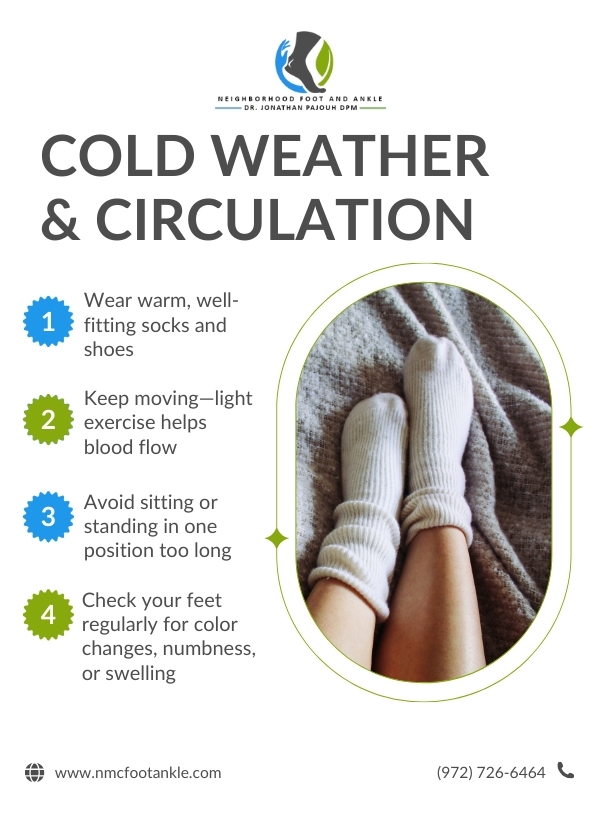
As temperatures drop, many people start to notice their feet feeling colder than usual. While chilly toes are common in cooler weather, consistently cold feet can sometimes be a sign of poor circulation—a condition that affects how blood flows to your extremities. Healthy circulation is essential for keeping your feet warm, nourished, and protected from injury or infection. By understanding the signs of reduced blood flow and taking proactive steps, you can keep your feet healthy and comfortable all season long.
Why Circulation Matters
Your feet are the farthest point from your heart, which means they rely heavily on efficient blood flow to stay warm and receive enough oxygen and nutrients. When circulation is sluggish, your feet may become cold, numb, or even discolored. Over time, poor blood flow can also increase the risk of sores, infections, and delayed healing—especially in individuals with diabetes or vascular conditions.
If you often find that your feet stay cold even in warm socks, or if they appear pale or bluish, it may be time to pay closer attention to your circulation.
Common Causes of Poor Circulation
Cold weather naturally causes blood vessels to constrict, directing warmth to your body’s core. However, other factors can make circulation problems worse, including:
-
Sedentary lifestyle: Sitting or standing for long periods slows down blood flow.
-
Smoking: Nicotine narrows blood vessels, reducing circulation.
-
Diabetes: High blood sugar can damage blood vessels over time.
-
Peripheral artery disease (PAD): A condition that limits blood flow to the legs and feet.
-
Tight footwear: Shoes or socks that are too snug can restrict blood flow and worsen symptoms.
Recognizing the underlying cause is key. Dr. Jonathan Pajouh and his team at NMC Foot & Ankle, in Dallas, offer diagnostic testing and personalized care plans to help patients identify circulation issues early and manage them effectively.
Tips to Keep Your Feet Warm and Healthy
Cold feet don’t have to be a seasonal struggle. With a few simple habits, you can encourage better blood flow and stay comfortable even on chilly days.
• Wear Warm, Well-Fitting Socks and Shoes
Choose thermal or moisture-wicking socks that keep heat in without being too tight. Thick, breathable materials like merino wool can provide warmth while still allowing air circulation. Make sure your shoes fit properly—too-tight shoes can restrict blood flow, while loose shoes can lead to friction and blisters.
• Keep Moving
Movement is one of the best ways to improve circulation. Even light activity like walking, stretching, or flexing your ankles can help pump blood back toward your heart. If you work at a desk, try standing or walking around every hour to stimulate blood flow to your feet and legs.
• Avoid Staying in One Position Too Long
Whether you’re sitting at your computer or standing at a counter, staying in one position for too long can reduce circulation. Shift your weight, stretch your calves, or take short breaks to move throughout the day. Small changes in movement can have a big impact on foot health.
• Check Your Feet Regularly
Regular foot checks can help you catch early signs of circulation problems or skin changes. Look for:
-
Unusual color changes (pale, bluish, or reddish tones)
-
Numbness or tingling
-
Swelling or coldness in one foot more than the other
-
Sores or cuts that heal slowly
If you notice any of these signs, it’s important to schedule an evaluation with a specialist, such as Dr. Pajouh. Early detection can prevent more serious complications down the road.
Take Steps Toward Better Circulation
Healthy feet start with good circulation—and small, consistent changes can make a big difference. Staying active, wearing well-fitting footwear, and checking your feet regularly can go a long way in preventing discomfort and maintaining mobility through the colder months.
If you’ve noticed persistent coldness, tingling, or color changes in your feet, don’t ignore the signs. Professional evaluation is the best way to determine whether poor circulation or another underlying condition is to blame.
Stay Warm, Stay Active
You don’t have to let cold feet or circulation problems slow you down this season. With the right care and a few preventive habits, you can stay warm, comfortable, and active all winter long. If you notice persistent coldness, tingling, or color changes in your feet, don’t ignore the signs—early care can prevent more serious issues. Reach out to Dr. Jonathan Pajouh's office, at NMC Foot & Ankle in Dallas, to discuss your foot health, improve circulation, and keep your feet healthy through the colder months.