
 Connect With Our Team
Bunions are more than just a cosmetic concern — they can cause daily discomfort, limit mobility, and even change the way you walk. For some people, simple lifestyle changes can help manage bunion pain and slow progression. However, when pain persists or the deformity begins to interfere with everyday activities, surgery may be the most effective path to lasting relief and restored foot function.
Understanding Bunions
-
A bunion is a bony bump at the base of the big toe that can cause the toe to lean toward the second toe, creating foot pain and joint misalignment.
-
Common causes include genetics, tight or narrow shoes, arthritis, or structural foot problems. Women and frequent high-heel wearers are at higher risk.
-
Early symptoms may include redness, tenderness, or swelling around the toe joint.
-
If left untreated, bunions can worsen, making walking, standing, or exercising painful.
At NMC Foot & Ankle in Dallas, Dr. Jonathan Pajouh, DPM helps patients understand when a bunionectomy is the right next step — and what they can expect from treatment designed to restore comfort, balance, and mobility.
Why Early Evaluation Matters
Many people delay seeking help for bunions, assuming the issue is purely cosmetic or will resolve on its own. In reality, bunions are a progressive condition, meaning the misalignment tends to worsen over time. As the deformity grows, the surrounding tissues — including ligaments, tendons, and cartilage — can become strained, sometimes leading to arthritis, chronic pain, or secondary toe deformities such as hammertoes.
Seeking evaluation early allows a podiatrist to assess the severity of the bunion and recommend treatments that may prevent surgery or make any future procedures simpler. Even when surgery is ultimately needed, addressing the problem sooner can lead to less invasive procedures, faster recovery, and better long-term foot health.
When Conservative Treatments Aren’t Enough
Not all bunions require surgery. In fact, many patients find relief through conservative care, such as:
-
Wearing wider shoes with a roomy toe box
-
Using protective padding or orthotic inserts
-
Applying ice to reduce inflammation
-
Taking anti-inflammatory medication
-
Avoiding activities that put extra pressure on the joint
These methods often help in the early stages of bunion formation. However, when pain persists or the bunion continues to worsen, it may be time to consider surgical options.
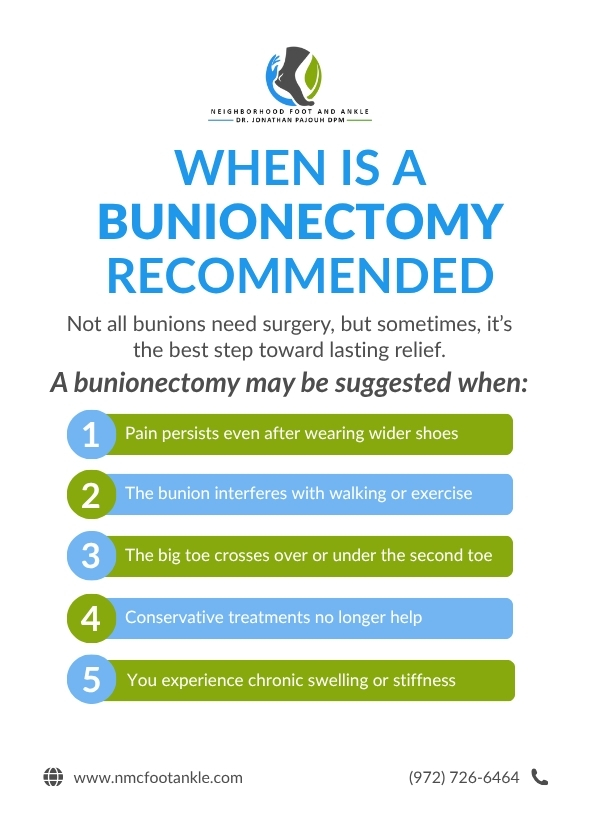
Dr. Pajouh may recommend a bunionectomy if pain persists despite non-surgical treatments, the bunion interferes with walking or daily activities, the big toe begins to overlap or tuck under the second toe, or swelling and stiffness continue. Experiencing any of these issues is a sign to schedule a consultation to see if surgery is the right option.
What Happens During a Bunionectomy
A bunionectomy is a procedure that removes the bony bump at the base of the big toe and realigns the surrounding joint to restore natural movement. There are different surgical techniques, and the best approach depends on the severity of the deformity and your individual foot structure.
During surgery, the surgeon carefully reshapes or repositions the bones of the toe joint to correct alignment and relieve pressure. In some cases, small screws or plates are used to stabilize the joint while it heals.
Most patients go home the same day, and while full recovery takes time, many people notice significant improvement in comfort and foot function after healing. Dr. Pajouh’s expertise in foot and ankle surgery ensures a personalized approach to bunion correction, helping patients achieve the best possible outcome and return to pain-free movement.
The Benefits of Surgical Correction
The goal of bunion surgery isn’t just to remove the bump — it’s to restore balance and prevent future joint damage. After recovery, patients often experience:
-
Improved foot alignment and appearance
-
Relief from chronic pain and stiffness
-
Better mobility and comfort in everyday activities
-
The ability to wear shoes comfortably again
While recovery varies depending on the procedure, most patients can gradually return to walking, exercise, and work with guidance from their foot and ankle specialist.
At NMC Foot & Ankle, Dr. Pajouh provides detailed post-surgical instructions and follow-up care to ensure optimal healing and long-term success.
Don’t Ignore Bunion Pain
Bunions are progressive — meaning they typically worsen over time if left untreated. Early evaluation is key to preventing complications such as arthritis, joint stiffness, or chronic pain. The sooner you seek care, the more treatment options are available to help protect your joint health and restore comfort.
If bunion pain is limiting your mobility or daily activities, don’t wait until it becomes severe. Dr. Jonathan Pajouh, DPM, and the team at NMC Foot & Ankle in Dallas specialize in both conservative and surgical bunion care, helping patients walk comfortably and confidently again.